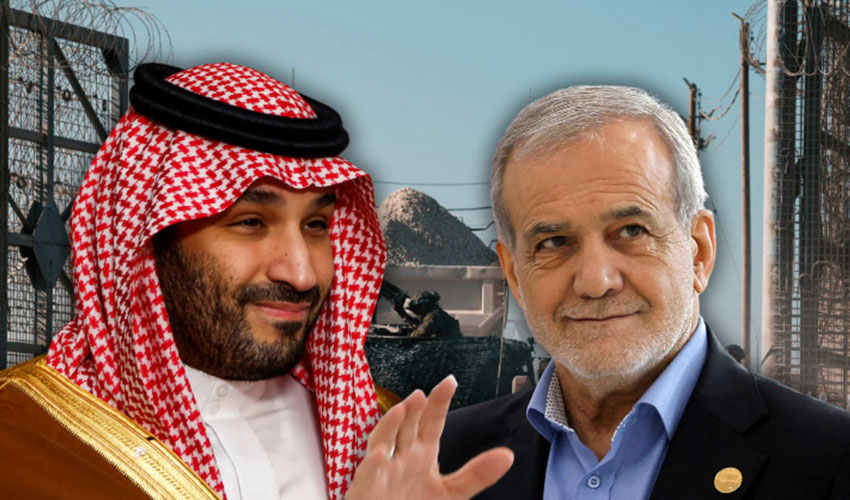
Saudi Arabia has warned Iran against launching further attacks on its territory or energy infrastructure, according to sources familiar with the discussions.
The warning comes amid escalating regional tensions following recent missile and drone strikes across the Gulf.
According to sources, Riyadh conveyed a firm message to Tehran stating that while it supports a diplomatic solution to the conflict involving the United States and Iran, continued attacks on Saudi territory would force the kingdom to respond.
The message was reportedly delivered ahead of remarks by Iranian President Masoud Pezeshkian, who later apologised to neighbouring Gulf states for Iran’s recent actions.
Saudi officials stressed that diplomacy remains their preferred path but warned that the kingdom could retaliate if its critical energy facilities or territory were targeted again.
Foreign ministers discuss rising tensions
Two days before the apology, Saudi Foreign Minister Faisal bin Farhan Al Saud held a conversation with his Iranian counterpart Abbas Araqchi.
Sources said Prince Faisal outlined Riyadh’s stance clearly during the call, emphasising that Saudi Arabia supports de-escalation and mediation efforts.
He also reportedly told Tehran that Saudi Arabia and other Gulf states had not allowed U.S. forces to use their territory or airspace to launch strikes against Iran.
However, he warned that if Iranian attacks continued, Saudi Arabia might permit U.S. forces to use bases in the kingdom and could respond militarily.
Regional strikes escalate tensions
The warning comes after several Gulf states faced drone and missile attacks over the past week.
Countries including the United Arab Emirates, Kuwait, Qatar, Bahrain, and Saudi Arabia were reportedly targeted.
The regional escalation followed the death of Iran’s Supreme Leader Ali Khamenei during the early stages of the conflict.
Tehran subsequently launched strikes against Israel and Gulf states hosting U.S. military facilities, while Israel targeted the Iran-backed group Hezbollah in Lebanon.
Iran signals possible pause in attacks
Iranian President Masoud Pezeshkian later said the country’s temporary leadership council had approved suspending attacks on neighbouring countries, unless those countries directly participated in attacks against Iran.
“I personally apologise to neighbouring countries that were affected by Iran’s actions,” he said.
However, the situation remains uncertain, as reports of additional strikes targeting Gulf states continued on Saturday.
Mixed signals from Iran’s military
Statements from Iran’s military leadership suggested internal divisions over the next course of action.
The Khatam al-Anbiya Central Headquarters, which coordinates Iran’s armed forces, said that U.S. and Israeli bases and interests across the region would remain primary targets.
The command emphasised that Iran respects the sovereignty of neighbouring countries but warned that American and Israeli military assets across the region could face “powerful and heavy” strikes.
Donald Trump said in a social media post that Iran had apologised to Middle Eastern neighbours and pledged not to target them further.
He suggested that the pledge came after sustained military pressure from the United States and Israel.
Despite the tensions, diplomatic communication between Riyadh and Tehran has continued.
Sources said Saudi Arabia maintained contact with Iranian officials through its ambassador after the conflict escalated following the collapse of negotiations over Iran’s nuclear programme.
Iranian officials also reportedly reiterated that their strikes were aimed at U.S. interests and military bases, not Gulf countries themselves.
However, Tehran has also demanded that U.S. military bases in the region be closed and that some Gulf states stop sharing intelligence with Washington.



.gif)
.jpg)