A day after one of the most dramatic crashes in its history, the Pakistan Stock Exchange (PSX) witnessed a powerful rebound on Tuesday.
The benchmark KSE-100 Index surged by over 3,000 points during intraday trading, signalling a return of buying momentum after Monday’s historic selloff.
During trading, the KSE-100 Index gained 3,018 points, climbing to 154,991 points. Earlier in the session at 12:35pm, the benchmark index was hovering at 153,093.59, up by 1,120.60 points or 0.74%.
The recovery marked a sharp turnaround from Monday’s panic-driven decline, when investor confidence had been severely shaken.
Buying returns across key sectors
Strong buying activity was observed in major sectors, including:
-
Cement
-
Commercial banks
-
Fertilizer
-
Exploration & Production (E&Ps)
-
Oil Marketing Companies (OMCs)
-
Power generation
Index-heavy stocks such as OGDC, POL, PPL, HUBCO, MCB, MEBL and NBP traded in the green, helping lift the broader market.
The renewed investor interest suggests selective value buying after steep losses a day earlier.
Monday’s Historic Selloff
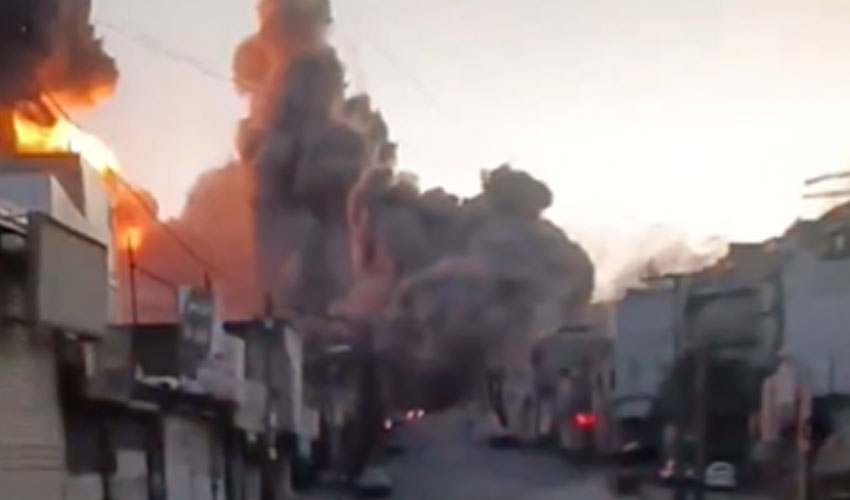
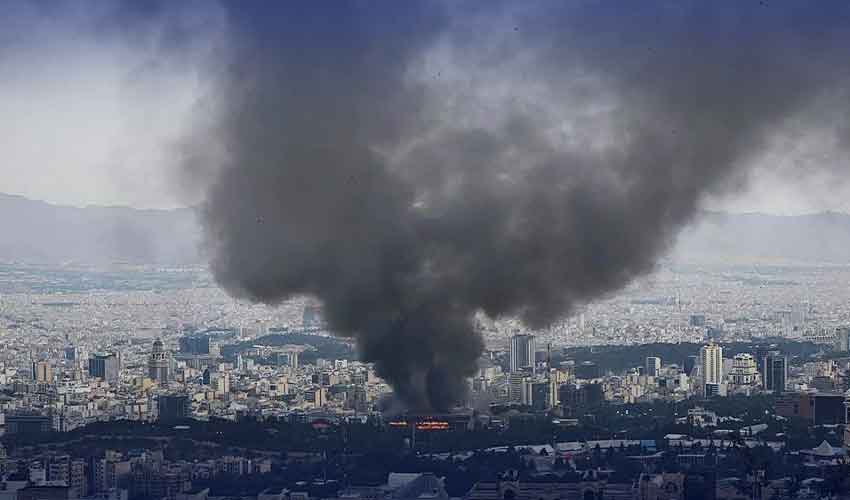
On Monday, the PSX suffered one of the most severe trading sessions in its history. Mounting geopolitical tensions and sharp global risk aversion triggered a massive selloff.
By the closing bell, the KSE-100 had plunged 16,089.17 points, or 9.57%, settling at 151,973.00 — marking the largest single-day point decline on record.
The crash wiped out vast market value and rattled investors nationwide.
Global markets remain under pressure
Internationally, markets continued to face pressure on Tuesday. Investors assessed the implications of US and Israeli strikes on Iran and their potential impact on energy prices and the global economy.
MSCI’s broadest index of Asia-Pacific shares outside Japan fell 1%, extending losses for a second day. Korean shares tumbled 2.5%, while Tokyo’s Nikkei 225 slipped 0.8%.
In the United States, Wall Street stabilised after a volatile session. The S&P 500 closed flat after recovering from early losses, while the Nasdaq Composite gained 0.4% as investors bought the dip amid Middle East tensions spilling into Lebanon.
Strait of Hormuz closure adds to concerns
With hostilities showing no signs of easing, an official from Iran’s Revolutionary Guards stated on Monday that the Strait of Hormuz has been closed to marine traffic. The official warned that any ship attempting to pass would face fire.
The threat to one of the world’s most critical oil shipping routes significantly heightened global market anxiety.
Oil and gas prices surge
Energy markets reacted sharply. Brent crude futures surged as much as 13% to $82.37 per barrel, the highest level since January 2025, before settling 7.1% higher at $78.07 per barrel.
In natural gas markets, benchmark European and Asian LNG prices jumped nearly 40% on Monday.
The spike in energy prices has added fresh complications for policymakers.
Rising oil and gas prices could make it harder for the Federal Reserve to manage inflation. Policymakers are already divided over the broader economic impact of artificial intelligence on the US economy.
Higher energy costs risk fuelling inflationary pressures at a delicate time for global markets.



.jpg)