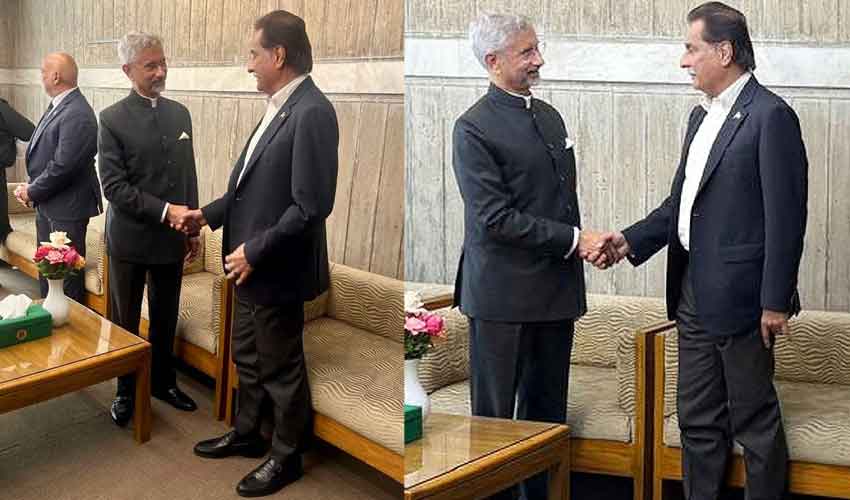
In a rare diplomatic moment after the May conflict between Pakistan and India, senior leaders of both countries came face to face in Dhaka.
The brief but symbolic interaction took place during National Assembly Speaker Ayaz Sadiq’s visit to Bangladesh for the funeral of former Bangladeshi prime minister Khaleda Zia.
The meeting marked the first face-to-face interaction between top leaders of Pakistan and India after the May war. Indian External Affairs Minister Subrahmanyam Jaishankar met Ayaz Sadiq in Dhaka.
Warm exchange at Khaleda Zia’s residence
The two leaders met at the residence of Khaleda Zia. According to sources, Jaishankar himself walked to Ayaz Sadiq’s seat and shook hands, while the speaker smiled and responded warmly.
During the brief meeting, both leaders inquired about each other’s well-being and exchanged welcoming words. The conversation lasted only a few minutes but carried diplomatic significance amid strained regional relations.
Ayaz in Bangladesh on condolence mission
The speaker is visiting Bangladesh to offer condolences on the passing of Khaleda Zia. He met her son, Tareq Rehman, and her daughter, expressing sympathy on behalf of Pakistan.
Ayaz Sadiq told Khaleda Zia’s children that the government and people of Pakistan stand with them in this hour of grief. The family thanked him for expressing condolences and for attending the funeral prayer.

The speaker conveyed a formal message of condolence on behalf of the president and prime minister of Pakistan. He emphasized Pakistan’s respect for Khaleda Zia’s political legacy and contributions.
Meetings with Bangladesh’s key officials
During the visit, Ayaz Sadiq also met Bangladesh’s National Security Advisor Khalilur Rehman. He further held discussions with Bangladesh’s Legal Advisor Asif Nazrul on matters of mutual interest.
While the visit centered on condolences, the unexpected interaction between Pakistani and Indian leaders added diplomatic weight to the occasion. Observers see the meeting as a rare high-level contact following recent hostilities.



.jpg)