Bangladesh’s first female prime minister and veteran opposition leader Begum Khaleda Zia passed away early Tuesday morning during treatment at a private hospital in the capital. She was 80.
Bangladesh Nationalist Party (BNP) Chairperson and former prime minister Begum Khaleda Zia died at 6am local time at Evercare Hospital in Dhaka, according to party officials.
Her family members and senior BNP leaders were present at the hospital, including her eldest son and acting BNP chairman Tariq Rahman, his wife Dr Zubaida Rahman, granddaughter Zaima Rahman, and BNP Secretary General Mirza Fakhrul Islam Alamgir.
A medical board overseeing her treatment was also in attendance at the time of her death.
Prolonged illness and medical condition
Khaleda Zia had been admitted to Evercare Hospital on November 23 with symptoms of a lung infection, local media reported.
Doctors said she was suffering from advanced liver cirrhosis, along with arthritis, diabetes, and chronic heart and chest complications.
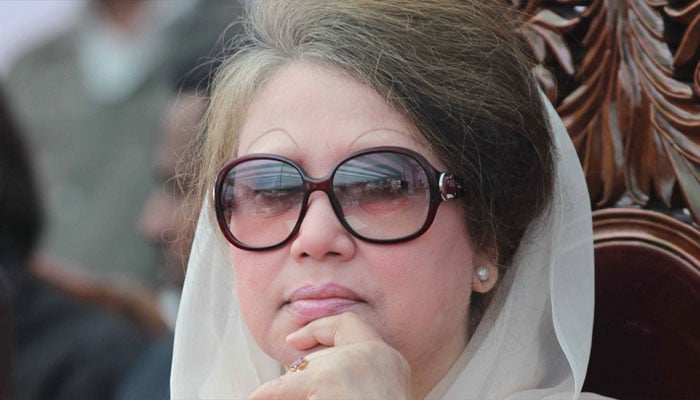
In her final days, interim leader Muhammad Yunus urged citizens to pray for her recovery, calling her a “source of utmost inspiration for the nation.”
Begum Khaleda Zia remained one of the most influential political figures in Bangladesh for over three decades.
She served as prime minister three times and led the BNP through periods of political upheaval, military rule, and intense rivalry with Awami League leader Sheikh Hasina.
Her death is being widely viewed as the close of a defining chapter in Bangladesh’s opposition politics, with implications felt across South Asia, including Pakistan.
From personal tragedy to political leadership
Born on August 15, 1946, in Dinajpur, Khaleda Zia entered politics following a personal tragedy.
Her husband, former president and BNP founder Ziaur Rahman, was assassinated during a failed military coup in 1981.
Initially dismissed as politically inexperienced, she emerged as a powerful leader, playing a key role in the movement that ended military ruler Hussain Muhammad Ershad’s regime in 1990.
In 1991, Khaleda Zia won Bangladesh’s first widely recognised free election, becoming the country’s first female prime minister.
She was also only the second woman to lead a democratic government in a Muslim-majority nation, after Pakistan’s Benazir Bhutto.
During her tenure, she restored the parliamentary system, promoted foreign investment, and made primary education free and compulsory.
Rivalry with Sheikh Hasina
Her rivalry with Sheikh Hasina, known as the era of the “Battling Begums,” shaped Bangladesh’s modern political history.
Power alternated between the two leaders amid repeated crises, including election boycotts, street protests, and the 2007 military-backed emergency rule, during which both were detained.
Hasina later dominated politics from 2008 until her violent ouster in 2024.
In 2018, Khaleda Zia was jailed on corruption charges linked to an orphanage trust, along with her son Tariq Rahman.
She consistently denied the allegations, calling them politically motivated attempts to sideline her family from politics.
Her declining health and legal restrictions also prevented her from travelling abroad for medical treatment.
BNP officials said details regarding funeral prayers and burial arrangements will be announced later.
In a statement, the party said: “Our beloved national leader is no longer with us,” while urging supporters to offer prayers for her departed soul.
PM Shehbaz offers condolences on Khaleda Zia’s passing
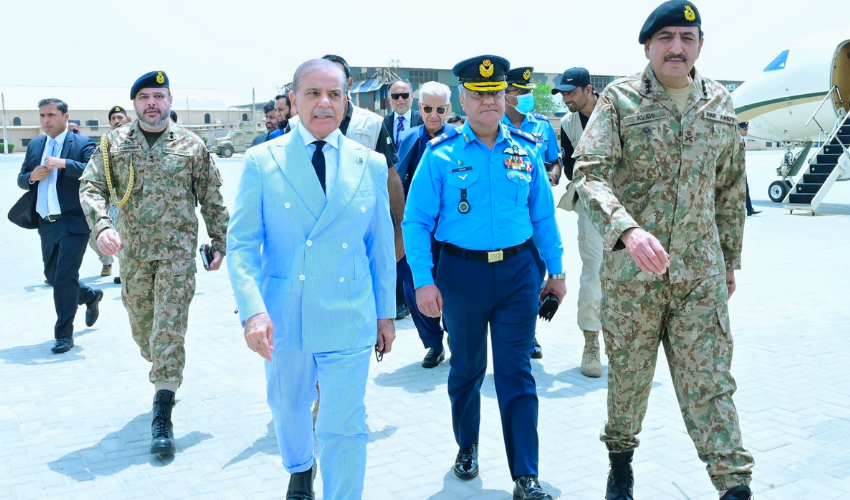
Prime Minister Shehbaz Sharif also expressed deep sorrow over the death of former Bangladeshi prime minister and Bangladesh Nationalist Party (BNP) chairperson Begum Khaleda Zia, calling her a significant leader whose legacy would be remembered for generations.
In a condolence message on X , the prime minister said he was “deeply saddened” by Begum Zia’s passing and paid tribute to her lifelong service to Bangladesh and its development.
Prime Minister Shehbaz noted that Begum Khaleda Zia played an important role in shaping Bangladesh’s political landscape and contributed to the country’s growth during her years in public service.
Deeply saddened by the passing of Begum Khaleda Zia, Chairperson of the BNP and former Prime Minister of Bangladesh. Her lifelong service to Bangladesh and its growth and development leaves a lasting legacy.
— Shehbaz Sharif (@CMShehbaz) December 30, 2025
Begum Zia was a committed friend of Pakistan. My Government and the…
He said her leadership and dedication left a lasting imprint on Bangladesh’s history, particularly during challenging political periods.
Remembering ties with Pakistan
The prime minister also recalled Begum Khaleda Zia as a committed friend of Pakistan, acknowledging her role in fostering goodwill between the two countries.
“My government and the people of Pakistan stand with the people of Bangladesh in this moment of sorrow,” he said, expressing solidarity with the neighbouring nation.
Extending sympathies to the former prime minister’s family, friends, and supporters, PM Shehbaz said Pakistan shared the grief of the Bangladeshi people during this difficult time.
“Our thoughts and prayers are with her family, friends and the people of Bangladesh,” the statement said.
He concluded the message with a prayer, saying, “May Allah SWT bless her soul. Ameen.”
President Zardari mourns death of Khaleda Zia
Meanwhile, President Asif Ali Zardari has expressed deep sorrow over the passing of Begum Khaleda Zia, former Prime Minister of Bangladesh, highlighting her contributions to the nation’s political landscape.
In a statement, President Zardari extended his heartfelt sympathies to Begum Khaleda Zia’s family and the people of Bangladesh. He acknowledged the grief felt across the region at the loss of a prominent political figure.
President Zardari praised Begum Khaleda Zia’s decades-long political service and leadership, stating that her efforts and contributions to Bangladesh’s governance will be remembered with respect. He highlighted her role in shaping the nation’s democratic processes and her resilience in public life.




.jpg)