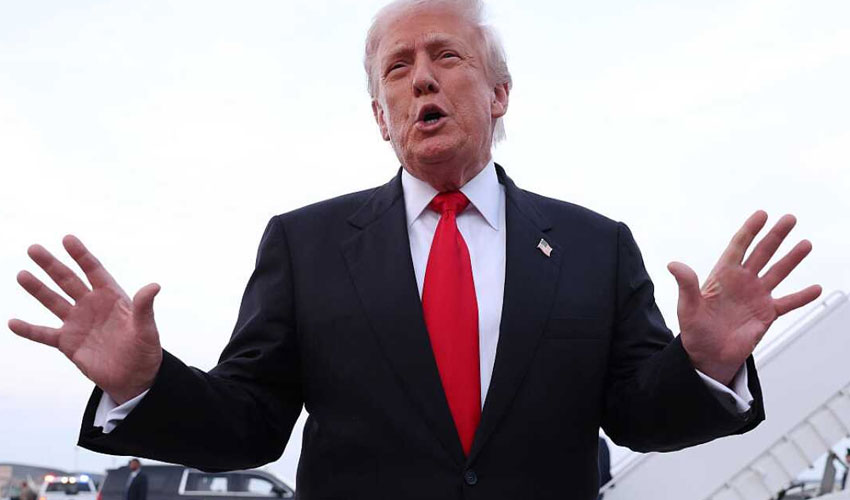
The U.S. Supreme Court on Tuesday temporarily blocked President Donald Trump from deploying National Guard troops to the Chicago area, marking a rare setback for his administration as it expands domestic military operations in Democratic-led cities.
The Supreme Court let stand a lower court order preventing Trump from sending hundreds of National Guard troops to Illinois. The case was filed by state and city officials, who argued the deployment was unlawful.
An unsigned order stated that the administration had not identified a legal source allowing military enforcement of laws in Illinois, and that presidential authority over the National Guard applies only in “exceptional” circumstances.
Three conservative justices—Samuel Alito, Clarence Thomas, and Neil Gorsuch—dissented from the decision.
Administration vs local authorities
The Trump administration claimed the deployment was necessary to protect federal personnel and property at a Chicago-area immigration facility. Officials argued that protests posed a constant threat and that local law enforcement was insufficient.
Illinois Governor J.B. Pritzker and city leaders countered that protests were largely peaceful and manageable. Federal judges have echoed this skepticism, noting that claims of violence were overstated and that equating protests with riots risked inflaming tensions further.
Legal background
Trump cited a law allowing the president to federalize state National Guard troops in cases of rebellion, invasion, or inability to enforce federal law with regular forces.
However, Judge April Perry, a Biden appointee, highlighted that the National Guard’s federalization bypassed the use of “regular forces” and added that domestic military intervention must meet strict legal standards.
A three-judge panel of the 7th U.S. Circuit Court of Appeals upheld Perry’s ruling, stating that facts on the ground did not justify the president’s actions. Two judges on the panel were appointed by Republican presidents, including one by Trump.
Broader context
This case is part of a broader pattern of Trump sending National Guard troops to Democratic-led cities, including Los Angeles, Memphis, Portland, and Washington, D.C. Critics have accused the administration of using military deployments to punish political adversaries and stifle dissent.
While the Supreme Court has generally sided with Trump’s administration since his return to office, this ruling represents one of the few high-profile setbacks.
Reactions from officials
-
White House: Spokeswoman Abigail Jackson defended the administration, stating that the president remains committed to enforcing immigration laws and protecting federal personnel.
-
Illinois Governor J.B. Pritzker: Called the ruling “an important step in curbing the Trump Administration's consistent abuse of power and slowing Trump’s march toward authoritarianism.”


.jpg)