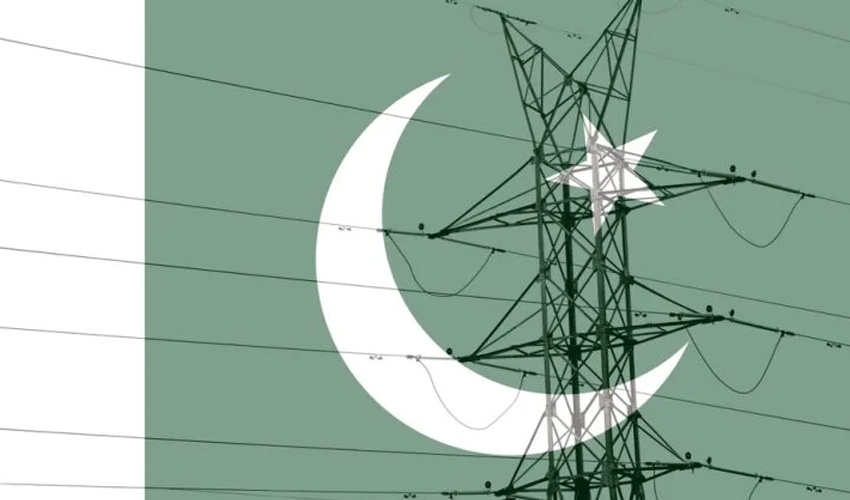
Pakistan’s top economic think tank, the Pakistan Institute of Development Economics (PIDE), has issued a stark warning about deep-rooted corruption and mismanagement in the country’s energy sector.
Its latest report reveals that soaring electricity tariffs and a ballooning circular debt have placed an unbearable burden on the poorest households.
Energy sector corruption and rising social crisis
According to PIDE, Pakistan’s power sector has deteriorated into a serious social crisis, driven by inefficiencies, non-transparent policies, and decades of poor governance.
The report shows that the national electricity tariff has nearly tripled between 2015 and 2025, pushing millions of low-income families into greater financial distress.
Circular debt in the energy sector has now crossed Rs2,600 billion, the think tank confirms.
Poor households paying highest share
PIDE’s findings highlight severe inequity in how electricity costs are distributed across income groups:
-
For the poorest households, electricity tariffs for up to 100 units increased from Rs11.72 to Rs22.44.
-
The middle-income group now pays Rs34.2 per unit, while
-
The richest households pay Rs46.5 per unit.
But despite paying a lower per-unit rate, the poorest bear far heavier non-energy charges.
The report shows that:
-
60% of non-energy costs fall on poor households,
-
while the richest pay only 30%.
Furthermore, 37% of the electricity bill for poor households consists solely of circular debt surcharges.
Circular debt burden falls unfairly on poorest
PIDE reveals that 55–60% of all surcharges are paid by the poorest 40% of households. In contrast, the richest households -- who hold 45% of the national income -- pay only 15–20% of surcharges.
The think tank warns that the circular debt crisis has turned electricity tariffs into a source of sustained financial burden, with low-income families effectively subsidizing inefficiencies in the power sector.
Discos’ inefficiency worsening crisis
The report places significant responsibility on the operational failures of distribution companies (Discos).
According to PIDE, their inefficiencies and governance failures have trapped the energy sector in a debt cycle, escalating costs for consumers year after year.
“In the current system, poor households are forced to bear the burden of ineffective institutions,” PIDE states.
PIDE has urged the government to undertake immediate reforms and adopt a fair tariff structure that aligns electricity prices with actual consumption and income levels.
The think tank stresses that without systemic corrections, the energy crisis will continue to deepen poverty and widen inequality across Pakistan.