“At the beginning of a dynasty, low taxation yields a large revenue. At the end of the dynasty, high taxation yields a small revenue.” – Muqaddimah, Ibn Khaldun.
Every empire in history has witnessed its peak, and eventually an inevitable demise. The hegemony in politics and economy reinforced by narrative eventually loses its worth; it is all but a pre-determined cycle, which exists by nature. The Big Beautiful Bill proposed by US President Donald Trump aims at challenging the very laws of nature, by slowing down the downfall of the American economy. This bill also highlights the hypothesis proposed by the 14th-century historian Ibn Khaldun that at the end of empire, the government imposes high taxes but generates little revenue, which can be obviously seen in the case of BBB. The main question that affects international relations remains, how this bill will affect and shape the global political economy, and whether the US can fulfill its perceived objectives with it.
As for the argument that is to be proposed in this article, it will not encompass all of the aspects of the bill, but will primarily address the politics of debt ceiling and deficit impacts. Debt ceiling is a legislative limit placed by the US Congress on how much the federal government is allowed to borrow for financial purposes. The US being the biggest debt economy and the only supplier of dollar, heavily affects how the US borrowing and US Treasury bonds shape international politics of economy. With over $34 trillion in national debt (as of 2025), it somehow gives the US an extraordinary advantage but also imposes complex responsibilities, especially after this bill as it has exceeded the borrowing limit by $5 trillion.
But why was there a need for the Big Beautiful Bill? The bill is a large-scale deficit spending initiative aimed at economic recovery through deficit financing. One of the main issues with the American economy is that it sustains itself with constant supply of international investment in the US Treasury bonds. The strategy is to use deficit spending and Treasury bonds at low interest rate to maintain investor confidence for a stable supply. The confidence in the US dollar as the world’s reserve currency makes the dollar a safe haven in a competitive market, enabling the US to borrow cheaply and extensively. By increasing the debt ceiling, investors are allowed to make larger investments in the US economy. Additionally, by generating a steady desire for USD, this dollar demand preserves flow and liquidity in global economy. Amidst these economic aspirations, the BBB has a political narrative that aims to confront China, particularly by investing in critical technologies and on-shoring production chains. One of the key themes of this bill is the economic recovery following the COVID-19 epidemic. The COVID-19 pandemic caused the US economy to contract by 3.4% in 2020, and since then, it has been continuously declining, with China providing them with fierce competition. Without increasing the debt ceiling, the US will perhaps default under its obligations.
Trump’s Agenda
Considering the extremely high taxes and tariffs on both domestic products and foreign imports, sudden executive decisions, shutting down long-standing economic advisory committee, and aggressively pushing deregulation directives, analysts can only wonder if Trump is trying to crash the economy.
However, another hypothesis deduced from Trump’s policies is that he may be deliberately trying to bleed the market. It may be a strategic reset. Because when market fails, investors move toward safer assets, and there is no safer asset than the US Treasury bond. With the BBB, and an increased borrowing limit alongside reduced interest rates, Trump aims to fuel the economy by attracting investors and presumably stable investment in the US Treasury bond.
Since returning to office in 2025, Trump has publicly criticized the US Federal Reserve for keeping interest rates too high and fueling inflation, especially under the Biden administration. As per Trump’s argument, “Inflation is the result of Biden’s reckless spending and the Fed’s failure to act faster. Now, to save the economy, the Fed must cut rates aggressively”. Trump’s campaign to pressure federal bank is creating uncertainty in market raising borrowing costs and interest rates. The federal bank is designed to be independent and its credibility and power rest upon it i.e., being free from political interference. Hence, Trump’s public attack on the US Federal Reserve is losing investors’ confidence in the bank.
But that may be only more beneficial for the government, as the US Treasury bonds are issued by the US Department of Treasury, which manages the issuance, sale, and redemption of US government securities, including T-Bills, T-Notes, T-Bonds, and Treasury Inflation Protected Securities (TIPS). The Federal Reserve indirectly issues the US Treasury bonds, playing a key role in open market operation i.e., buying and selling securities, auction support and most importantly monetary policy. Hence, when US Federal Reserve buys T-Bonds from Treasury Department, it injects liquidity into the economy and when it sells it withdraws liquidity. With political motivation to strengthen the Treasury Department, Trump could influence the Federal Reserve to adopt preferred monetary policies that maintain liquidity in the economy.
Effect on global political economy
The global financial crisis is a phenomenon that has a domino effect, meaning one market from global triad i.e., New York, London or Tokyo will crash and their effect will reach all over the world. A key factor in financial crises, as seen in 2008, is that markets are extremely overvalued just before the crash. When the value assigned to the assets increases its intrinsic value or fundamental value, market starts to become volatile with increasing risks. Trump’s ambition to attract investors to buy Treasury bonds — especially when other assets are considered riskier due to political interference — could lead the market to become overvalued and highly vulnerable. A single misstep might trigger another global financial crisis, given the extensive globalization and dependence on U.S. Treasury bonds as a safe haven, which would affect all nations. Hence, the overvalued market is of foremost concern.
Global capital flow into US assets will also starve the emerging markets of investment resulting in weaker currencies and increasing debt stress for developing economies. Aggressive monetary policy will cause exchange rate instability especially with states having dollar-dominated debt. If overvaluation appears to be artificially sustained to other states or investors it will lead to economic de-coupling, de-dollarization and increasing the risk of a financial crisis.
Way forward
The best possible solution for economic development is through regional development as stated by the Regional Economic Integration (REI). The REI will sustain the regional economies at least just enough to avoid default during a global financial crisis. The case study of the EU during the 2008 financial crisis explains why it was also significantly impacted. The main reason could be that the US is the EU's primary export market and that the EU depends heavily on the US and dollar for its monetary policy, particularly to limit Soviet influence through NATO and the US military. REI, if sustained independently without US influence and monetary policy, will significantly reduce dependence on the US. It will reduce the reliance on the US Treasury bonds and dollar. Cross-border trading is much less expensive and regional currency can sustain intra-regional trade.
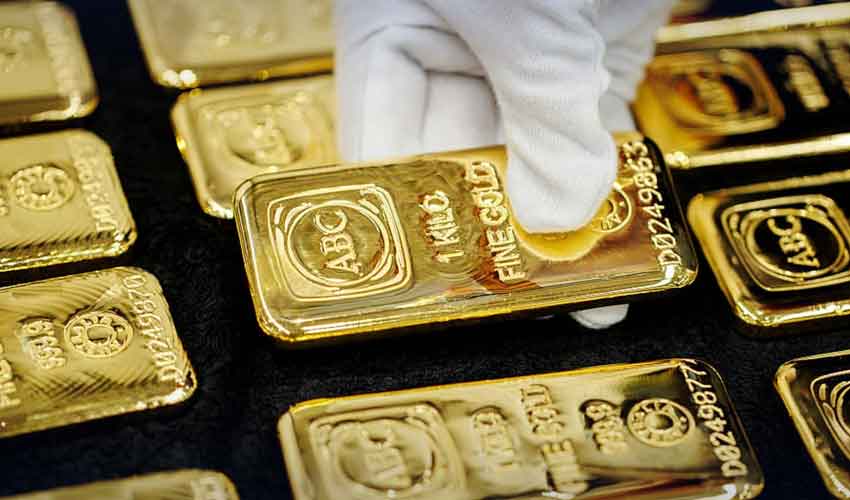
Investing in non-dollar assets like gold or the new trend of digital currency, like Bitcoin, provides a better alternative to US Treasury bonds. Investing in domestic infrastructure and innovation can attract local investors. Moreover, establishing a monetary oversight framework for risk and volatility indication can provide countermeasures. Diversifying market beyond the US for export and investment and negotiating bilateral currency swap agreements for states beyond the region can also help.
Many of these initiatives are already being considered, especially by G20, ASEAN, BRICS, and other multilateral cooperation, etc. This is also leading to South-South Cooperation, developing states moving away from Western monopolistic market, leading to more balanced global financial reforms. Putting stakes in these reforms is essential for a future that is risk-free from the American market and monetary policy.
Conclusion
The US debt ceiling politics and BBB pose high risk toward financial stability of market but can possibly offer high rewards for American agenda if successful. It is a “high-risk, high-reward” situation. That being said, it exposes vulnerabilities in American architecture and global financial systems that are dependent on the US monetary policy and dollar bonds. As market becomes overvalued, the risk of financial crisis grows, especially for emerging economies dependent on dollar. Trump’s political influence over the Federal Reserve may regulate the market and stabilize the economy in the short term through liquidity injections, but for long-term stability, lack of sustainable economic infrastructure in the US domestic economy still poses concerning risks for future investors. To mitigate these risks, the Global South is now moving toward South-South cooperation, regional economic integration, strategic diversification in trade and investment, de-dollarization and domestic resilience by investing in non-dollar assets, hence creating a more balanced global economic system autonomous of US political intervention.