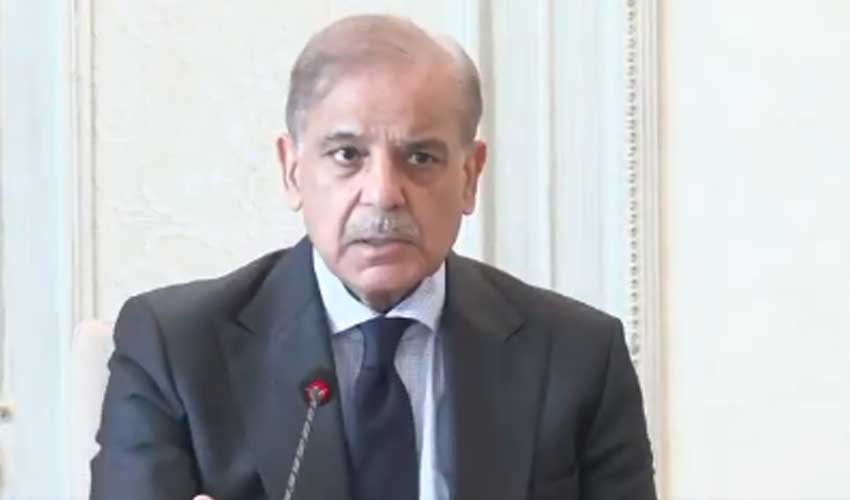
Amid court orders to block of 27 YouTube channels in Pakistan, including those operated by prominent journalists, Defense Minister Khawaja Asif has responded by stressing that freedom of expression has its limits and that both politicians and journalists must exercise restraint in their speech.
Speaking to the media in Islamabad, the senior PML-N leader said, “A line has to be drawn somewhere. I am a political worker, but I cannot speak indefinitely. If I cross the line, I will have to pay the price.”
He extended the same principle to journalists, warning that “if you cross the line as a journalist, you will also have to pay the price".
While he did not directly confirm or deny government involvement in these closures, defense minister’s remarks suggest an official position that seeks to balance freedom of speech with legal and ethical boundaries. “There is some limit to freedom of expression,” he reiterated.
Earlier today, a local court in Islamabad ordered the blocking of 27 YouTube channels, including those operated by prominent journalists, citing the dissemination of alleged anti-state content. The order was issued by Judicial Magistrate Abbas Shah following a petition submitted by the National Cybercrime Investigation Agency.
Also Read: Journalists' YouTube channels among 27 banned over 'anti-state content'
According to the two-page written judgement, the court directed authorities to take immediate action against the identified channels based on evidence presented by the Federal Investigation Agency (FIA).
Among those named in the court order are journalists Matiullah Jan, Asad Toor, Siddique Jan, Orya Maqbool Jan, and Habib Akram, as well as several channels affiliated with the Pakistan Tehreek-e-Insaf (PTI).
The petition argued that the channels in question were engaged in spreading disinformation, fake news, and content deemed inflammatory and insulting towards state institutions and senior officials. It further stated that such material could incite fear, hatred, and mistrust among the public, thereby posing a threat to national security and public order.
"The content published on these platforms is highly inflammatory, derogatory, and incites hatred against the army, judiciary, and other state institutions," the petition claimed, adding that it threatened social cohesion and the stability of the state.
The court order stated that the FIA initiated an inquiry into the matter on June 2. Following the investigation and a detailed examination of the submitted evidence, the court concluded that the content fell within the ambit of punishable offenses under the Pakistan Penal Code (PPC) and the Prevention of Electronic Crimes Act (PECA).
The written order noted: "The inquiry officer has provided sufficient material to demonstrate that the said channels are involved in uploading content that is offensive in nature and in violation of law. The court finds the evidence satisfactory for further action."
In light of these findings, the court directed the officer in charge of YouTube operations in Pakistan to immediately block access to the listed channels. The court also emphasized the importance of regulating online platforms to curb the spread of harmful narratives and protect national interests.
.jpg)