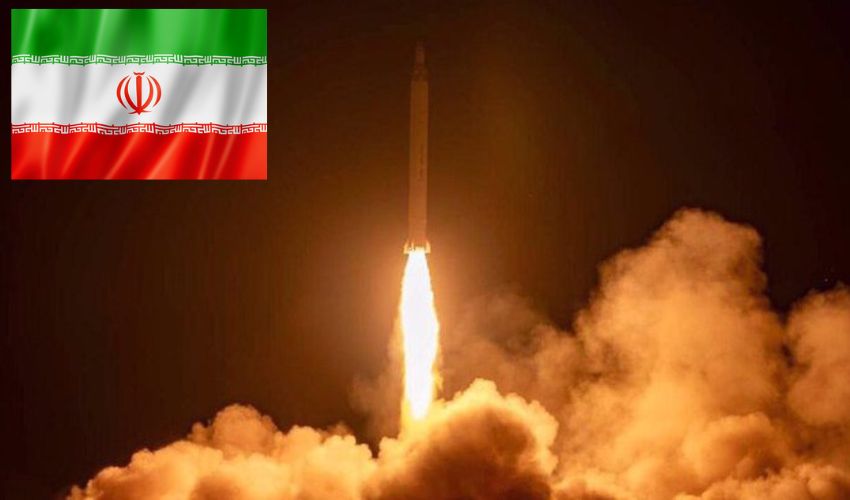
Iran has officially unveiled its latest ballistic missile, Qassem Basir, a domestically developed solid-fuel missile boasting a range of 1,200 kilometers. The announcement was made on Sunday during a high-profile military event, where officials described the missile as a major advancement in Iran's missile technology.
Developed as an upgraded version of the Martyr Haj Qassem missile, Qassem Basir features a redesigned warhead with enhanced maneuverability, specifically engineered to evade sophisticated missile defense systems. According to Iranian military officials, the warhead modifications and flight capabilities significantly improve the missile’s survivability in contested environments.
One of the missile’s most notable upgrades is the integration of a thermal imaging guidance system, which boosts precision targeting while rendering the system resistant to electronic warfare. The missile reportedly does not rely on GPS navigation, making it more difficult to jam or misdirect.
Iranian Defense Minister Brigadier General Aziz Nasirzadeh confirmed that the missile was successfully test-fired from a distance of over 1,200 kilometers, hitting its intended target with pinpoint accuracy. He noted that the missile underwent testing under intense electronic interference and maintained flawless performance.
“The Qassem Basir represents a new generation of precision strike capability,” said Nasirzadeh. “Its enhanced guidance and agility enable it to penetrate multi-layered defense networks.”
In his remarks, the defense minister also took aim at the United States, criticizing Washington for what he called “contradictory behavior”—advocating for diplomatic talks while simultaneously issuing military threats. Nasirzadeh suggested that such mixed signals undermine regional stability.
The unveiling of Qassem Basir comes amid heightened tensions in the Middle East and signals Iran’s continued focus on self-reliance in military development.