Water and Power Development Authority (WAPDA) Chairman Lt Gen (r) Muhammad Saeed has warned that India’s suspension of the Indus Waters Treaty (IWT) marks a major strategic challenge for Pakistan, threatening the country’s long-term water security and the stability of the Indus Basin Irrigation System.
In a comment piece for a local newspaper, Lt Gen (r) Saeed said the Indus Waters Treaty has remained one of the world's most enduring, successful and internationally recognized transboundary water-sharing agreements for more than 65 years.
He said that beyond its legal and diplomatic significance, the treaty has served as the foundation of Pakistan’s water resources development by ensuring certainty and predictability in river flows.
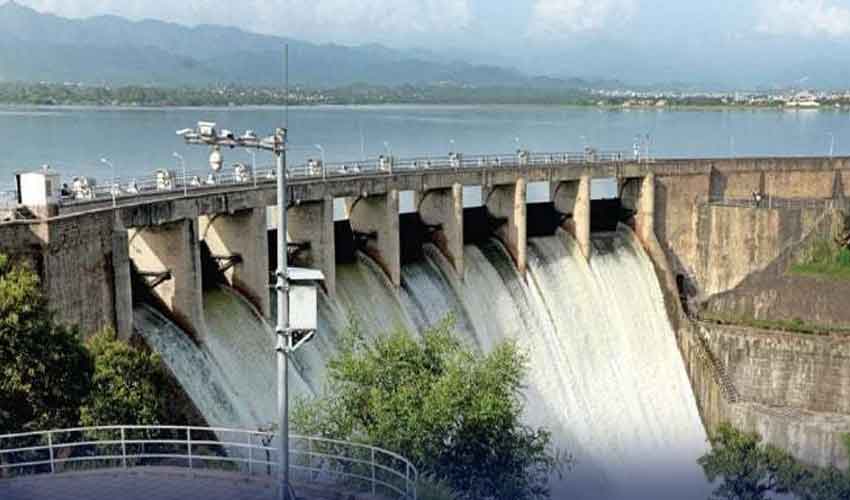
According to the WAPDA chairman, those guaranteed flows enabled Pakistan to build the Indus Basin Irrigation System (IBIS) -- the world’s largest contiguous irrigation network -- comprising three major reservoirs, six barrages, 12 inter-river link canals and an extensive canal distribution system.
The irrigation network serves nearly 35 million acres of farmland and supports more than 90% of Pakistan’s food production, while also underpinning the country’s hydropower generation, irrigated agriculture and broader economic development.
He added that the treaty has also played an important role in maintaining strategic stability in South Asia.
India’s move creates uncertainty
Lt Gen (r) Saeed said that strategic stability was fundamentally challenged in May 2025, when India unilaterally announced that it was placing the Indus Waters Treaty in abeyance.
He described the move as an illegal and unilateral action that is increasingly being viewed internationally as a violation of binding treaty obligations and international law.
He noted that while countries participating in the recently concluded UN Water Convention in Geneva were urged to strengthen governance, transparency and cooperation on shared river basins under the principle of "One Water-One Vision," India was moving in the opposite direction.
According to him, regardless of ongoing legal debates, India's decision has introduced uncertainty into a river system that guarantees Pakistan’s water, food and energy security.
Concerns over future water flows
The WAPDA chairman said India has accelerated work on upstream infrastructure projects on the western rivers since May 2025. He said India has also invited bids for fast-track implementation of additional projects, including the planned expansion of the Ranbir Canal and the Chenab-Beas Link Tunnel.
Taken together, he argued, these developments have the potential to pose a serious long-term threat to Pakistan’s water security.
Suspension of river data sharing
Lt Gen (r) Saeed said India has also stopped sharing hydrological data for the western rivers with Pakistan’s Commissioner for Indus Waters, despite the treaty’s data-sharing obligations.
He said the absence of timely river flow information during the 2025 flood season weakened Pakistan’s flood forecasting and emergency preparedness, increasing risks to human lives, infrastructure and livelihoods.
According to him, such actions are inconsistent with humanitarian principles, undermine international cooperation on shared watercourses and contradict the fundamental objective of protecting populations from transboundary flood hazards.
He further argued that India’s actions also restrict Pakistan’s ability to achieve Sustainable Development Goals (SDGs) 6.5, 6.5.1 and 6.5.2, which promote international cooperation in managing shared water resources.
Pakistan’s dependence on predictable river flows
The WAPDA chairman said Pakistan, as a lower riparian state, depends heavily on reliable and predictable flows from rivers originating upstream.
He said the country's irrigation system, reservoirs, agriculture, growing population and industrial development all rely on uninterrupted river flows.
Any uncertainty in either the quantity or timing of these flows, he warned, directly threatens Pakistan’s water, food, energy, environmental and economic security.
Chenab River identified as most critical concern
Lt Gen (r) Saeed highlighted the River Chenab as the most strategically important among the western rivers. He said the geographical structure of the Indus Basin makes predictable Chenab flows indispensable for the safe and efficient operation of the Indus Basin Irrigation System.
The lack of upstream river flow data, he said, weakens Pakistan’s ability to regulate canal diversions, manage floods and issue timely warnings during periods of extreme hydrological conditions.
He warned that the absence of such information could lead to greater loss of life, damage to critical infrastructure and increased economic losses.
The WAPDA chairman stressed that Pakistan’s concerns are not focused on any single dam, hydropower project or engineering structure. Nor, he said, are they limited to the total annual volume of water allocated under the treaty.
Instead, he said the emerging challenge lies in the cumulative capability created by multiple upstream projects to regulate the quantity, timing and predictability of river flows entering Pakistan.
For a lower riparian country whose irrigation system depends on reliable river flows, he described this as an existential challenge that extends far beyond conventional water management.
Chenab’s role in Pakistan’s agriculture
Lt Gen (r) Saeed said the Chenab carries an average annual flow of 25 million acre-feet (MAF) at Marala. He noted that the river irrigates nearly 10 million acres of farmland through the Marala, Khanki, Qadirabad, Trimmu and Punjnad barrages.
These command areas, he said, represent one of Pakistan’s most productive agricultural regions, making major contributions to wheat, rice, sugarcane and other strategic crops while supporting millions of rural livelihoods.
The WAPDA chairman explained that the Chenab forms a vital component of Pakistan’s interconnected Indus Basin Irrigation System. He said reservoirs, barrages, link canals and irrigation canals operate as one coordinated hydraulic network.
As a result, any sustained changes in the quantity or timing of Chenab flows affect not only the river’s own command areas but also canal regulation and irrigation supplies throughout the wider basin.
Geography limits Pakistan’s alternatives
Lt Gen (r) Saeed concluded that the strategic importance of the Chenab is further strengthened by geography. He said almost the entire catchment area of the river lies inside India before it enters Pakistan at Marala.
Unlike rivers that receive significant downstream tributary inflows, Pakistan has limited ability to compensate for prolonged upstream regulation through additional local runoff.
According to him, this geographical reality makes the reliability and predictability of Chenab River flows essential for maintaining the operational stability of Pakistan’s Indus Basin Irrigation System.