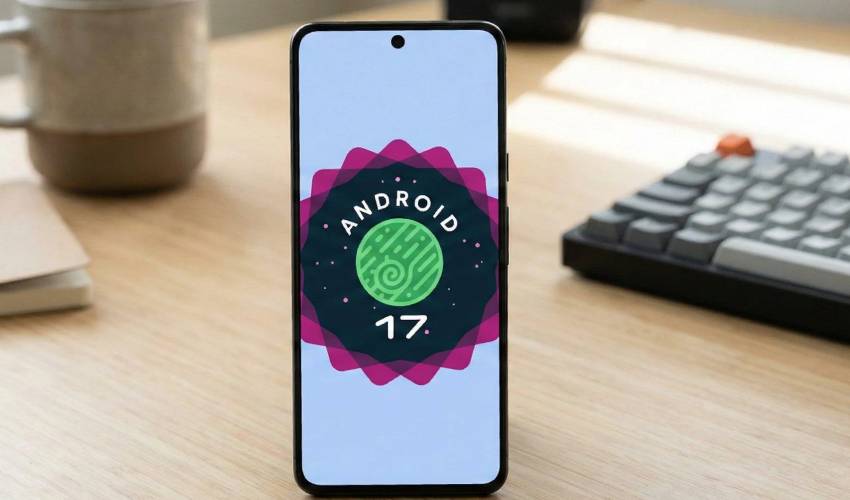
Android 17 has officially launched, introducing a new wave of multitasking improvements and deeper integration of Google’s artificial intelligence system, as Google continues to expand its Gemini-powered ecosystem.
The update, announced on Monday, focuses heavily on productivity enhancements designed to make Android devices more efficient for both casual and power users.
Smarter multitasking and app switching
Android 17 introduces upgraded multitasking tools, including more responsive split-screen controls and improved drag-and-drop functionality between apps.
Users can now switch between active tasks more smoothly, with the system better predicting app usage patterns and prioritizing frequently used combinations of apps.
The update is aimed at making large-screen Android devices and foldables more practical for work and media consumption.
Gemini AI becomes more central
A key part of the release is the expansion of Google’s Gemini AI features across the Android system.
Gemini is now more deeply integrated into system-level functions, allowing users to perform tasks such as summarizing on-screen content, generating responses within apps, and managing workflows through natural language commands.
The AI assistant is also expected to play a larger role in contextual suggestions, helping users move between apps without losing progress or manually copying information.
Focus on productivity and fluid experience
Google says Android 17 is designed to reduce friction in everyday smartphone use, particularly for users juggling multiple apps at once.
The system improvements are intended to make Android feel more unified, with fewer interruptions when switching between messaging, browsing, media, and productivity tools.
Part of a broader AI push
The rollout of Android 17 reflects Google’s broader strategy of embedding Gemini AI across its ecosystem, including phones, tablets, and wearable devices.
The company has been steadily positioning Gemini as a core layer of interaction rather than a standalone assistant, signaling a shift toward more proactive and context-aware computing.











.gif)