US President Donald Trump has rejected claims that Washington is offering direct financial payouts to Iran, calling reports of American funding “fake news” as questions grow over a proposed multi-billion-dollar reconstruction package linked to a possible peace agreement.
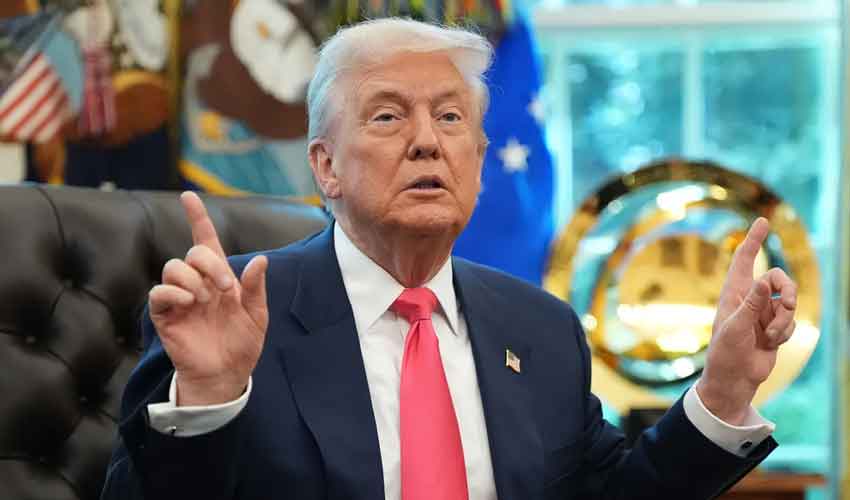
Writing on Truth Social, Trump said reports that the United States was paying Iran were false.
“The story that the US is paying Iran 300 million dollars is fake news,” Trump wrote, blaming what he called “Dumocrats” for spreading the claim.
His reference to “300 million” created confusion, as several reports and US officials have discussed a much larger possible $300 billion reconstruction and investment fund for Iran.
Trump also claimed that Iran had agreed never to acquire a nuclear weapon.
Vance says US taxpayers will not fund package
US Vice President JD Vance clarified that any proposed $300 billion fund would not come from American taxpayers.
“Not a single dime of that money comes from the United States,” Vance told NBC News.
In a separate interview with CBS Mornings, Vance said Iran could gain access to such investment only if it meets strict conditions, including ending its nuclear program, giving up its enriched stockpile and accepting inspections.
“That is the sort of thing they could have access to, funded by the Gulf Coast Coalition, so long as they honor their end of the obligation,” Vance said, apparently referring to the Gulf Cooperation Council.
The GCC includes Bahrain, Kuwait, Oman, Qatar, Saudi Arabia and the United Arab Emirates.
Fund tied to Iran’s performance
A senior US official said the reconstruction fund was discussed as part of wider diplomatic talks, but stressed that any financial progress would be “tied to performance.”
The official said options under discussion included sanctions relief, releasing frozen funds and creating a major fund to help rebuild Iran.
However, US officials said “zero” dollars had flowed to Iran so far, and no funds would be released simply for signing an agreement or attending a meeting.
Vance also wrote earlier on X that Tehran would not receive cash under the agreement.
Financial Times reports investment framework
The Financial Times reported that the proposed $300 billion fund would be designed for companies interested in investing in Iran, rather than direct government-to-government aid.
According to the report, the fund would depend on a final settlement that includes a 60-day ceasefire extension, reopening of the Strait of Hormuz and further nuclear negotiations.
The fund would aim to attract investment in Iran’s energy resources, with interest expected from businesses in Europe, Asia, South Korea, Japan and the United States if sanctions are lifted.
Reuters said it could not immediately confirm the Financial Times report.
Strait of Hormuz, nuclear talks remain key
The proposed financial incentives are linked to a memorandum of understanding expected to be signed by Washington and Tehran in Switzerland on Friday.
The MoU is considered only a first step, with US officials saying “real technical discussions” will begin later this week under Vance’s leadership.
The broader deal is expected to focus on extending the ceasefire, fully reopening the Strait of Hormuz and negotiating limits on Iran’s nuclear program.
Trump has long criticized former president Barack Obama’s 2015 nuclear deal with Iran, accusing that administration of sending “pallets of cash” to Tehran.
Critics of the new MoU argue that the reconstruction package under discussion could be far larger than the financial benefits Iran received under the 2015 accord.
However, Trump administration officials insist that any sanctions relief would be phased, conditional and dependent on Iran meeting nuclear and security obligations.
Gulf investment only if Iran changes course
Vance said Washington is open to Gulf countries investing in Iran’s reconstruction, but only if Tehran ends its nuclear ambitions and behaves like a “normal country.”
He said Gulf Arab nations may choose to invest only if Iran makes its economy “investable.”
A senior US official also confirmed that small financial gestures may be considered to build trust during negotiations, but broader economic benefits would depend on a final settlement.