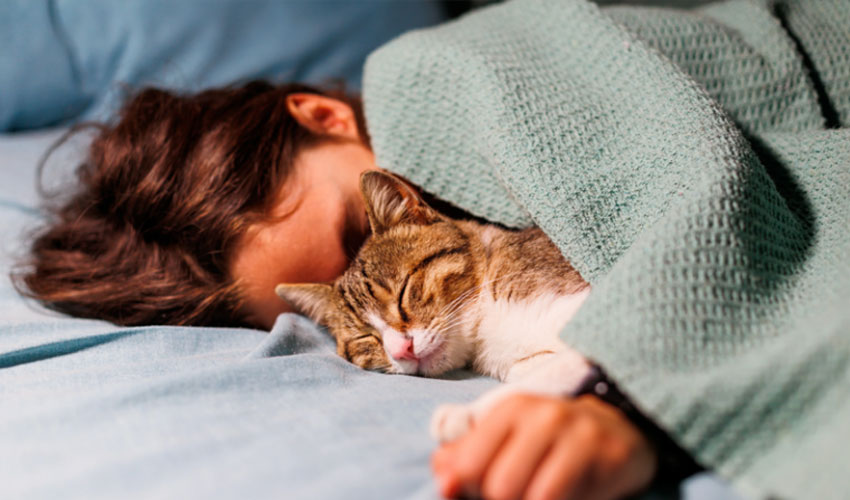
A new scientific study has raised questions about a common habit among pet owners: sharing a bed with their furry companions.
Researchers found that people who sleep with their pets—particularly dogs—are more likely to experience poor sleep quality and symptoms of insomnia.
The study, published in the journal Scientific Reports, analyzed data from 1,591 adults in the United States to better understand the relationship between pet ownership and sleep quality.
Researchers found that nearly 47.6% of pet owners reported sleeping in the same bed as their pets. Even after accounting for factors such as age and income, the findings suggested that co-sleeping with pets was associated with poorer sleep outcomes.
Dogs linked to sleep disturbances
One of the most notable findings of the research was that the negative impact on sleep was observed only among dog owners.
According to experts, several factors may explain why dogs disrupt sleep. Their larger body size, frequent movement during the night, and tendency to adapt to their owners’ sleep schedules can all contribute to interrupted rest.
The study also found that people who slept with dogs were more likely to experience symptoms associated with insomnia compared to those who did not share their beds with pets.
Cat Owners Showed Different Results
Interestingly, researchers found no significant effect on the sleep quality of cat owners.
Experts believe this may be because cats are generally lighter and less likely to interfere with a person's sleeping position. Unlike dogs, cats also tend not to synchronize their routines with human sleep patterns.
However, the study noted that earlier research has suggested cat owners may be more likely to report leg tremors during sleep.
Pets still offer mental health benefits
While the study highlighted possible drawbacks of sleeping with pets, experts emphasized that pet ownership also provides several psychological benefits.
Research from the National Institutes of Health has shown that interacting with pets can help lower blood pressure, reduce levels of the stress hormone cortisol, and increase the release of oxytocin, a hormone associated with relaxation and emotional bonding.
These benefits can be particularly valuable for people dealing with loneliness, stress, or depression.
Allergy and health concerns remain
Medical experts also pointed to potential health risks associated with sleeping closely with pets.
According to the American Academy of Allergy and Asthma, around 30% of people with allergies may experience sleep disruptions caused by pet hair and dander.
Meanwhile, the US Centers for Disease Control and Prevention (CDC) has warned about certain pet-related health risks, including cat scratch fever, which can be transmitted through flea exposure.