US President Donald Trump abruptly ended an interview with NBC's Meet the Press after a tense exchange with host Kristen Welker over his repeated claims that the 2020 presidential election and current California elections were rigged.
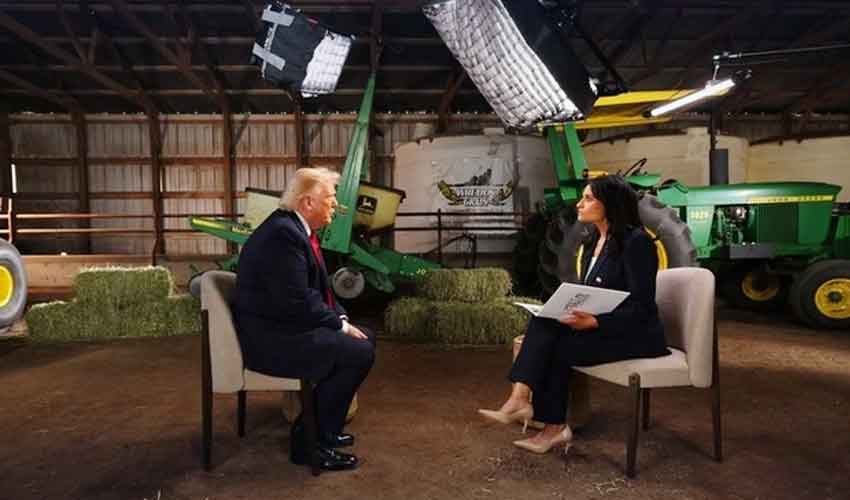
The interview, recorded in Wisconsin and aired on Sunday, became increasingly confrontational as Welker repeatedly pressed Trump for evidence to support his allegations of election fraud and questioned him about compensation for individuals charged in connection with the January 6 Capitol riot.
Much of the dispute centered on Trump's continued assertions that the 2020 US presidential election was stolen, a claim that courts and election officials have repeatedly rejected.
During the interview, Trump also alleged that California's ongoing primary elections, including the gubernatorial race, were being manipulated.
"It's four days and they aren't even close to counting ballots," Trump argued, suggesting that delays in vote counting were evidence of wrongdoing.
Welker responded that lengthy vote-counting periods are common in California due to the state's extensive use of mail-in ballots and detailed verification procedures.
Trump challenged to provide evidence
When Welker asked Trump for evidence supporting his allegations of fraud in California's elections, the president replied, "All I have to do is look, and I listen."
Welker countered by saying that observation alone did not constitute evidence. The exchange quickly escalated, with Trump accusing the media and NBC of dishonesty.
"They're crooked, just like you're crooked. Your press is crooked. And Meet the Press is crooked," Trump said.
Welker pushed back, saying, "To be fair, I'm not crooked. But let's continue." Trump then intensified his criticism, telling Welker, "You're either crooked or you're stupid."
He also accused NBC of being a "one-sided crooked network" and claimed the media knowingly ignored what he described as election fraud.
January 6, compensation fund
Earlier in the interview, Welker questioned Trump about a controversial proposal known as the "anti-weaponisation" fund.
The now-abandoned plan would have created a $1.8 billion fund to compensate individuals who claimed they had been unfairly targeted or investigated by the government.
The proposal faced criticism from Democrats and some Republicans who argued it could result in taxpayer-funded payments to people prosecuted for their roles in the January 6, 2021 Capitol riot.
When asked whether individuals who pleaded guilty to assaulting police officers during the riot should be eligible for compensation, Trump did not provide a direct answer.
Instead, he claimed, without presenting evidence, that some rioters had been invited into the Capitol by FBI agents.
Trump defends January 6 defendants
Trump argued that many defendants accepted plea agreements because they feared receiving lengthy prison sentences if they went to trial.
"You know why they pleaded guilty? Because they were told they were going to jail for 15 years," Trump said.
He further claimed that participants in the riot were "frightened" and had been "ushered into a building". Welker noted that there has been no evidence presented in court to support many of Trump's claims regarding the January 6 events.
Trump responded by insisting there was "nothing but evidence," although he did not cite any specific proof.
Heated exchange leads to interview ending
The interview continued to grow more contentious as Welker repeatedly challenged Trump's statements. After another exchange regarding election integrity and media coverage, Trump decided to terminate the interview.
"Sorry, let's call it quits because I've had enough," he said. As he removed his microphone, Trump added: "Thank you darling. Have a good time."
Welker attempted to continue the discussion and reminded Trump that she and her team had traveled to Wisconsin specifically for the interview.
Trump criticises media before leaving
Before leaving the set, Trump criticized the American media landscape and accused journalists of damaging the country.
"I've sat in the rain with you for an hour, on and off in the rain, and I've given you enough time," Trump said. "You ought to straighten out your press, because you know what? A country can never be great with a dishonest press."
He then signaled to his staff, saying, "Come on, let's go," before standing up and walking away from the interview.
According to NBC, the interview took place inside a barn during Trump's visit to an event with farmers in Wisconsin. The session experienced repeated delays due to technical issues and rain hitting the metal roof of the venue.
NBC reported that Trump left approximately 50 minutes after the interview began on Friday.
Foreign policy and Iran also discussed
Before the confrontation over elections and January 6, the interview covered a range of policy issues, including the conflict with Iran.
Trump defended US actions in the region and insisted Washington needed to prevent Iran from obtaining a nuclear weapon. He also rejected suggestions that the conflict would become a prolonged military engagement.
"We're there for a few months and the threat is largely over," Trump said.
Trump's remarks also focused heavily on California's ongoing primary elections. He claimed Republican candidates were falling behind because the elections were "rigged" and accused election officials of cheating.
Current polling, however, suggests a competitive race between Democratic frontrunner Xavier Becerra and Republican candidate Steve Hilton in the gubernatorial contest.
Vote counting remains ongoing in several California races, a process that officials say is normal due to the state's voting procedures.
Trump agrees to future interview
Despite the contentious ending, the dispute may not be the final exchange between Trump and NBC. Following the broadcast, Welker revealed that she spoke with Trump on Saturday.
According to Welker, both acknowledged that the weather-related complications affected the interview, and Trump agreed to participate in another Meet the Press interview in the future.
Neither NBC nor Trump's team provided additional details about when or where the follow-up interview might take place.
The episode highlights Trump's often strained relationship with major US media organizations.
Throughout his political career, Trump has frequently accused traditional news outlets of bias and dishonesty, while journalists have continued to challenge many of his claims regarding election integrity and the January 6 Capitol attack.
The latest confrontation on national television underscores how those tensions remain a defining feature of Trump's presidency.