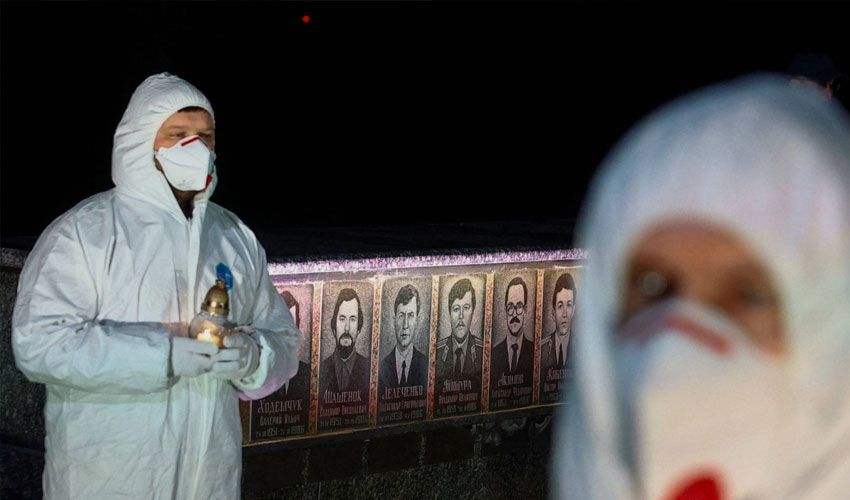
Ukraine is marking the 40th anniversary of the Chornobyl nuclear disaster under the shadow of war, with officials warning that ongoing conflict with Russia could trigger new nuclear risks at the historic site.
Chernobyl disaster is being remembered across Ukraine as the country reflects on one of the world’s worst nuclear catastrophes.
The disaster, which occurred on April 26, 1986, released large amounts of radioactive material across Europe after a reactor explosion at the Soviet-era plant.
Millions were exposed to radiation, while hundreds of thousands were forced to evacuate contaminated areas.
War raises new nuclear safety concerns
Ukrainian officials say Russia’s ongoing war has increased risks around the Chornobyl site, which lies about 100 km north of Kyiv.
Kyiv has accused Moscow of repeatedly launching missiles and drones along routes near the facility, raising fears of accidental damage to nuclear infrastructure.
The Foreign Ministry said the original disaster was the result of “lies and cover-ups” under a totalitarian system that ignored safety protocols.
Protective structure damaged
A massive steel-and-concrete containment structure built in 2016 to secure the damaged reactor remains a key safeguard at the site.
However, officials reported that a Russian drone strike in February 2025 punctured the protective arc’s seal.
While no radiation leaks were detected, authorities say repairs worth at least €500 million are needed to prevent long-term damage.
Drone activity near the site
Ukrainian prosecutors told Reuters that radars have detected at least 92 Russian drones flying within a five-kilometre radius of the Chornobyl shelter since mid-2024.
These repeated incidents have heightened concerns over the safety of one of the world’s most sensitive nuclear sites.
The Chornobyl plant, now located within a 2,600 sq km exclusion zone, remains under strict control and surveillance.
Around 2,250 workers continue rotating shifts to manage ongoing decommissioning work. The plant’s last operational reactor was shut down in 2000.
National Guard units also patrol the area to ensure security.
Despite its tragic history, nature has gradually reclaimed large parts of the exclusion zone.
Wild animals such as moose and horses now roam freely in the abandoned city of Prypiat and surrounding forests.
The once-busy control rooms of Reactor 4 now stand silent, filled with rusted Soviet-era machinery.





.jpg)