Pakistan has stressed that diplomacy remains the only viable path to resolve the Iranian nuclear issue, as divisions persist within the United Nations Security Council over how to address rising tensions in the Middle East.
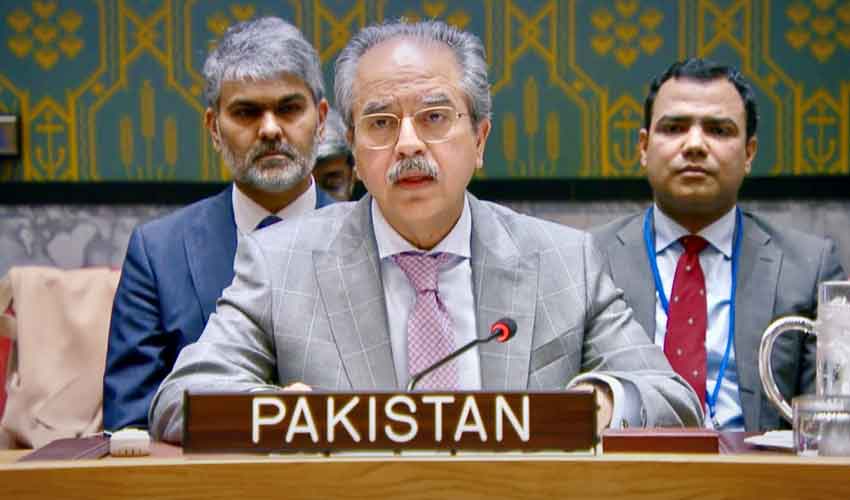
Pakistan’s Permanent Representative to the UN, Ambassador Asim Iftikhar Ahmed, urged restraint and called for renewed diplomatic engagement during discussions at the Security Council.
Ambassador Ahmed said diplomacy is the only viable way to resolve the Iranian nuclear issue. He called for an immediate ceasefire in the Middle East, along with a halt in hostilities and the resumption of negotiations.
The Pakistani envoy also urged all parties to exercise restraint and avoid further escalation, warning that continued confrontation could worsen the already fragile regional situation.
Security Council remains divided
During the meeting, Ambassador Ahmed acknowledged that the UN Security Council remains divided on the issue. He said that military actions are further increasing tensions in the region, complicating efforts to resolve the dispute diplomatically.
According to the Pakistani representative, recent developments and unprovoked attacks on Iran since June last year have significantly affected the context of the Iranian nuclear issue.
Diplomatic stalemate
The ambassador noted that the ongoing diplomatic stalemate surrounding Iran’s nuclear program has further complicated the situation. He emphasized that the use of force and the escalation of tensions undermine efforts to find a peaceful solution.
Ambassador Asim Iftikhar Ahmed also condemned attacks targeting civilian infrastructure and nuclear facilities under the supervision of the International Atomic Energy Agency (IAEA).
He warned that such attacks pose serious environmental and security risks not only to the local population but also to the wider region.
Pakistan supports JCPOA and negotiations
Referring to the Joint Comprehensive Plan of Action (JCPOA), the Pakistani envoy described it as an important diplomatic agreement.
He said the deal was the result of lengthy negotiations and mutual efforts, and it offered a clear roadmap for the peaceful resolution of disputes related to Iran’s nuclear program.
Pakistan had supported the agreement in the past and continues to support resolving the issue through negotiations, he added.
Pakistan backed resolution to support diplomatic process
Ambassador Ahmed recalled that Pakistan supported a resolution introduced in September last year. The resolution sought to provide a six-month technical extension to UN Security Council Resolution 2231, allowing additional time for diplomatic efforts to continue.
He emphasized that the disagreement over the issue should not hinder the normal functioning of the Security Council and its subsidiary bodies.
The Pakistani envoy stressed that the IAEA’s verification mandate should not be hampered. He urged that the agency’s monitoring activities in Iran should resume without obstruction to ensure transparency and accountability.
Ambassador Asim Iftikhar Ahmed also recalled that the UN Security Council unanimously adopted Resolution 2788 in July last year, which underscored the importance of peaceful conflict resolution.
In the current circumstances, he said, it is essential to revive the spirit of the UN Charter and its resolutions to manage rising tensions in the region.