2025 did not end gently for Pakistan. The year closed with rivers breaking their banks, glaciers giving way without warning, and winter air turning poisonous. All this in a country that emits less than one percent of the world’s carbon. These climate shocks, arriving one after another, have left millions exposed, health systems exhausted, and recovery efforts perpetually unfinished.
Moving into 2026, Pakistan does so not with relief, but with unresolved grief and a growing list of climate tragedies.
1. Monsoon floods
The 2025 monsoon floods, driven by heavy rains from June through September, have devastated large swaths of the country.

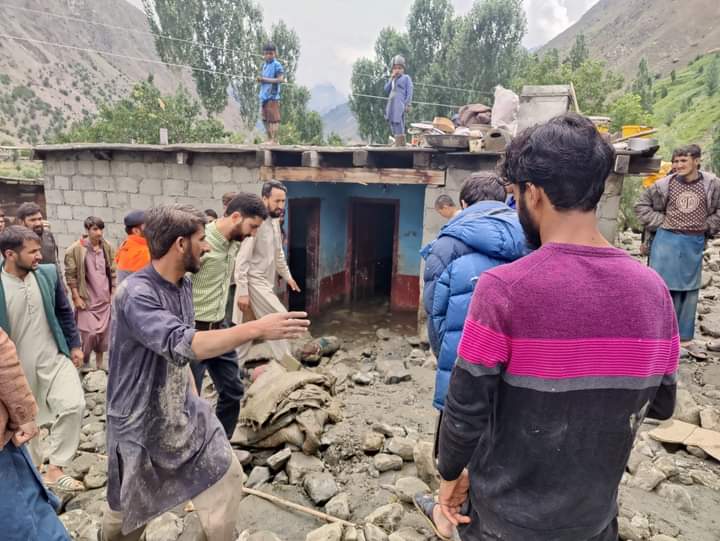
According to the United Nations Office for the Coordination of Humanitarian Affairs (OCHA) and the National Disaster Management Authority (NDMA), at least 1,037 people died and more than 1,067 were injured nationwide due to flooding, landslides, and flash floods. Over 229,760 houses were damaged or destroyed across provinces.

(National totals combine figures from OCHA NDMA reports and supplemental regional estimates.)
KP's Buner at the epicenter
KP bore the highest fatality burden. Mid‑August cloudbursts, where intense rainfall dumped more than 150 mm in hours, triggered flash floods and landslides in mountainous terrain.
Villages such as Pir Baba and Bayshonai Kalay were wiped out, forcing large‑scale evacuations and eroding local infrastructure.

Data visualisation credit: Google Nano Banana
Punjab's agricultural heartland crushed
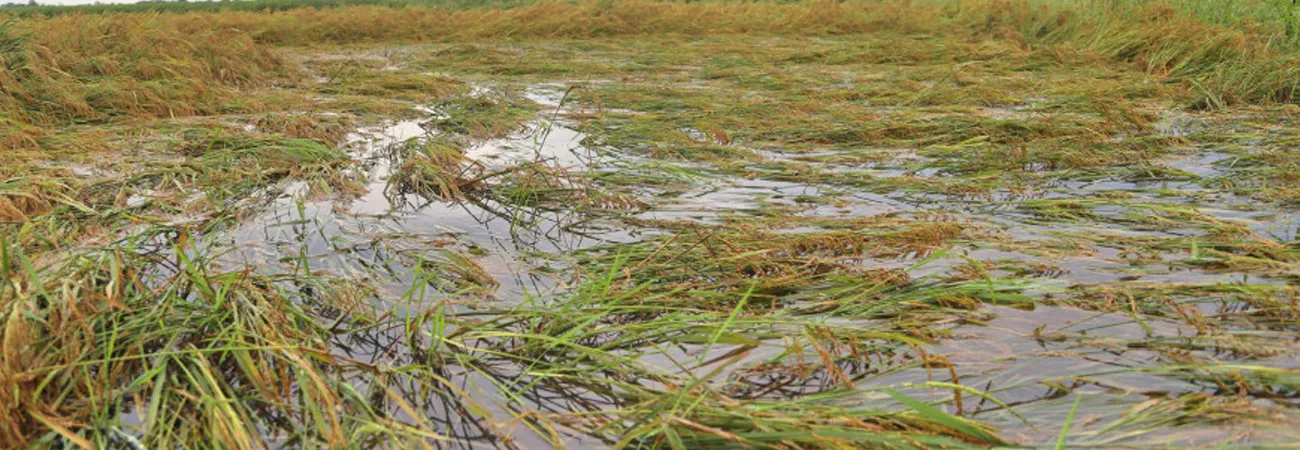
Punjab, Pakistan’s most populous and agriculturally productive province, saw at least 216 deaths and over 2 million acres of farmland submerged.
Read also: How Pakistan’s street workers see climate change as ‘God’s will’
Rice, cotton, and sugarcane fields were inundated, jeopardizing food security and livelihoods. Emergency evacuations exposed vulnerabilities in both rural and urban planning.

Data visualisation credit: Wajid Ali
Gilgit‑Baltistan and Balochistan
— In Gilgit‑Baltistan, glacial lake outburst floods and flash floods damaged infrastructure and isolated communities.
— Balochistan experienced extensive flood damage, with roughly 30 deaths and thousands of homes partially or fully destroyed.
2. Smog and air quality crisis
Even as floodwaters receded, hazardous air quality emerged as another climate‑linked threat. Winter smog, driven by thermal inversions, industrial emissions, crop burning, and traffic, soared across Punjab and KP:

Recent AQI reports indicated that cities like Lahore have been ranked among the most polluted in the world during parts of 2025. IQAir
3. National economic and food security implications
The climate disasters have dealt severe blows to Pakistan’s economy and food systems:
-
Rice: ~60% crop loss (major areas)
-
Cotton: ~35% lost, threatening textile exports
-
Sugarcane: ~30% submerged
-
Wheat: Projected import needs up to 5 million tons
Economists estimate that the agricultural sector alone lost an estimated Rs302 billion (about $1bn USD), with total economic damages climbing beyond Rs409 billion (around $1.4bn USD). Inflation spiked sharply, with tomato prices rising by 46% and wheat flour by 25% in a week.
4. Pakistan’s climate policy
Pakistan’s Third Nationally Determined Contributions (NDC 3.0) set ambitious targets for emissions reduction and renewable energy expansion, contingent on external climate finance. Experts caution that implementation gaps could emerge without stronger sub‑national coordination, integration of local insights, and private sector involvement.
RELATED: Pakistan, UK join hands on new green climate compact
Focus areas include:
-
Solar PV expansion
-
Hydropower and wind capacity increases
-
Persistent electricity transmission challenges
-
Heavy dependence on external financing
The 2025 floods highlighted the fragility of the Indus River system, characterised by unpredictable glacial melt patterns, erratic monsoon flows, and increasingly over‑burdened reservoirs like Tarbela and Mangla. Integrated approaches that combine dams with aquifer recharge and delta restoration are urgently needed.
5. Humanitarian and policy responses
Efforts to respond and recover include:
-
Relief operations by CARE, UN agencies, PDMA, NDMA
-
Provincial initiatives such as targeted cash transfers and utility bill waivers
-
International adaptation finance pledges (e.g., $120bn annual support by 2035, though slower than desired)

Long‑term recommendations:
-
Strengthen agricultural resilience (drought‑tolerant seed varieties, precision farming)
-
Expand the Benazir Income Support Programme (BISP) for affected families
-
Empower NDMA and provincial disaster agencies with advanced forecasting tools
-
Champion climate justice internationally for flexible, rapid financing
2025 has proven that climate change is no longer a distant warning, it is an urgent, destabilizing reality shaking Pakistan to its core. The floods, glacial surges, and choking smog have exposed the fragile threads holding communities, agriculture, and cities together.
Without decisive adaptation measures, stronger disaster preparedness, and bold climate policy reforms, the country risks plunging deeper into crises threatening water security, food availability, and public health.



.jpg)