Israel’s Chief of Staff Eyal Zamir has warned that the Israeli military is prepared to strike its enemies “wherever required,” a statement widely seen as hinting at the possibility of renewed military action against Iran.
Speaking on Sunday at a changeover ceremony for the head of the IDF Planning Directorate, Lt Gen Zamir said Israel remains in the midst of the “longest and most complex war” in its history. He described the campaign against Iran as central to the multifront conflict that erupted on October 7, 2023, following Hamas’s attack on southern Israel.
That war expanded to include Hezbollah in Lebanon, the Houthis in Yemen, Iraqi militias, and eventually the Islamic Republic itself.
Iran accused of orchestrating regional threats
Zamir accused Iran of financing and arming what he described as a “ring of strangulation” around Israel. He said Tehran stood behind plans aimed at Israel’s destruction, underlining why Israel views Iran as the primary driver of regional instability.
His remarks reinforced Israel’s long-standing position that Iran is the central threat behind multiple hostile fronts.
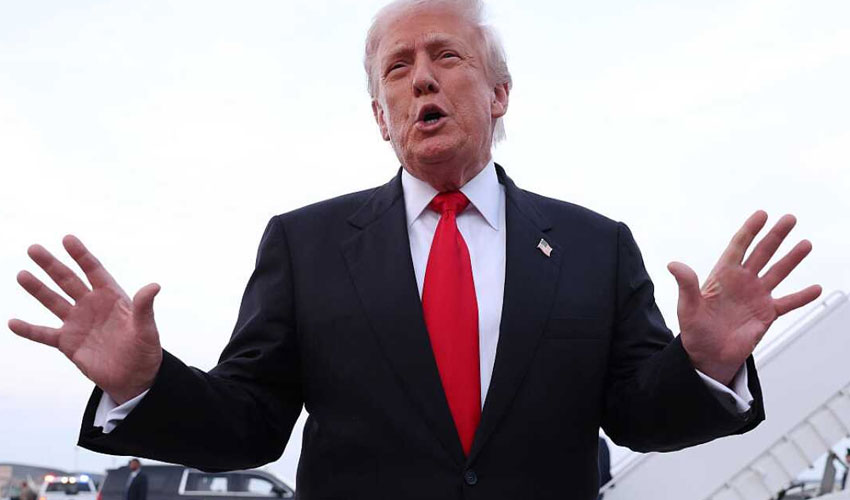
The warning came a day after NBC News reported that Israeli Prime Minister Benjamin Netanyahu is expected to present plans for a potential new attack on Iran to US President Donald Trump during an upcoming visit to Washington.
According to the report, which cited several unnamed officials, Israel is increasingly alarmed by intelligence suggesting Iran is rebuilding and expanding its ballistic missile production following the two countries’ 12-day war in June.
Ballistic missiles seen as more urgent than nuclear issue
While Israel has repeatedly described Iran’s nuclear program as an existential threat, officials quoted by NBC News said ballistic missiles are currently viewed as a more immediate danger. One source said Iran’s nuclear program was concerning but “not that immediate,” while warning that the missile threat is “very real.”
Another source acknowledged that Israel was unable to intercept all Iranian missiles during the last conflict.
A source familiar with the matter, along with former US officials, told NBC News that Israel believes Iran’s ballistic missile production could rise to as many as 3,000 missiles per year if left unchecked. Such a capability would significantly alter the regional military balance.
These concerns are shaping Israel’s current strategic calculations.
Iran claims readiness for war
Adding weight to Israel’s fears, Iranian Foreign Minister Abbas Araghchi said on Sunday that Iran has rebuilt strategic facilities damaged in Israeli strikes last June. Speaking to Russia Today, Araghchi said Iran was “fully prepared” for another round of fighting.
“If they want to repeat the same failed experience, they will not achieve a better result,” he said, according to Iran’s ISNA news agency.
Araghchi acknowledged that Iranian facilities had been “seriously” damaged but insisted that Iran’s technology and resolve remained intact. He argued that technology “cannot be bombed” and reaffirmed Iran’s claim to a legitimate right to peaceful nuclear technology, including uranium enrichment.
He said Iran was open to a “fair and balanced agreement” through negotiations but rejected what he called external “dictation.”
Iran denies weapons ambitions despite evidence
Iran, which frequently calls for Israel’s destruction, continues to deny seeking nuclear weapons. However, it has enriched uranium to levels with no civilian application, restricted international inspections, and expanded its ballistic missile capabilities.
When the war began, Israeli officials said Iran had recently taken concrete steps toward nuclear weaponization.
Israel launched strikes against Iran in June, targeting nuclear facilities and ballistic missile infrastructure, citing an imminent existential threat. Over 12 days, Israeli airstrikes killed Iranian nuclear scientists, damaged uranium enrichment sites, and crippled much of Iran’s missile production and supply chains.
The United States joined the campaign in its final days, using bunker-buster bombs to destroy underground nuclear facilities beyond Israel’s reach.
Heavy casualties and damage on both sides
Iran said more than 1,000 people were killed by Israeli strikes during the war. Tehran retaliated by firing over 500 ballistic missiles and around 1,100 drones at Israel, killing 32 people and wounding more than 3,000, according to Israeli health officials.
Israel recorded 36 missile impacts and one drone strike in populated areas, damaging 2,305 homes across 240 buildings, as well as two universities and a hospital, and displacing over 13,000 Israelis.




.jpg)