The Foreign Office has dismissed reports of an upcoming visit by Chief of Defence Forces Asim Munir to Washington and strongly criticised false media claims linking Pakistan to the Bondi Beach attack in Australia.
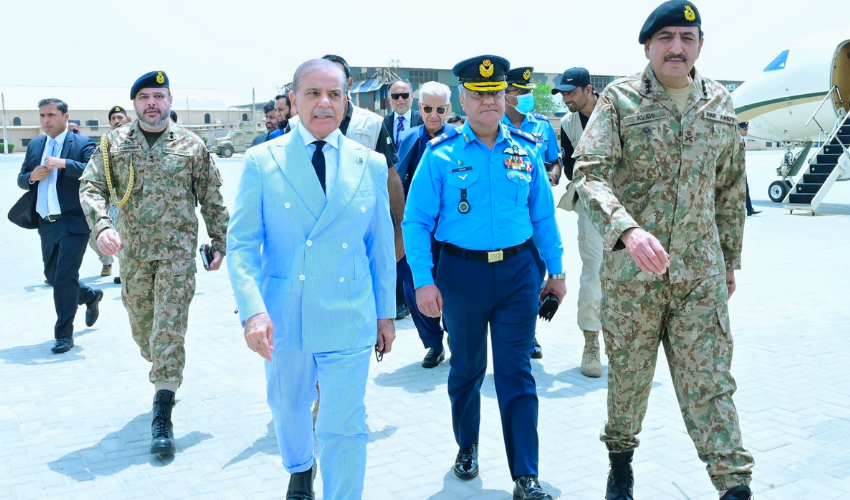
The Foreign Office spokesperson said there is no confirmed information regarding any visit by Chief of Defence Forces and army chief Field Marshal Asim Munir to Washington. Rejecting a Reuters report, the spokesperson said the claim was incorrect.
“There is no information about the planning or finalisation of any such visit,” the spokesperson clarified.
The spokesperson emphasised that the Pakistani government officially announces all high-level visits through proper channels. Any confirmed development regarding official visits would be communicated transparently.
Until then, reports suggesting such a visit should be treated as speculative and inaccurate.
No decision on ISF participation
Responding to another query, the spokesperson said Pakistan has not taken any decision regarding participation in the International Stabilization Force (ISF) in Gaza. Any future developments on the matter will be shared in a timely manner.
The spokesperson reiterated Pakistan’s commitment to transparent communication on international security matters.
Reuters report
The spokesman was responding to a Reuters report from Wednesday that had claimed that “Pakistan's most powerful military chief in decades” faced the toughest test of his newly amassed powers as Washington pushes Islamabad to contribute troops to the Gaza stabilisation force, a move analysts say could spark domestic backlash.
The report had claimed that Field Marshal Asim Munir was expected to fly to Washington to meet US President Donald Trump in the coming weeks for a third meeting in six months that will likely focus on the Gaza force. The report quoted two sources, with one of them allegedly a key player in the general's economic diplomacy.
Strong reaction to Bondi Beach attack reporting
The Foreign Office also termed attempts to link Pakistan to the Bondi Beach attack in Australia as “regrettable and irresponsible.” The spokesperson said a Pakistani name and photograph were circulated by some media outlets without any verification.
This false reporting, the spokesperson warned, put an innocent individual and their family at serious risk.
The spokesperson accused Indian media of spreading false information and propaganda regarding the incident. According to the Foreign Office, the misleading coverage has severely damaged the credibility and reputation of Indian media outlets.
The spokesperson urged Indian media organisations to adopt a more responsible and professional approach in reporting sensitive incidents.
Australia investigating attack
The FO confirmed that Australian authorities are currently investigating the Bondi Beach attack. Pakistan, the spokesperson said, is closely following developments related to the case.
No evidence has emerged so far linking Pakistan to the incident, the spokesperson added.
UNSC report backs Pakistan’s concerns
The Foreign Office spokesperson said a recent UN Security Council report confirms Pakistan’s long-standing concerns about the Taliban-led government in Afghanistan. According to the report, multiple terrorist groups are operating from Afghan soil.
The spokesperson said groups, including Fitna al-Khawarij, Fitna al-Hindustan and other militant organisations, are actively present in Afghanistan.
The spokesperson said there are credible reports that terrorist elements in Afghanistan are receiving funding and support from within the Kabul government. Pakistan, he added, possesses solid humanitarian and intelligence-based evidence regarding this support.
He said Pakistan has credible information about the number, identities, and financial backing of terrorists operating from Afghan territory.
Pakistan-Afghanistan ceasefire not being honoured
Clarifying the nature of the Pak-Afghan ceasefire, the spokesperson said it was not a traditional bilateral ceasefire. Instead, it was declared in good faith to stop terrorist attacks against Pakistan from Afghan soil.
Despite this, he said terrorist attacks against Pakistan are continuing, proving that the ceasefire has not been respected. “Unfortunately, attacks are still ongoing,” the spokesperson stated.
Diplomatic channels with Afghanistan
The spokesperson said diplomatic engagement between Pakistan and Afghanistan continues. Ambassadors of both countries are present in their respective capitals, and bilateral issues are being discussed through established diplomatic channels.
Pakistan, he added, remains committed to dialogue and regional stability.
Pakistan recently participated in a regional meeting on Afghanistan held in Iran, the spokesperson said. The gathering was part of an established regional mechanism aimed at consultation and consensus-building.
He said the Tehran meeting of special representatives was also held under the same mechanism, where the presence of terrorist groups, including the TTP, was discussed in a broader regional context.
The spokesperson stressed that regional mechanisms play a vital role in promoting consultation and cooperation. Pakistan, he said, will continue to support sustained diplomatic engagement within the region.
Pakistan condemns hijab removal incident in India
Responding to a separate question, the spokesperson said Pakistan strongly condemns the reported removal of the hijab of a female doctor in India. He noted that the chief minister of India’s Uttar Pradesh state has also strongly condemned the incident.
Pakistan, he said, demands the protection of minority rights in India.
India accused of water aggression
The Foreign Office spokesperson said India’s water aggression on the Chenab River has been ongoing since December 7. He said India released water without giving prior notice, putting human lives at risk.
Calling it a violation of the Indus Waters Treaty, the spokesperson said Pakistan has formally contacted India over the issue.
Pakistan wants good relations with all neighbouring countries, the spokesperson said. However, he urged the international community to take serious notice of India’s actions regarding the Chenab River.
Such violations, he warned, threaten regional stability and the safety of civilian populations.