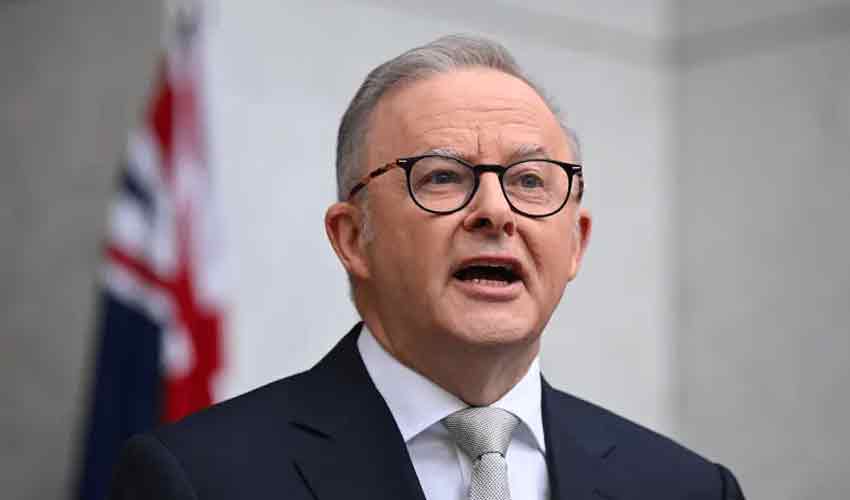
US President Donald Trump announced on Monday that his administration will allow Nvidia to resume sales of its H200 AI accelerators to China—on the condition that Washington receives a 25 percent fee from each shipment.
The announcement, made on Trump’s social platform Truth Social, signals a significant policy reversal from earlier restrictions imposed over national security concerns.
Trump wrote that he had “informed President Xi” of the decision and that Beijing responded “positively.”
He added that “25% will be paid to the United States of America,” echoing his earlier suggestion that high-end chip exports should carry a licensing fee.
However, Trump did not explain how the new arrangement would maintain national security—a key justification used by previous administrations to restrict AI chip sales to China.
Security concerns behind earlier bans
The Biden administration’s 2022 export rules barred advanced accelerators from reaching China, stating they could be used to build weapons systems, improve military decision-making, and facilitate human rights abuses.
Although Washington later allowed the export of downgraded AI models such as Nvidia’s H20, Trump attacked that policy, calling the products "degraded" and claiming companies were forced to waste “BILLIONS OF DOLLARS building products that nobody wanted.”
That claim contrasts with Nvidia’s own projections, which valued lost H20 sales to China at $10.5 billion.
Policy applies only to H200 chips
Trump clarified that the new export permission covers only Nvidia’s H200 accelerators, which are widely used in generative AI and high-performance computing due to their HBM3 memory.
More advanced hardware—including Nvidia’s Blackwell and Nvidia’s upcoming Rubin chips—will remain banned from sale to China.
He added that the Department of Commerce is “finalizing the details,” and that the same policy framework would apply to AMD, Intel, and other US chipmakers.
As of now, the Commerce Department has not issued any public statement confirming the move.
Trump’s criticism of “degraded” chips also appears to overlook his administration’s April 2025 decision to ban H20 exports—a restriction that was later reversed.
The debate reflects ongoing tension between protecting US chip dominance and allowing companies access to the world’s largest semiconductor market.