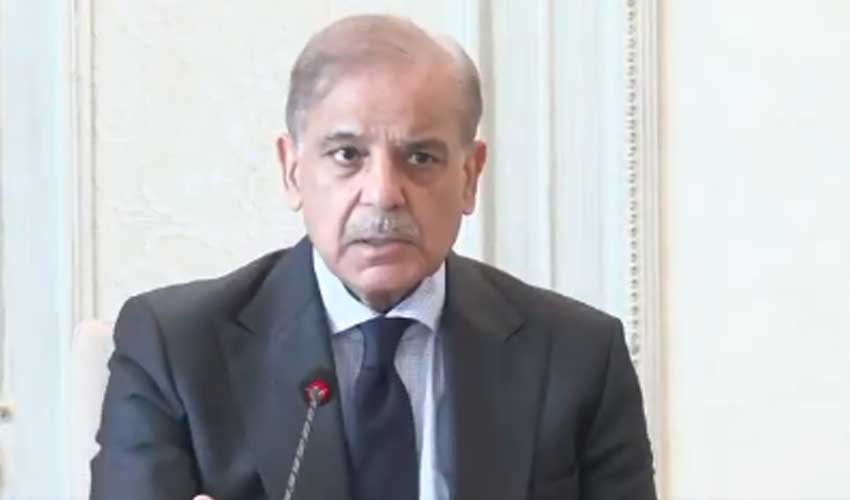
Prime Minister Shehbaz Sharif is likely to miss the COP30 Climate Change Conference in Brazil due to his busy schedule. In his place, he has nominated Federal Minister for Climate Change Dr Musadik Malik to lead Pakistan’s delegation at the high-level global summit.
The COP30 conference will be held in Belém, Brazil, from November 6, with participation from several heads of state, environmental experts, and international organizations.
Pakistan to seek $50–60bn in annual climate financing
According to officials from the Ministry of Climate Change, Pakistan’s key focus at COP30 will be securing climate financing worth $50 to $60 billion annually to tackle environmental threats and support green development initiatives.
A wide range of projects from all four provinces, Gilgit-Baltistan, and Azad Jammu and Kashmir will be showcased at the conference. These include programs related to climate-smart agriculture, glacier protection, and water recharge systems.
The ministry said it will provide administrative and technical support to the provinces for presenting these projects. Officials added that Pakistan has already received $500 million in climate finance for various environmental projects, including water and glacier management projects in Lahore.
Delegation to include Punjab leadership
Apart from Dr. Musadik Malik, the Pakistani delegation will include Punjab Chief Minister Maryam Nawaz and Senior Minister Marriyum Aurangzeb, both of whom will participate in sessions highlighting Pakistan’s regional and provincial climate initiatives.
The Federal Ministry of Climate Change has completed preparations for the conference, emphasizing that Pakistan will call for stronger international cooperation and financial support for developing nations affected by climate change.
Pakistan needs $348bn in climate financing by 2030
Citing a World Bank report, ministry officials said Pakistan requires an estimated $348 billion in climate financing by 2030 to effectively mitigate and adapt to climate impacts such as floods, heatwaves, and glacier melt.
Officials stressed that large-scale financial assistance is essential to help Pakistan transition toward sustainable energy, resilient agriculture, and climate adaptation infrastructure.
October climate report: Record heat and rainfall patterns
Meanwhile, the Meteorological Department released its October 2025 climate report, confirming that the month broke a 65-year heat record and ranked as the sixth hottest October on record.
Average temperatures across Pakistan were above normal, with the national average temperature recorded at 24.43°C, about 0.9°C higher than usual.
-
Average daytime temperature: 31.5°C (0.1°C above normal)
-
Average nighttime temperature: 17.23°C (2°C above normal)
The hottest day of October was recorded in Turbat on October 1, where the mercury hit 43°C, making it the hottest location of the month with an average high of 37.7°C. In contrast, Skardu saw the coldest night on October 31, with an average minimum of 3.8°C.
The average rainfall across the country stood at 12.2 millimeters, which was 53% higher than normal. Muzaffarabad Airport recorded the highest single-day rainfall of 75mm on October 7, and a monthly total of 129.6mm, making it the rainiest place in the country.
The report also noted that El Niño indicators remain moderate, meaning neither El Niño nor La Niña conditions are currently dominant.



.jpg)