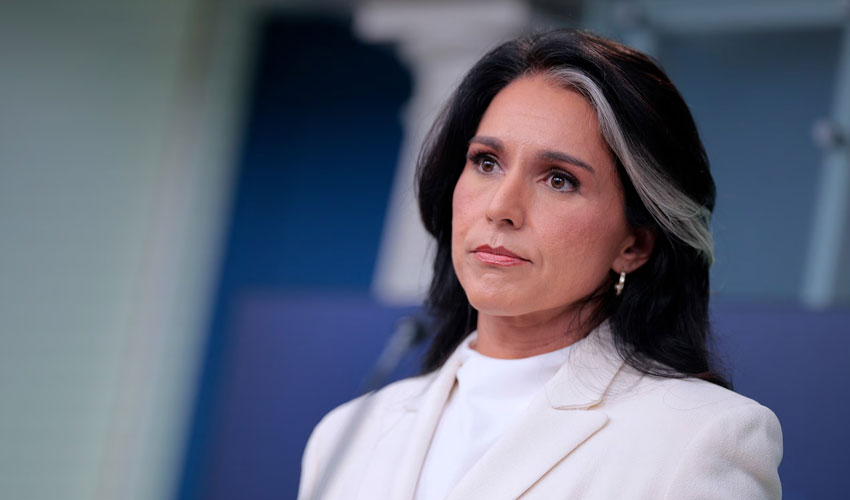
US Director of National Intelligence Tulsi Gabbard announced sweeping reforms on Wednesday, saying she will slash her agency’s payroll by more than 40% by the end of 2025, saving an estimated $700 million.
She accused the Office of the Director of National Intelligence (ODNI) of becoming “bloated, inefficient, and rife with abuse of power.”
Gabbard announces 'ODNI 2.0' plan
In a statement and a series of social media posts, Gabbard pledged to “cut bloated bureaucracy, root out deep state actors, and restore mission focus.”
Her office released a four-page fact sheet outlining “ODNI 2.0,” which details reductions in intelligence forecasting, cyber threat monitoring, biosecurity, and weapons proliferation oversight.
The Strategic Futures Group was cited for allegedly violating analytic standards to advance a political agenda, while the Foreign Malign Influence Center was accused of being used by the Biden administration to censor political opposition.
Previous cuts and clearance revocations
According to her office, Gabbard has already reduced ODNI’s staff by nearly 30% since taking charge, eliminating over 500 positions.
This week, The New York Times reported that she also revoked the security clearances of 37 current and former national security officials, many of whom worked on Russia-related intelligence or election interference analysis.
Critics raise concerns
Gabbard’s moves come despite multiple criminal, counterintelligence, and watchdog probes from 2019 to 2023 that concluded Russia interfered in US elections to aid former President Donald Trump.
Her critics argue the cuts undermine national security and note her history of controversial remarks, including accusations that former President Barack Obama led a “treasonous conspiracy.”
Gabbard, 43, has also faced criticism for her perceived closeness to Vladimir Putin and ousted Syrian leader Bashar al-Assad.
President Donald Trump campaigned on reducing the size of the federal government, and Gabbard’s overhaul of ODNI is part of that wider push. Similar budget cuts have already affected US foreign aid and even the Department of Education.
The coming months will determine how Gabbard’s restructuring impacts the intelligence community’s ability to monitor foreign threats, cyber risks, and global security challenges.