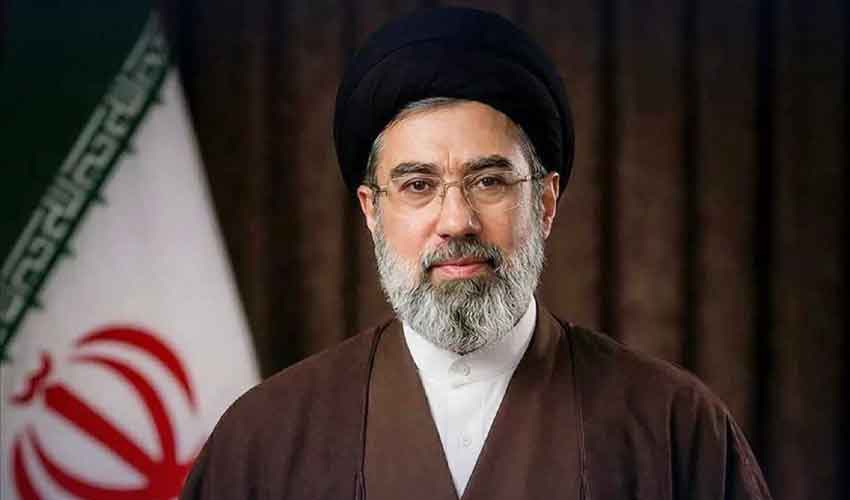
Iran’s Supreme Leader Ayatollah Ali Khamenei has quietly named three senior clerics as potential successors in case he is killed during the ongoing conflict with Israel, The New York Times reported, citing Iranian officials familiar with the regime’s emergency war plans.
This unprecedented step by the 86-year-old leader reflects the growing seriousness with which Iran views the current security threat. Khamenei, who holds the highest religious and political authority in the Islamic Republic, is said to be operating from an undisclosed underground bunker in Lavizan, northeast Tehran, as Israeli airstrikes continue targeting Iranian military and nuclear sites.
Secret succession planning
The identities of the three successor candidates have not been disclosed. However, officials told the NYT that Khamenei deliberately excluded his son, Mojtaba Khamenei — a prominent cleric with close ties to the Islamic Revolutionary Guard Corps (IRGC) — from the shortlist. Mojtaba had long been speculated as a potential successor.
In line with Iran’s constitution, the Assembly of Experts — a body of 88 senior Islamic jurists — is mandated to elect a new Supreme Leader in the event of Khamenei’s death or incapacitation. But amid the intensifying military conflict, the Supreme Leader has reportedly instructed the Assembly to convene immediately should such a scenario arise.
Also Read: Unity need of the hour to tackle Muslim world challenges: Dar
Political observers note that while the selection process is institutionally designed to ensure continuity and consensus, alternative models — such as a council of clerics temporarily sharing power — are also under consideration. This echoes deliberations that occurred after the death of revolutionary founder Ayatollah Ruhollah Khomeini in 1989.
Delegation of powers, wartime measures
According to Iran International, Khamenei has already delegated some of his powers to the Supreme Council of the Revolutionary Guards to ensure continuity of command in case he is killed or rendered unable to lead. This move gives the elite force greater autonomy in wartime decision-making.
The NYT report also notes that Khamenei is avoiding electronic communications to prevent detection and is relaying messages through a trusted aide. Despite his seclusion, he has issued occasional public statements threatening Israel and urging unity among the Iranian population.
The revelations come as tensions in the Middle East escalate dramatically. Israeli strikes have intensified following Iran’s continued support for proxy forces across the region. Tehran’s military infrastructure and nuclear facilities have been hit in multiple precision strikes, prompting fears of a full-scale regional war.


.jpg)