A New York-based designer has developed an innovative “climate-responsive” paint that changes colour with the seasons — a breakthrough that could help households reduce energy consumption and tackle the growing effects of climate change.
Joe Doucet, an inventor and designer, began experimenting with the idea after purchasing a home in Katonah, New York. Motivated by a desire to make the house environmentally friendly, Doucet considered how the exterior of a building could be used to mitigate changing weather conditions.
“Like many others, I knew that light colours reflect heat while dark ones absorb it. But I had never really thought deeply about the impact that choosing a particular colour could have on energy efficiency,” he said.
Katonah experiences both harsh winters and hot summers, raising a dilemma familiar to many residents in temperate climates. White exteriors can help keep homes cooler in the summer, while dark colours absorb heat, helping interiors stay warmer during the winter months.
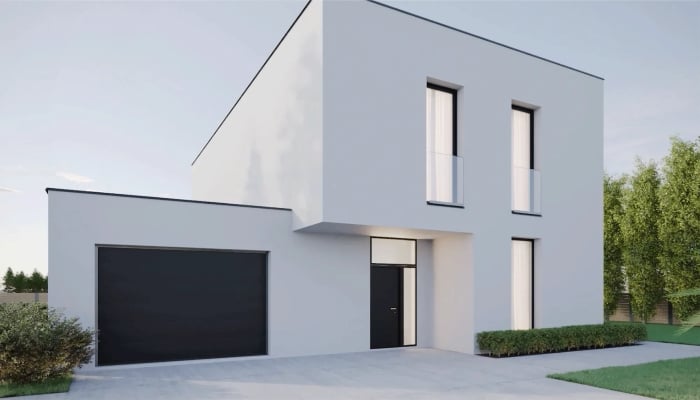
To explore the idea further, Doucet 3D-printed scale models of his house and painted them in different shades. After monitoring the internal temperatures for a full year, he observed that the black model retained heat better in the winter — maintaining an average temperature 13 degrees Celsius (around 7°F) warmer than the white model. Conversely, during the summer, the white model stayed about 11°C (12°F) cooler inside than its black counterpart.
“It became clear that the solution wasn’t choosing between black or white,” Doucet said. “The ideal outcome would be to have a house that could be black in the winter and white in the summer. But of course, repainting a house twice a year isn’t practical.”
This realization prompted him to develop a unique paint that could change colour based on the weather — much like a chameleon. The key lies in a technique known as thermochromic response, which employs liquid crystals that react to ambient temperatures.
At lower temperatures, the paint darkens, helping to retain warmth. When exposed to rising temperatures, it gradually lightens, reflecting sunlight and helping to cool the building. In simple terms, the paint absorbs ultraviolet light and begins to change its colour once a specific thermal threshold is reached.
Initial experiments with the thermochromic paint showed promise, but prolonged exposure to sunlight caused the paint’s performance to degrade. However, Doucet and his team continued refining the formulation and eventually overcame the issue, creating a version that remains stable under sustained sunlight.
Currently, the paint appears dark grey under normal conditions. As the temperature rises, it begins to shift to lighter shades, effectively reducing the need for artificial cooling methods like air conditioning.
Doucet has filed a patent application for the innovation and hopes it will be a game-changer in regions that experience a wide range of seasonal temperatures.
He admits that the technology may not be particularly beneficial for locations that experience consistently hot or cold climates. “It won’t help you if your environment is always hot or always cold — the real benefit lies in variable climates,” he said.
Still, he believes the paint could significantly reduce energy usage in homes located across North America, Europe, and parts of Asia, where seasonal variation is common and summer temperatures often exceed 10°C.
“This is not a futuristic gadget,” Doucet remarked. “It’s a practical response to the climate emergency we’re facing. If we can reduce the burden on our energy systems with smarter materials, it’s a step forward.”
As extreme heatwaves and cold snaps become more frequent around the world, scientists and designers alike are racing to find sustainable alternatives to traditional cooling and heating systems. For many households, especially in areas facing electricity shortages or where air conditioners are unaffordable, innovations like thermochromic paint could offer a promising solution.