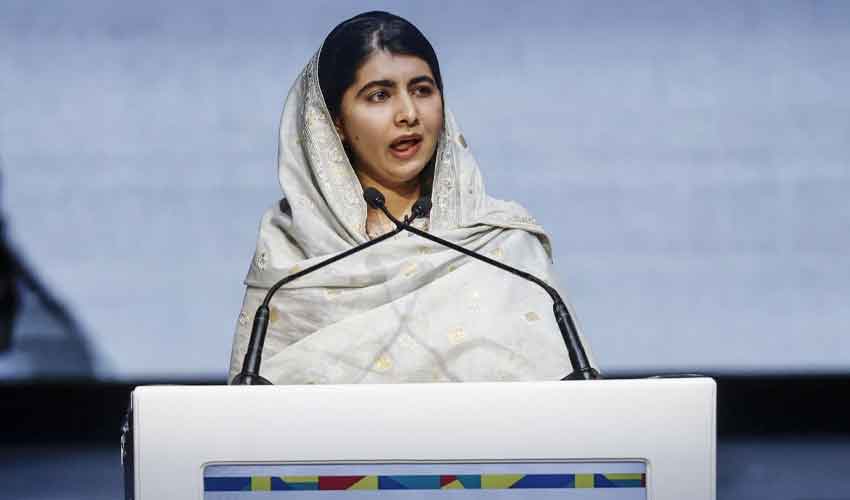
Nobel Peace Prize laureate Malala Yousafzai has called on South Africans and the international community to stand with Afghan women and girls as they face sweeping restrictions under Taliban rule.
Malala made the remarks during a visit to South Africa, where she joined commemorations marking the 70th anniversary of the historic Women’s March to the Union Buildings in Pretoria.
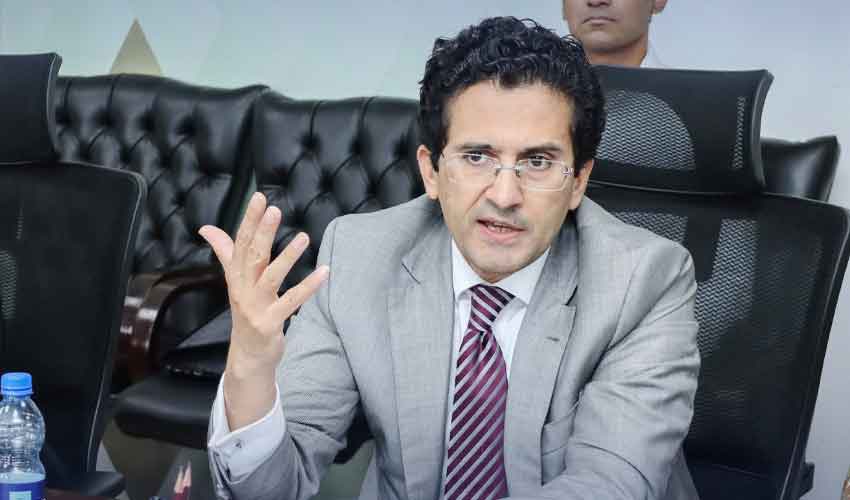
South Africa’s Director-General of International Relations and Cooperation Zane Dangor met Malala and a delegation of Afghan women leaders to discuss the situation of women and girls in Afghanistan.
According to the Department of International Relations and Cooperation (DIRCO), the meeting focused on what participants described as gender apartheid in Afghanistan and the restrictions imposed on women and girls under Taliban rule.
The discussions also explored ways the international community could provide stronger political support to Afghan women and girls seeking justice and accountability.
Afghan women seek inspiration from South Africa
Speaking at the Women’s Day event, Malala said Afghan women were looking to South Africans for solidarity and inspiration in their struggle against Taliban oppression.
Reflecting on the Taliban's policies since its return to power in August 2021, she said Afghan women were seeking support from a country with a history of confronting institutionalised discrimination and oppression.
“We have come to honour your heroes, to learn from your movement, and to ask for your solidarity in our own fight against oppression,” Malala said.
She said the Taliban had taken control of Afghanistan’s courts, police and public administration and used that power to abuse women and girls.
Malala highlights restrictions on Afghan women
Malala also pointed to the sharply different treatment of women in South Africa and Afghanistan.
Referring to South Africa’s efforts to address gender-based violence and femicide, she said Afghan women were facing an environment in which violence and discrimination against them had become increasingly entrenched.
The Taliban have barred women from universities and many jobs, while girls have been excluded from secondary education since the group returned to power in August 2021.
The restrictions have triggered widespread condemnation from the United Nations and governments around the world.
Ramaphosa praises Malala’s campaign
South African President Cyril Ramaphosa paid tribute to Malala during the main Women’s Day ceremony at the Union Buildings.
Addressing the Pakistani education activist, Ramaphosa praised her campaign for girls’ education and her advocacy for women’s rights globally.
“A cruel ideology tried to silence you, but you rose to become one of the most strident voices for the emancipation of women in our world today,” he told Malala.
Ramaphosa said the struggle for women’s equality crossed national, religious and cultural boundaries, using Malala’s presence to extend South Africa’s solidarity to Afghan women and girls excluded from education, employment and public life.
“No culture, religion, government or ideology can justify reducing women to lesser human beings,” he said, adding that “the freedom of women is indivisible.”
70 years since historic Women’s March
Malala was among the guests at the ceremony commemorating the 1956 Women’s March, when about 20,000 women marched to the Union Buildings to protest apartheid-era pass laws restricting the movement of Black South Africans.
The event formed part of South Africa’s broader Women’s Day commemorations, marking seven decades since the historic protest.
Malala also recalled visiting Constitution Hill, saying she was inspired by South Africa’s freedom activists and their struggle against oppression.
She said that experience encouraged her to continue advocating for Afghan women who have been denied higher education and professional opportunities.
South Africa's progress and remaining challenges
Ramaphosa also highlighted progress made by women in South Africa since the country’s transition to democracy.
He noted that women now hold some of the country’s most senior positions, including Chief Justice, Speaker of the National Assembly, Chairperson of the National Council of Provinces, Public Protector and Auditor-General.
More women than men are also enrolled at universities and colleges, he said.
However, Ramaphosa acknowledged that women remain under-represented in engineering, science, technology and artisanal trades, sectors expected to provide significant employment opportunities in the future.
He said the government was working to increase women’s participation in the economy through public procurement, improved access to finance and markets, and programmes designed to bring women-owned businesses into major industrial value chains.
Calls for stronger international action
The meeting between Malala, Afghan women leaders and South African officials comes as Afghan activists seek greater international pressure on the Taliban.
The South African government has increasingly raised the situation of Afghan women and girls in international discussions on human rights and gender equality.
The latest engagement is focused not only on highlighting restrictions but also on developing stronger mechanisms for political support, justice and accountability for policies that limit the rights and freedoms of Afghan women and girls.