Iran has said it has no reason to view the new Pakistan-Saudi Arabia-Türkiye defence agreement as a threat, while calling on regional countries to strengthen their security without relying on outside powers.
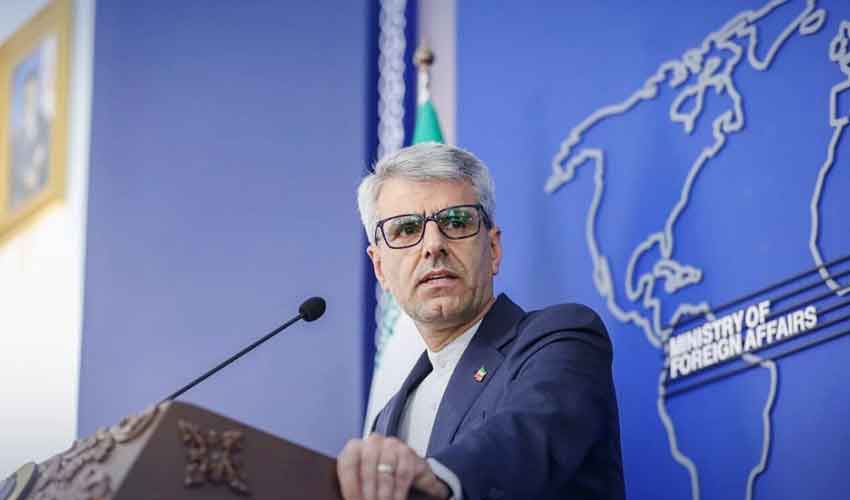
Iranian Foreign Ministry spokesperson Esmail Baghaei made the remarks on Monday during a news conference, where he also discussed the Strait of Hormuz, Iran-Oman talks, the US naval blockade and the absence of direct negotiations between Tehran and Washington.
Baghaei said the defence agreement between Pakistan, Saudi Arabia and Türkiye was not directed against Iran and that Tehran had no objection to the agreement.
He said Iran has historical relations with Pakistan, Türkiye and Saudi Arabia, adding that the pact reflects a broader shift in how countries in the region approach security.
According to Baghaei, regional states are increasingly relying on their own capabilities rather than outside powers to protect their security.
He said regional countries have understood that security cannot be bought with money and should instead be strengthened through regional cooperation without external interference.
Makkah agreement can reduce US influence
Baghaei described the Makkah agreement as a major development that could contribute to reducing American influence in the region.
He said any security plan based on the geopolitical and historical realities of the region, while being comprehensive and inclusive and correctly identifying what Iran considers the main threats, could help strengthen regional security.
Referring to Israel, Baghaei said such an approach could help prevent instability and what he described as abuses by the “Zionist enemy and its allies.”
He also warned that the Greater Israel plan, as described by Tehran, could pose a threat to many countries across the region.
Gulf states urged not to allow territory against Iran
Despite welcoming the Pakistan-Saudi Arabia-Türkiye defence agreement, Baghaei urged Gulf countries not to allow their territory to be used for actions against Iran.
He said the regional security arrangements should remain focused on strengthening the security of countries in the region rather than facilitating external military operations against them.
Iran, Oman agree on Strait of Hormuz roadmap
Baghaei also provided an update on Iran's discussions with Oman regarding the Strait of Hormuz, saying the two countries have agreed on a roadmap for the waterway. He said negotiations are progressing positively, although Tehran and Muscat are still discussing some technical issues.
According to Baghaei, the talks are aimed at determining the shipping route through the Strait of Hormuz. He added that the issue of removing mines from the waterway is being discussed between Iran and Oman.
Baghaei said the southern part of the Strait is currently unsafe and described the situation as a violation of the memorandum of understanding.
Strait can reopen without third-party intervention
The Iranian spokesperson said the Strait of Hormuz could be opened if no third party intervenes in the process.
He stressed that the waterway would not be safe while the US naval blockade continues, describing the blockade as a continuation of what Iran considers the war against the country.
Baghaei said the US blockade is tantamount to a war against Iran.
He also clarified that Iran has no intention of imposing fees on ships passing through the Strait of Hormuz.
No direct US-Iran talks underway
Baghaei said there are currently no direct negotiations between Iran and the United States. However, he confirmed that messages are being exchanged between Tehran and Washington through mediators.
He said there can be no talks with the US until the relevant agreement is violated, reiterating Tehran's position on the conditions surrounding any future negotiations.
Baghaei reiterated that countries in the region should strengthen their security through regional cooperation and without external interference.
He said Iran maintains historical ties with Pakistan, Türkiye and Saudi Arabia and therefore does not view their new defence agreement as inherently hostile.
The comments come as Tehran continues discussions with Oman over the Strait of Hormuz while tensions with the United States remain high.
Tribute to slain journalists
During the news conference, Baghaei also paid tribute to journalists who were killed in Lebanon and Palestine. He expressed condolences and recognition for the journalists who lost their lives while reporting from conflict zones.
The Iranian Foreign Ministry spokesperson's remarks reflected Tehran's broader position that regional countries should take greater responsibility for their own security while resisting what it sees as excessive external influence.