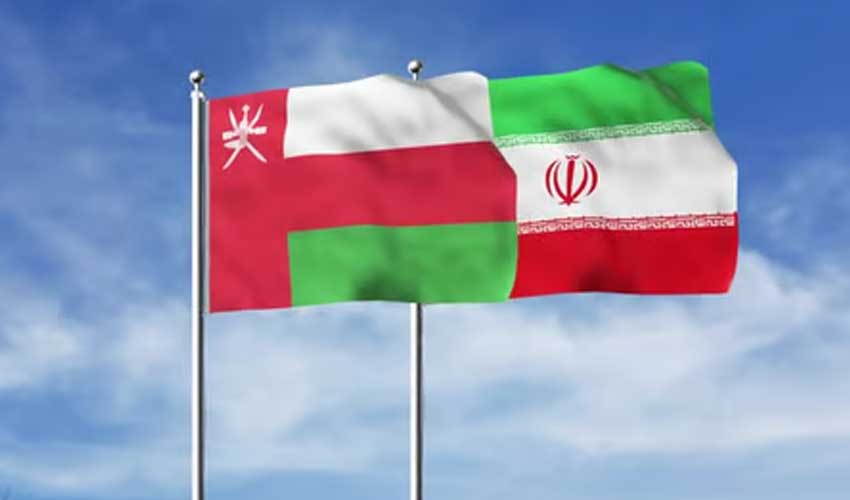
Iran and Oman are close to reaching an agreement on a temporary shipping corridor through the Strait of Hormuz, but Tehran has made clear that the deal alone will not reopen the strategically vital waterway.
Iranian Foreign Minister Abbas Araghchi said on Saturday that negotiations with Oman were “very close” to an agreement, while Iranian security officials insisted that reopening the strait depends on separate conditions that must be accepted by the United States.
The proposed agreement between Iran and Oman concerns a new route through the narrow waterway separating the two countries. The arrangement is intended to serve as a temporary corridor while technical and legal issues surrounding a permanent Traffic Separation Scheme (TSS) are resolved.
Araghchi said Iran no longer accepts the previous shipping traffic separation system and is discussing an interim route with Oman. The permanent arrangement would require further work on technical, legal, security and sovereignty issues.
Iranian Foreign Ministry spokesperson Esmaeil Baghaei said earlier that Tehran and Muscat had reached a mutual understanding on the geographical parameters of the proposed route. He said a joint statement outlining the main points of understanding was in the final stages of review and drafting, provided that “certain third parties” did not interfere.
The discussions have included the possibility of an intermediate or single two-way corridor, replacing or modifying the previous northern Iranian-controlled and southern Omani routes. Technical arrangements, maritime security, sovereignty concerns and the possibility of establishing a joint coordination centre have also been discussed.
Also Read: US working on safe passage through Strait of Hormuz, says JD Vance
Earlier phases of the negotiations involved joint working groups examining future navigation management, maritime services and associated costs under international standards. Both countries have maintained that their sovereignty over their respective territorial waters must be respected and that shipping should be allowed to pass safely.
Temporary northern and southern corridors have also been considered or implemented at different stages because of security concerns and reports involving mines. Iran has rejected some proposals for an equal division of shipping lanes and has pushed for significant control, including one full lane and part of another.
According to sources cited in the report, a possible agreement could give Tehran greater influence over ships entering the Gulf through the Strait of Hormuz.
Oman agreement won't automatically reopen strait
Despite the progress with Oman, Tehran has repeatedly stressed that an agreement on the shipping route should not be confused with a decision to fully reopen the Strait of Hormuz.
Araghchi said the Iran-Oman agreement “does not necessarily mean the reopening of the Strait of Hormuz”. He linked the reopening to other conditions, including compensation from the United States over what Tehran considers violations of the Islamabad memorandum of understanding.
The Islamic Revolutionary Guard Corps (IRGC) also reinforced the distinction on Saturday, saying the Oman negotiations and the reopening of the waterway were separate matters.
Also Read: Iran won't accept pressure to surrender or submit, says Pezeshkian
IRGC spokesperson Hossein Mohebbi, according to Iran’s Tasnim news agency, said the strait would reopen when the United States accepted Iran’s conditions.
“Whenever the United States accepts Iran’s conditions, the Strait of Hormuz will certainly be reopened,” Mohebbi said.
Iran lists conditions for reopening Hormuz
Mohammad-Bagher Zolghadr, secretary of Iran’s Supreme National Security Council, outlined Tehran’s demands in a written message on Saturday.
He said Iran would not fully reopen the waterway until Washington “corrects its behavior”. His demands included an end to threats against Iran, a permanent halt to aggression against Iran and its regional allies, and the lifting of the naval blockade.
Zolghadr also demanded the withdrawal of US naval and air forces from around Iran, compensation for war-related damages, the lifting of sanctions and the release of frozen Iranian assets.
He said the aggression against Iran’s allies in Lebanon, Palestine, Yemen and Iraq must also end permanently.
“The Supreme National Security Council will never back down, whether in war or in negotiations,” Zolghadr said.
Araghchi separately said Tehran was seeking US compensation for alleged violations of the earlier Islamabad memorandum of understanding.
Oman calls negotiations positive, constructive
Oman, which has been working with Tehran on the shipping arrangements, described the negotiations as “positive and constructive”.
The Omani Foreign Ministry also condemned repeated attacks on vessels travelling through the Strait of Hormuz, although it did not assign responsibility for the incidents.
Also Read: Iran, Oman finalise framework for Strait of Hormuz deal
“Oman stresses the importance of avoiding any actions that could affect these negotiations and the progress achieved in a manner that takes into account the interests of all parties,” the ministry said.
Oman’s position reflects the sensitivity surrounding the talks, as any new shipping arrangement must balance maritime safety, the sovereignty claims of both countries and the wider security situation in the region.
Iran says now's the best time for agreement
Iranian President Masoud Pezeshkian, who is regarded as a relative moderate, said he believed the current circumstances provided a good opportunity to reach an agreement.
“There is cohesion, strength, and unity in the country,” Iranian news agencies quoted Pezeshkian as saying. He added that Iran was considered victorious and powerful in the war.
The conflict began with US and Israeli attacks on Iran on February 28 and has since created severe disruption across the region.
Iran responded by targeting US bases in Gulf states and Jordan while also restricting and attacking shipping in the Strait of Hormuz.
The diplomatic developments came as maritime tensions continued.
The United Arab Emirates said Saturday that Iran had attacked a carrier affiliated with the UAE’s state oil company with a missile while it was transiting the Strait of Hormuz. No injuries were reported in the latest attacks on shipping.
Also Read: US expects deal soon on Strait of Hormuz
The UK Maritime Trade Operations (UKMTO) also said a vessel caught fire after being struck by an unknown projectile. The fire was later extinguished, and there was no reported environmental impact.
Iranian authorities had not immediately commented on the latest vessel incident.
Oman has condemned the repeated attacks on ships moving through the strait, adding further urgency to efforts to establish a workable and secure shipping arrangement.
Strait of Hormuz disruption threatens global energy supplies
Before the war, the Strait of Hormuz carried around one-fifth of the world's oil and gas shipments, making the waterway one of the most important energy routes on the planet.
Iran’s restrictions on shipping have severely disrupted global trade. Tehran has also used the conflict to justify charging tolls on oil tankers, while ships attempting to cross the strait without Iranian permission have faced attacks or other forms of interference.
The disruption has pushed energy prices higher and contributed to broader inflationary pressures.
The crisis has also affected ordinary Iranians. Food and other essential goods have become significantly more expensive since the conflict began.
At a news conference on Saturday, Pezeshkian blamed the United States for creating difficulties in importing basic goods. He did not refer to any exceptions allowing humanitarian shipments through the blockade.
Washington signals possible deal but remains cautious
The United States has repeatedly indicated that an agreement to reopen the Strait of Hormuz could be close.
A US official, speaking anonymously on Friday, said Washington anticipated an agreement between Iran and Oman soon that could allow normal oil traffic to resume.
The official said that once a deal was announced to restore commercial shipping without impediments, the United States would lift its blockade of Iranian ports. US measures, the official added, would depend on Iran implementing its commitments.
However, Washington has previously rejected the idea of allowing Iran to control access to the Gulf through the Strait of Hormuz.
US officials have repeatedly said they would not agree to Tehran controlling the world's most important energy trade route.
In recent weeks, the Trump administration has repeatedly signalled that a deal could be imminent, only for Iranian officials to deny that negotiations were taking place. It remains unclear whether the latest diplomatic activity will produce a lasting arrangement.
US says more than 30 ships allowed through
US Central Command said Saturday that more than 30 ships had been allowed to pass through the area for humanitarian aid since the current blockade began.
CENTCOM said US forces had turned away 53 ships, disabled two vessels and boarded two others.
The figures highlight the continuing confrontation over maritime traffic even as diplomatic efforts seek to establish a new framework for shipping through Hormuz.
Proposed deal could give Tehran greater control
Earlier this week, a senior Iranian source and two regional officials told Reuters that a proposed Iran-Oman arrangement could give Tehran control over ships entering the Gulf through the Strait of Hormuz.
Such an arrangement would represent one of the biggest concessions to Iran under discussion.
The proposal comes despite repeated US statements that Washington would not accept Iranian control over access to the strategic waterway.
Iranian officials have nevertheless described the talks with Oman as professional and progressing, while stressing that important details still need to be settled.
Baghaei said the two sides had reached a mutual understanding on the geographical parameters of the route and were preparing a joint statement, provided outside parties did not disrupt the process.
The immediate focus is on whether Iran and Oman can finalise the temporary shipping corridor and announce an agreement.
A permanent replacement for the previous Traffic Separation Scheme remains under discussion, meaning the initial arrangement may only provide an interim solution.
More importantly, Tehran insists that even a successful agreement with Oman will not by itself restore unrestricted commercial shipping. Iran has tied the full reopening of the Strait of Hormuz to US concessions, including an end to threats and military pressure, the lifting of sanctions and the naval blockade, compensation for war damages, the withdrawal of US forces around Iran and the release of frozen Iranian assets.
The coming days will therefore determine whether the Iran-Oman route agreement becomes the first step toward reopening one of the world's most critical energy corridors -- or remains only a limited maritime arrangement amid a wider US-Iran confrontation.