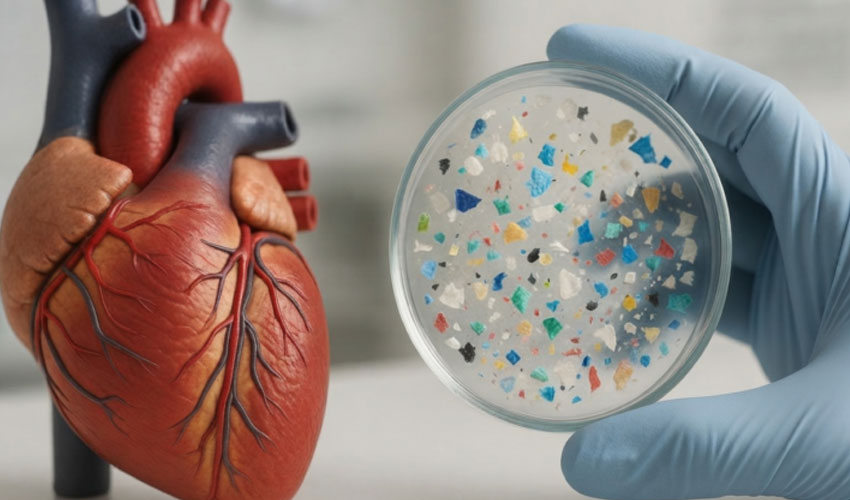
A new medical study has suggested that the presence of microplastics in the bloodstream may be associated with an increased risk of severe heart attacks, raising fresh concerns about the health effects of widespread plastic pollution.
Commenting on the research, conducted in Italy, Dr Craig Basman, an interventional cardiologist at Hackensack University Medical Center in the United States, said microplastic particles were detected in the blood of patients who had suffered heart attacks.
He said the findings point to a possible link between microplastics and cardiovascular disease, although the study does not establish a direct cause-and-effect relationship.
Microplastics are widespread
Dr Basman noted that microplastics are now found in nearly every part of the environment, making it difficult for people to avoid exposure entirely.
However, he recommended reducing the use of plastics wherever possible, particularly for storing or consuming food and beverages. He also advised limiting exposure to environmental pollution to help reduce contact with microplastic particles.
More evidence needed
Researchers and health experts stressed that while the study found an association between microplastics in the blood and severe heart attacks, it does not prove that microplastics directly cause cardiovascular events.
They said additional large-scale studies are needed to better understand how microplastics may affect the heart and whether they play a direct role in increasing the risk of heart disease.
The findings add to a growing body of research examining the potential health impacts of microplastics, which have previously been detected in human blood, lungs, brain tissue and other organs.