China’s top diplomat urged the United States on Sunday to work through its disputes with Beijing as the two largest economies continue to clash over tariffs and geopolitical issues.
Relations between the two countries have remained tense since U.S. President Donald Trump returned to the White House last year. His administration imposed new tariffs on Chinese goods, triggering a renewed trade conflict in which both sides placed duties on each other’s products.
The trade tensions have disrupted global markets, while China has attempted to present itself as a stable and reliable partner amid what it describes as unpredictable U.S. policies.
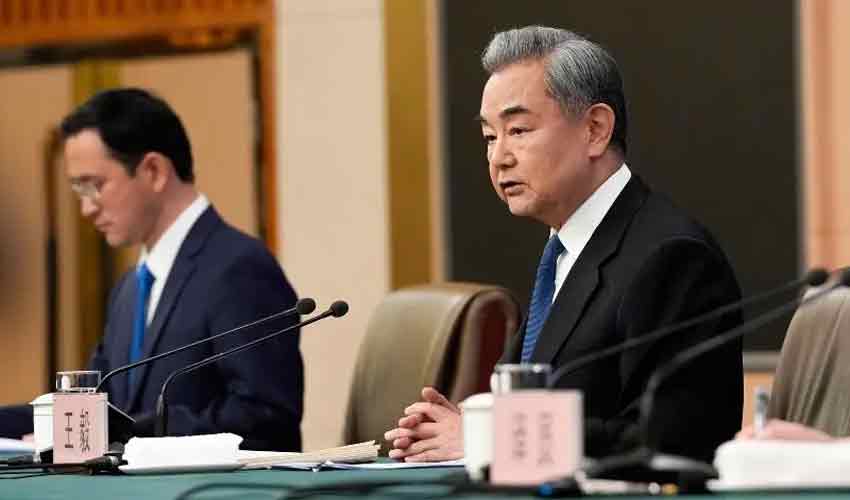
Speaking at a press conference during China’s annual political meetings, Foreign Minister Wang Yi criticized countries that impose tariffs and push for supply chain decoupling.
“We see a certain country putting up tariff barriers and disrupting supply chains,” Wang said. “Such actions are like trying to put out a fire by adding fuel—they will ultimately backfire.”
Wang’s remarks came during China’s annual political gathering known as the Two Sessions, which brings together the country’s parliament and political advisory body. The meetings are closely watched for signals about China’s domestic and foreign policy priorities.
During the briefing, Wang discussed a range of global issues including relations with the United States, tensions in the South China Sea, and conflicts in the Middle East and Ukraine.
“This year is indeed an important one for China-U.S. relations,” he said. While the two countries “cannot change each other,” Wang added that they could change how they interact by managing disagreements and reducing unnecessary interference.
Middle East Conflict
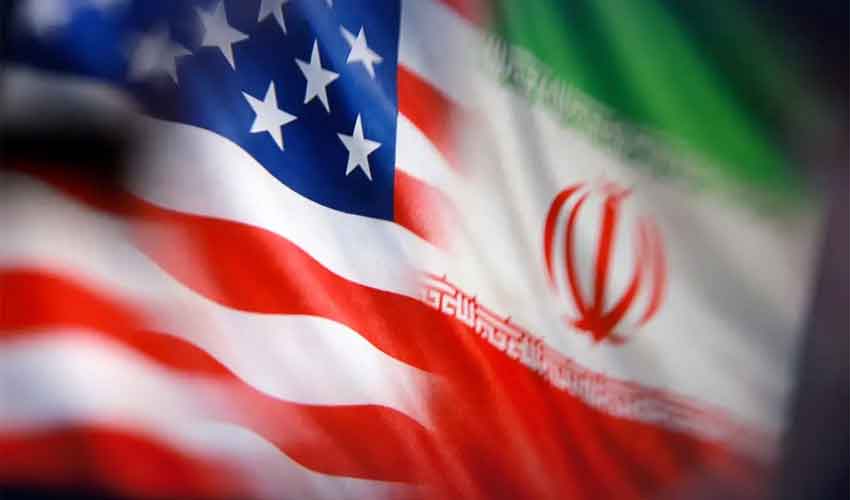
Despite the call for cooperation, major differences remain. China has strongly criticized U.S. and Israeli military strikes on Iran that ignited the latest conflict in the Middle East.
Beijing maintains diplomatic and economic ties with Tehran and has condemned the killing of Iran’s Supreme Leader, Ali Khamenei.
“The war should never have happened,” Wang said, adding that the use of force does not justify itself. “The world must not return to the law of the jungle.”
China–Russia Relations
Wang also emphasized that China’s relationship with Vladimir Putin’s Russia remains “steadfast and unshakeable.” Western governments have criticized Beijing for maintaining strong trade ties with Moscow during the war in Ukraine, arguing that China’s support helps Russia withstand international sanctions.
China, however, insists it remains neutral in the conflict.
Improving EU Relations
At the same time, China’s ties with Europe appear to be improving. Officials from countries including France, Canada, Finland, and the United Kingdom have recently visited Beijing.
According to Wang, more European leaders are beginning to see China as a global partner rather than a rival. He added that relations between China and the European Union have steadily improved over the past year.
To strengthen international ties, Beijing has expanded visa-free travel agreements to about 50 countries and reduced tariffs on some exports from nations including Canada and the United Kingdom.
Taiwan Remains a ‘Red Line’
However, the issue of Taiwan continues to be a major source of friction between Beijing and Washington. China considers the self-governed island part of its territory and has not ruled out using force to bring it under its control.
President Trump has suggested increasing U.S. weapons sales to Taiwan despite warnings from Chinese leader Xi Jinping. The two leaders are expected to meet in Beijing in April.
Wang reaffirmed China’s position, stating that Beijing “will never allow anyone or any force to separate Taiwan from China again.”
Tensions over the island have also strained China’s relationship with Japan after Japanese Prime Minister Sanae Takaichi indicated that Tokyo could consider military involvement if Taiwan were attacked.



.gif)
.jpg)