Ousted Venezuelan President Nicolás Maduro and his wife pleaded not guilty on Monday to multiple charges including narco-terrorism, appearing in a Manhattan federal court days after his dramatic capture by US forces sparked global alarm.
Nicolás Maduro, 63, appeared before US District Judge Alvin K. Hellerstein in New York federal court, where prosecutors outlined four criminal charges against him.
The charges include narco-terrorism, conspiracy to import cocaine into the United States, and possession of machine guns and destructive devices.
“I am innocent. I am not guilty. I am a decent man. I am still president of my country,” Maduro said through an interpreter before being interrupted by the judge.
Maduro’s wife, Cilia Flores, appeared alongside him and also entered a not-guilty plea to the charges.
The judge scheduled the next court hearing for March 17 and informed the couple of their right to notify the Venezuelan consulate of their arrests.
Both were escorted to court from a Brooklyn detention facility under heavy security and appeared in orange and beige prison uniforms.
Longstanding drug trafficking allegations
US prosecutors allege that Maduro oversaw a cocaine trafficking network that collaborated with criminal groups including Mexico’s Sinaloa and Zetas cartels, Colombia’s FARC rebels, and Venezuela’s Tren de Aragua gang.
Federal prosecutors first indicted Maduro in 2020, accusing him of involvement in drug trafficking dating back to his time in Venezuela’s National Assembly in 2000.
An updated indictment released on Saturday added further details and listed Cilia Flores as a co-defendant.
UN raises legal concerns
As Maduro appeared in court, the UN Security Council debated the implications of the US operation that led to his capture.
UN Secretary-General António Guterres voiced concerns over the legality of the raid and warned of potential instability in Venezuela, describing the action as the most dramatic US intervention in Latin America since the 1989 invasion of Panama.
Russia, China, and several left-leaning governments condemned the raid, while international legal experts questioned whether it violated international law.
In Caracas, senior officials from Maduro’s government remain in control, issuing an emergency order directing police to arrest anyone found supporting the US operation.
Despite political uncertainty, reports indicate that a semblance of normal life has begun to return in parts of the country.
Maduro opponents have largely refrained from celebrations as the military has shown no visible signs of breaking ranks with the ruling establishment.
Trump signals oil ambitions
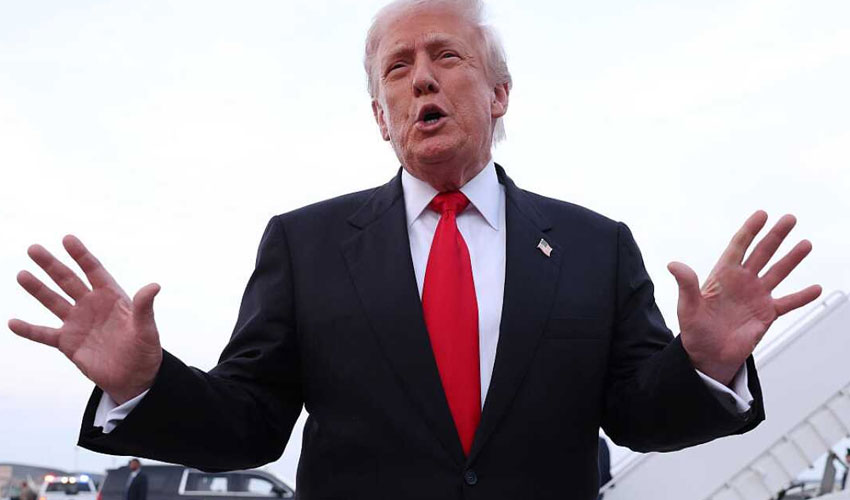
US President Donald Trump has openly linked the operation to Venezuela’s oil resources, stating that American companies would return to rebuild the sector.
“We’re taking back what they stole. We’re in charge,” Trump said on Sunday.
Following the remarks, shares of US oil companies surged amid expectations of renewed access to Venezuela’s vast reserves, estimated at 303 billion barrels.
Venezuela’s acting president, Delcy Rodríguez, initially condemned Maduro’s capture as a “kidnapping” but later called for respectful relations with Washington.
“We invite the US government to work together on an agenda of cooperation,” Rodríguez said, stressing the need for peace and dialogue rather than conflict.
Trump has warned of further military action if Venezuela fails to cooperate on opening its oil industry and combating drug trafficking.
Washington’s allies have responded cautiously, urging dialogue and adherence to international law, while the US operation has triggered political debate at home.
Opposition Democrats claim they were misled about the raid, and Secretary of State Marco Rubio is expected to brief lawmakers.
As legal proceedings move forward, the future of Venezuela — and US involvement — remains uncertain.
.jpg)