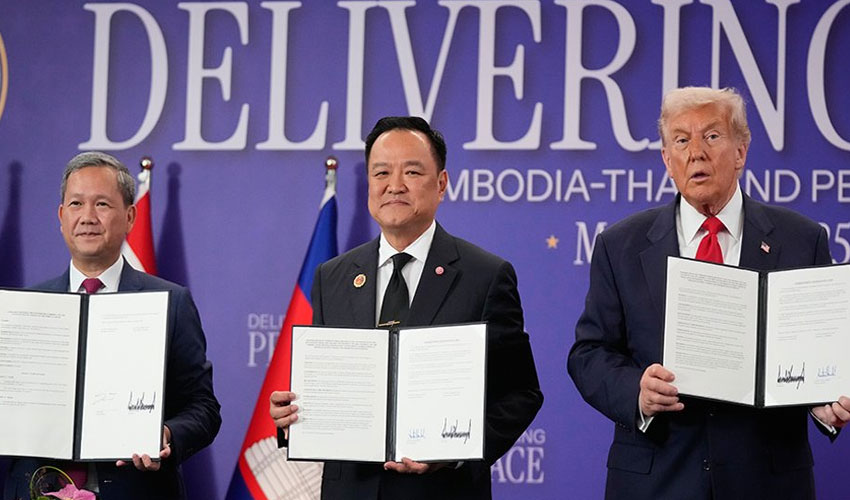
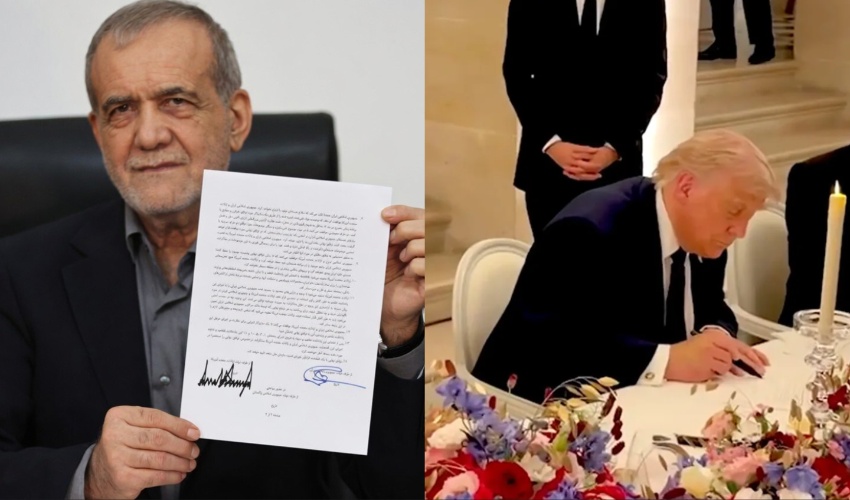
The leaders of Thailand and Cambodia signed an expanded ceasefire agreement on Sunday in the presence of U.S. President Donald Trump, marking a renewed effort to end months of deadly border clashes and restore stability in the region.
The signing ceremony took place shortly after Trump’s arrival in Malaysia for the ASEAN Summit, where he was scheduled to attend key trade and diplomatic meetings. The agreement builds upon a truce reached three months earlier, which was also facilitated by Trump’s direct intervention.
In his remarks, Cambodian Prime Minister Hun Manet said the expanded declaration would “provide the building blocks for a lasting peace” and help mend ties between the two neighboring nations.
“Our border communities have been divided by conflict, and innocent civilians have suffered immense losses,” Hun Manet said during the signing ceremony, held under the banner “Delivering Peace.”
Trump’s role in mediating conflict
U.S. President Donald Trump reportedly played a pivotal role in ending the five-day border conflict in July, when he called both nations’ leaders to urge an immediate ceasefire. According to officials, Trump warned that continued hostilities could jeopardize each country’s trade negotiations with Washington.
“The United States will have a robust commerce and cooperation, transactions, lots of them, with both nations, as long as they live in peace,” Trump said in Kuala Lumpur.
His mediation efforts helped pave the way for the current expanded agreement, which aims to formalize border security measures and promote economic cooperation between Bangkok and Phnom Penh.
ASEAN summit highlights broader cooperation
The ASEAN Summit in Kuala Lumpur has become a focal point for diplomatic progress across Southeast Asia, with Trump’s visit underscoring Washington’s renewed engagement in the region.
Beyond the ceasefire signing, the U.S. delegation is expected to hold side meetings on trade, security, and technology partnerships with several regional leaders. Analysts say the Thailand-Cambodia peace deal could set a positive precedent for conflict resolution through diplomatic engagement.
The newly signed accord is expected to include monitoring mechanisms and joint border committees to ensure compliance and prevent future skirmishes. Both governments have pledged to prioritize civilian safety and promote cross-border trade once the ceasefire stabilizes.
However, experts warn that sustained peace will depend on both sides’ political will and adherence to the agreement. Implementation challenges, including demilitarization and local reconciliation, remain key hurdles.a


.jpg)