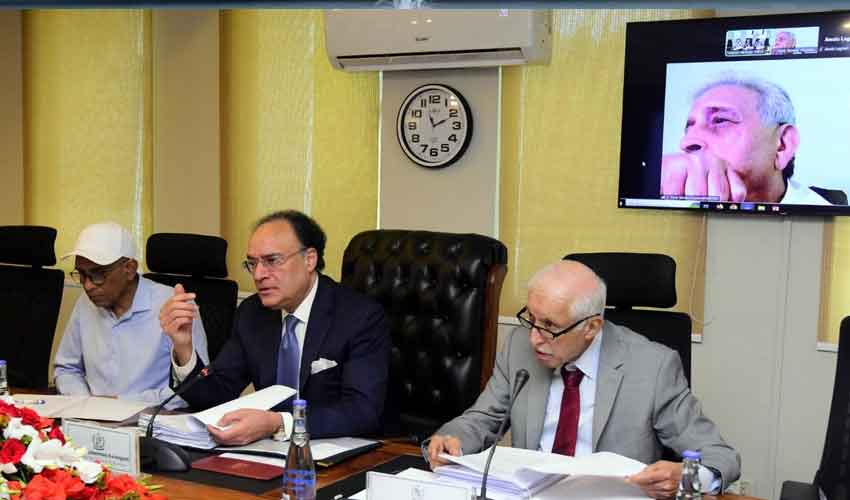
The National Assembly Standing Committee on Finance, chaired by MNA Naveed Qamar, has rejected the Federal Board of Revenue (FBR)’s proposal to impose a 4% rental tax on commercial properties, while approving key tax reforms targeting luxury clubs, e-commerce businesses, and digital marketers in the Budget 2025–26.
FBR withdraws controversial rental tax proposal
During the meeting, FBR Chairman Rashid Mahmood Langrial said that the proposal aimed to streamline the assessment of rental income from commercial properties, especially in urban areas where rents are significantly higher than in rural regions.
“Earlier, tax officers had the authority to set the rental rate. If the committee doesn’t want to delegate that authority, we’re withdrawing the proposal,” Langrial stated. "FBR property rates are much better than DC rates."
Committee member Mirza Ikhtiar Baig supported reducing rental tax rates in rural areas, while Osama Mela pointed out that applying a uniform 4% rental tax could be problematic in villages. Langrial suggested a flexible approach: “Let it be implemented. If it proves too high in any area, it can be revised next year.”
Qamar suggested some scope for revision in the law. Despite arguments, the committee formally rejected the 4% rental tax proposal, calling for revisions in future budget cycles.
Luxury clubs enter tax net
The committee also approved the inclusion of elite clubs into the income tax net, especially those charging Rs1 million or more for membership.
“These clubs are meant for the luxuries of the rich. Their income should be taxed,” said the minister of state for finance.
FBR Chairman Langrial confirmed that institutions like Islamabad Club will now be required to submit complete income and expenditure statements. "They will be taxed, but at a fair rate," he added.
E-commerce and digital marketers face new tax rules
In an effort to formalize the growing online economy, FBR has introduced new tax regulations for e-commerce businesses and digital marketers:
-
1% tax on online sales, and
-
5% tax on physical retail shops, according to FBR official Mubeen Arif, adding, "Tax for e-commerce is low; it will be misused."
Langrial admitted there was some ambiguity in the enforcement process. “Our technical team is working to resolve the loopholes,” he said. Additionally, digital marketers will now be taxed on their total turnover.
Major tax adjustments in Budget 2025–26
Other key reforms approved or introduced by the finance committee include:
-
Income from property will now be treated separately and cannot be adjusted against losses from other businesses.
-
Tax credit incentives will be given for mortgage financing or building a house/flat up to 2,500 sq ft, including:
-
30% tax credit on interest paid under the mortgage financing scheme.
-
-
Bank profits will be taxed at 52% in the next financial year, slightly reduced from the current 53%.
-
The loss adjustment period for registered businesses has been reduced from three years to two.
-
“E-commerce” and “e-business” have officially been included in the definition of taxable income in the new Finance Bill.
-
Tax disputes under Rs2 million will not be referred to the Alternative Dispute Resolution (ADR) mechanism.
-
Rules for cash-to-cash transactions have been tightened, with only businesses making cash payments up to Rs200,000 allowed to adjust 50% input tax.


.jpg)