The Senate Standing Committee on Finance has approved several key amendments in the Finance Bill 2025, signaling major policy shifts aimed at expanding the tax net and modernizing the classification of taxpayers.
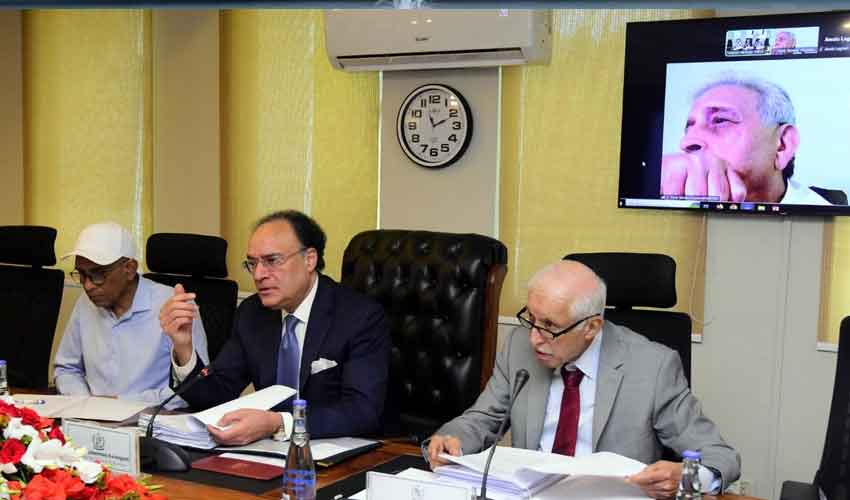
Chaired by Senator Saleem Mandviwala, the committee's meeting reviewed the bill clause-by-clause and approved significant proposals, including a substantial increase in the property purchase limit for non-filers and taxation on income from digital services.
Property purchase limit for non-filers increased to 500%
One of the most notable decisions was the approval of a proposal to raise the property purchase limit for non-filers from 130% to 500% of their declared assets. Senator Mohsin Aziz tabled the recommendation, arguing that non-filers should be allowed more flexibility in asset acquisition — a move that was supported and adopted by the committee.
Under the revised framework, a non-filer with declared wealth of Rs10 million can now purchase property worth up to Rs50 million, a fivefold increase over the current limit.
New classification system: Filers vs ineligible persons
The Finance Bill 2025 abolishes the traditional "filer" and "non-filer" categories, replacing them with "eligible" and "ineligible" persons. According to Federal Board of Revenue (FBR) officials, ineligible individuals — those who fail to submit tax returns — will face strict limitations on financial and asset-related transactions.
Under the new rules, ineligible persons will be barred from:
-
Purchasing, booking, or registering high-value vehicles
-
Buying or transferring property above a certain threshold
-
Investing in securities
-
Opening or maintaining bank accounts beyond basic or pension accounts
However, transactions involving rickshaws, motorcycles, or tractors will be exempt from these restrictions.
Taxation of digital services approved
The committee also approved a clause to impose tax on income generated through online platforms and digital services. This includes:
-
Online academies and digital tutoring
-
Music, audio, and video streaming platforms
-
Cloud services and software application providers
-
Telemedicine and e-learning platforms
-
Online banking, consultancy, and research services
According to the FBR chairman, many online academies are earning between Rs20 to Rs30 million annually but remain outside the tax net. The new clause — 17C — aims to bring such entities into the fold.
Despite this, the committee rejected a separate proposal to tax small-scale individuals engaged in online businesses, offering some relief to entrepreneurs and freelancers with limited operations.
Islamabad Club loses non-profit status
The FBR also announced the removal of Islamabad Club and other elite clubs from the list of non-profit institutions, citing luxury services limited to a small group of affluent members. The FBR chairman said the clubs serve only about 600 members, with membership fees exceeding Rs1 million.
Despite opposition from committee chairman Saleem Mandviwala, who argued that Islamabad Club should retain its tax-exempt status, the committee upheld the FBR’s recommendation. “Sir, let the rich pay some tax,” the FBR chairman remarked during the debate.
Changes in withholding tax
-
The withholding tax on cash withdrawals by non-filers has been increased from 0.6% to 1%, with the committee approving the FBR chairman’s recommendation to raise the rate.
-
The surcharge on income above Rs10 million has been slightly reduced from 10% to 9%.
-
A tax exemption on annual income up to Rs1.2 million was proposed, with the FBR chairman clarifying that individuals earning this amount will pay only Rs12,500 annually in taxes.
Push to expand tax base
Finance Minister Muhammad Aurangzeb reiterated the government’s commitment to increasing documentation and bringing more people into the formal tax net. “Pakistan is the only country in the world where we have a concept of ‘non-filer’. We must restore the credibility of our tax system,” he told the committee.
Aurangzeb also highlighted that penalties on non-filers were increased last year, and that the government aims to tighten compliance without discouraging business activity.


.jpg)