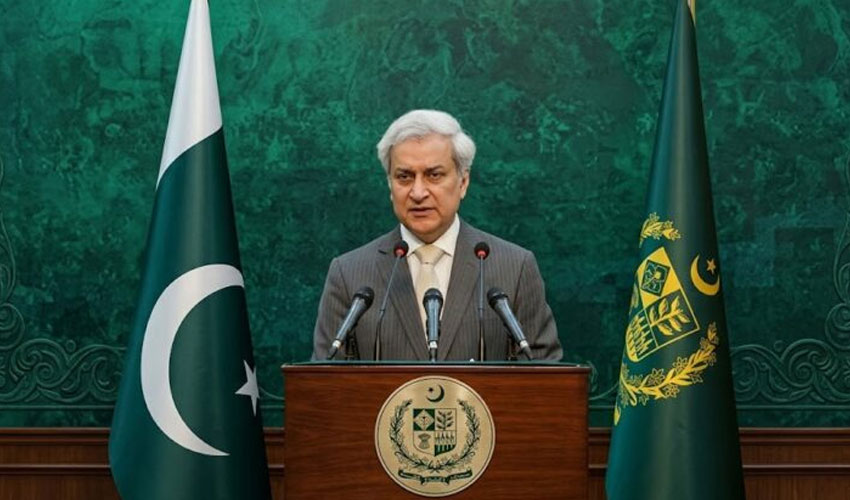
Pakistan expects direct talks between the United States and Iran to resume soon despite ongoing difficulties, Foreign Office spokesperson Tahir Hussain Andrabi said on Wednesday.
Speaking at his weekly press briefing, Andrabi said Islamabad was using both direct and indirect channels to facilitate the return of the two sides to the negotiating table.
“Despite the difficulties, it is expected that direct talks will begin soon,” the spokesperson said.
He said the Islamabad Memorandum of Understanding (MoU) and the Pak-Qatar Declaration provided a framework for efforts aimed at achieving peace.
According to Andrabi, negotiations could resume at any time if both sides agreed, while a ceasefire could also be extended to create space for diplomatic engagement.
Pakistan, he said, remained optimistic about a peaceful resolution and continued to support diplomatic efforts by Oman and Iran.
Pakistan welcomes Makkah Agreement
The Foreign Office spokesperson also welcomed the Makkah agreement signed by Pakistan, Saudi Arabia and Türkiye on August 7, describing it as an important development in relations between the three countries.
Andrabi said the agreement was “purely defensive” and aimed at strengthening regional peace and security.
“The Makkah Agreement is very clear that an attack on one is an attack on all,” he said.
He rejected reports of disagreements among Pakistan's political leadership or state institutions over the agreement, saying all legal and constitutional requirements had been fulfilled before Prime Minister Shehbaz Sharif signed it.
Andrabi said the agreement was open in nature, although no decision had been taken on adding other countries.
Pakistan condemns Houthi attack
The Foreign Office also condemned a recent Houthi attack on a commercial vessel in the Bab al-Mandab Strait, saying the incident had increased risks for international shipping in the Red Sea.
Andrabi said three Pakistani nationals were killed in the attack and their bodies were being repatriated to Pakistan.
Pakistan supports freedom of navigation in international waters, he said, adding that Islamabad was in contact with Saudi authorities and Yemen's internationally recognised government to obtain further information.
He said Pakistan was part of the Saudi-led maritime security coalition and was prepared to fulfil its responsibilities to ensure safe navigation.
Islamabad steps up regional diplomacy
The spokesperson said Interior Minister Mohsin Naqvi was visiting Iran, where discussions focused on peace and bilateral relations.
Pakistan has also invited Iran's parliamentary speaker and foreign minister to visit Islamabad, Andrabi said.
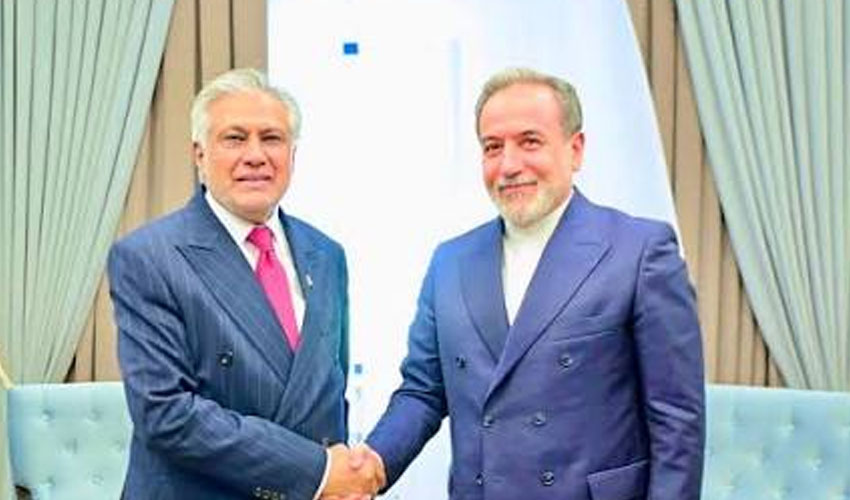
Meanwhile, Deputy Prime Minister and Foreign Minister Ishaq Dar has held discussions with the foreign ministers of Saudi Arabia, Iran and Kuwait.
Bahrain's foreign minister also congratulated Dar on the Makkah Agreement and expressed an intention to visit Pakistan, according to the spokesperson.
Pakistan backs Hormuz diplomacy
On the Strait of Hormuz, Andrabi said Pakistan and other friendly countries were supporting talks between Oman and Iran.
He described any agreement concerning the strategic waterway as highly important because of its significance for global energy supplies and commercial shipping.
Pakistan, he said, supported freedom of navigation and remained committed to maritime security.
Pakistan reiterates support for Gaza, Kashmir
On Gaza, Andrabi said recent remarks by the Israeli prime minister represented a setback to efforts by the Gaza Peace Board.
Pakistan continued to support the establishment of an independent Palestinian state in accordance with international law, he said.
On Kashmir, the spokesperson said Pakistan supported the rights of Kashmiris, including their right to self-determination.
He accused India of attempting to gain political advantage from developments in Azad Jammu and Kashmir and urged New Delhi to focus on the situation in occupied Kashmir.
Pakistan reviewing Saudi-US nuclear agreement
Asked about the US-Saudi civil nuclear agreement, Andrabi said Pakistan was reviewing the development and respected Saudi Arabia's right to pursue a peaceful civilian nuclear programme.
On the International Monetary Fund, he said Pakistan remained committed to financial transparency and economic reforms, adding that the country had successfully completed three reviews under IMF programmes.
The spokesperson said IMF programmes focused on reforms and transparency rather than political matters.
Andrabi reiterated that Pakistan would continue diplomatic efforts to reduce regional tensions and support negotiations between the parties.