The military confrontation between the United States and Iran entered its 12th consecutive day, with both sides reporting new attacks that signal a further escalation of the conflict.
Fresh US strikes targeted military sites inside Iran, while Tehran claimed it retaliated by striking American military bases in Kuwait and Jordan, amid growing concerns over maritime security in the Strait of Hormuz and the Red Sea.
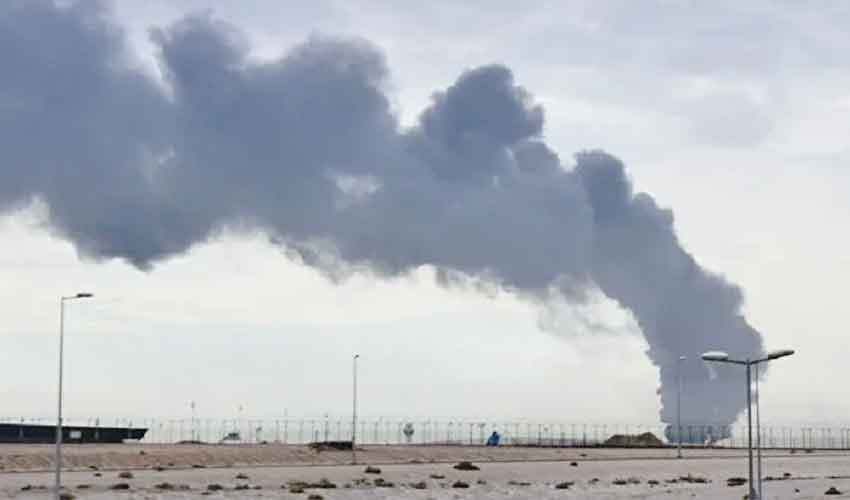
According to Iranian media, explosions were heard in Sirik and Bushehr, while missile strikes were also reported near the city of Ahvaz. The governor of Bushehr said a power plant located near the Bushehr Nuclear Power Plant was targeted in the latest US attack.
Iranian officials also reported a US missile strike near the Shalamcheh border crossing, where two people were killed.
The US Central Command (CENTCOM) later confirmed that American forces had completed another round of military operations, describing them as the 12th consecutive night of strikes carried out under the direction of President Donald Trump.
CENTCOM said US forces targeted Iranian military assets, including maritime capabilities, missile and drone storage facilities, coastal surveillance sites and air defence systems.
— U.S. Central Command (@CENTCOM) July 23, 2026
According to the US military, the latest operation lasted approximately five hours.
CENTCOM added that American forces have struck dozens of Iranian military sites throughout July while also resuming a naval blockade around Iran.
The command said the operations are intended to further degrade Iran's ability to threaten civilian mariners, commercial vessels and regional sea lanes. It also stated that US naval forces redirected nine commercial vessels and disabled one vessel to prevent ships from entering or leaving Iranian ports.
According to CENTCOM, more than 50,000 US service members remain deployed across the Middle East and are on high alert.
US officials also confirmed that a B-1 long-range strategic bomber was used for the first time since the conflict resumed 12 days ago.
According to Axios, the aircraft flew from a US airbase in the United Kingdom and was used to strike Islamic Revolutionary Guard Corps (IRGC) targets inside Iran. The B-1 bomber is capable of carrying up to 24 two-thousand-pound bombs or dozens of cruise missiles.
US officials also reported that 18 American troops have been killed in recent days.
Trump issues fresh warning to Iran
President Donald Trump warned that the United States would destroy an Iranian bridge or power plant every time Iran attacks a ship transiting the Strait of Hormuz.
His remarks came as Washington intensified military operations aimed at reducing Iran's ability to threaten international shipping.
Iran warns over Strait of Hormuz
Iran's Revolutionary Guards described continued US military intervention around the Strait of Hormuz as a serious threat with global consequences.
The IRGC warned that disruptions would not only trigger an energy crisis but could also create shortages of agricultural fertilizers worldwide.
The group demanded an immediate end to US attacks and warned international shipping companies not to ignore its instructions.
It stated that vessels intending to pass through the Strait of Hormuz should coordinate with Iranian authorities, claiming control over the strategic waterway.
The IRGC warned that as long as US attacks continue, no ship would be allowed to pass safely through the Strait of Hormuz.
Iran's joint military command also warned that if the United States follows through on threats to target Iranian infrastructure, Tehran would respond by striking regional oil, gas, electricity and other economic facilities.
Attacks on US bases in Kuwait and Jordan
Iran's Islamic Revolutionary Guard Corps (IRGC) announced that it carried out retaliatory strikes against US military bases in Kuwait and Jordan.
According to Iran's state broadcaster IRIB, the IRGC claimed it destroyed a large military equipment warehouse, a Patriot air defence system, and an MQ-9 drone hangar at Ali Al Salem Air Base in Kuwait.
The IRGC also claimed it struck accommodations used by US military personnel and two helicopter hangars at Udairi Camp, saying the attacks killed and wounded an unspecified number of American troops while causing heavy damage to helicopters and drones.
It further claimed responsibility for attacking a telecommunications tower in retaliation for previous US strikes on Iran's communications infrastructure.
Addressing the Kuwaiti public, the IRGC said its operations targeted only US military facilities and did not violate Kuwait's sovereignty or territorial integrity.
The group argued that US military bases operate outside the authority of host governments, claiming that American forces—not local authorities—exercise control over those facilities.
Claims of strikes in Jordan
The IRGC also claimed to have targeted US military installations in Jordan. According to its statement, Iranian forces destroyed a THAAD missile defence radar, a Patriot air defence system, and a C-RAM radar.
The group also claimed that fuel storage tanks, a helicopter equipment warehouse and a helicopter maintenance hangar were destroyed during the strikes.
In a separate statement addressed to the Jordanian public, the IRGC argued that it was attacking US military facilities rather than violating Jordan's sovereignty.
It maintained that American military installations on Jordanian soil function outside Jordanian legal authority and blamed the United States for undermining the country's sovereignty.
The statement further referred to the burial of 168 students killed in Minab on the first day of the conflict, describing them as victims of US attacks and asserting that Iran had a legal and moral right to strike US forces from wherever attacks on Iran originated.
Iranian army announces Operation Saeqa
Iran's regular army announced that the 23rd phase of Operation Saeqa (Thunderbolt) targeted US military logistics and ammunition depots.
According to Iran's Tasnim News Agency, attack drones struck ammunition and logistics facilities at Al Dhafra Air Base, fuel storage facilities at Ali Al Salem Air Base, and an ammunition depot at Camp Arifjan in Kuwait.
Iran also claimed it had previously targeted vital water desalination and energy facilities in Kuwait earlier this week.
The claims made by the IRGC regarding damage to US military facilities, casualties among American troops and destruction of military equipment have not been independently verified.
US authorities have not publicly confirmed the Iranian claims at the time of reporting.
Growing fears of wider regional conflict
The latest military exchanges mark one of the most significant escalations in the ongoing confrontation between Washington and Tehran.
The conflict has expanded beyond direct strikes inside Iran to include attacks and claimed retaliatory operations involving US military facilities in Gulf countries, alongside growing tensions over international shipping routes through the Strait of Hormuz and the Red Sea.
Analysts warn that any prolonged disruption to these strategic maritime corridors could have far-reaching consequences for global energy supplies, international trade and regional stability.