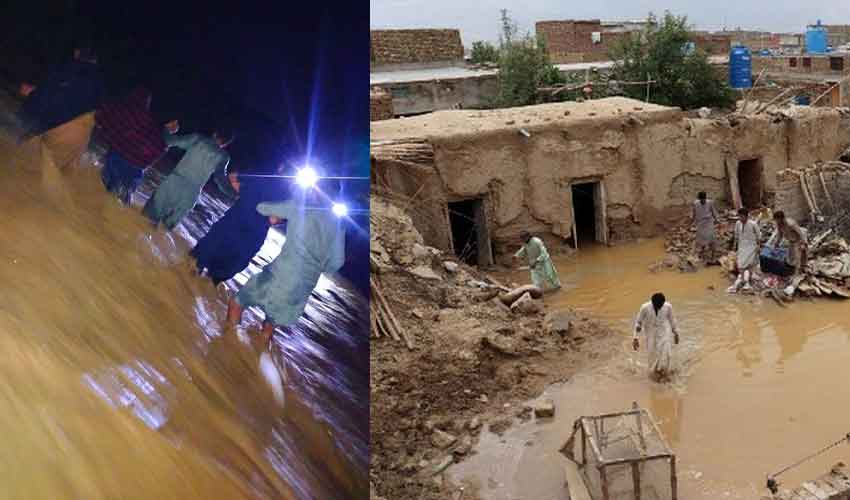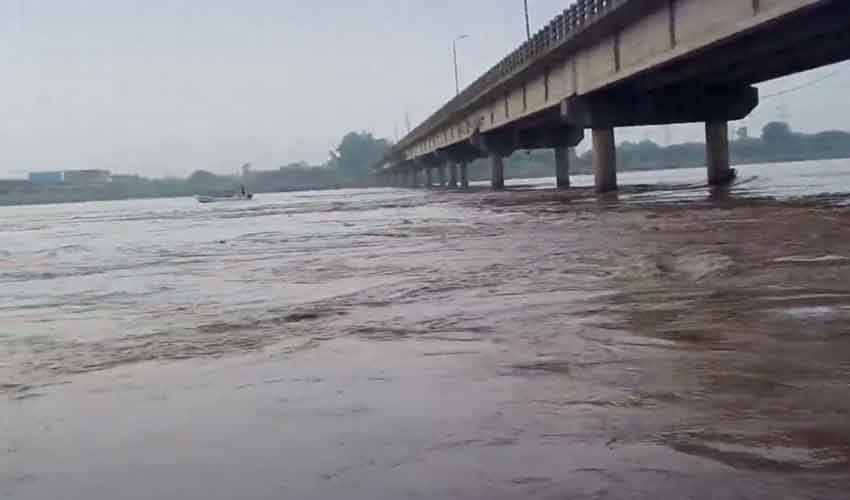
Punjab remains on high alert as rising river flows and ongoing monsoon rains continue to increase flood risks across several districts.
Authorities have strengthened emergency measures, issued evacuation advisories and expanded rescue preparations as water levels continue to rise in the Chenab River, while the Ravi River remains largely stable.
The flood situation has intensified in the Chenab River, with high flood levels recorded at Khanki and Qadirabad barrages, while Marala Barrage is experiencing a medium-level flood.
At Marala Barrage, the water inflow was recorded at 194,452 cusecs, while the outflow stood at 174,452 cusecs, indicating a medium flood.
At Khanki Barrage, authorities recorded a high flood, with an inflow of 261,463 cusecs and an outflow of 256,633 cusecs.
At Qadirabad Barrage, the water inflow reached 267,159 cusecs, while the outflow was recorded at 252,159 cusecs. Officials also confirmed that 15,000 cusecs of water is being released into the QB Link Canal as the high flood continues.
Ravi River remains largely stable
Unlike the Chenab, the Ravi River remains mostly stable despite the ongoing monsoon spell.
At Kot Naina, water flow was recorded at 17,500 cusecs, with officials reporting a normal situation and a declining water trend.
At Jasar, the flow stood at 24,940 cusecs, while 32,577 cusecs was recorded at Siphon and 32,138 cusecs at Shahdara. Authorities described conditions at all three locations as normal and stable.
At Head Balloki, however, a low-level flood has been recorded, with 73,625 cusecs of water entering the headworks and 50,725 cusecs flowing downstream.
Meanwhile, Sudhanai Barrage remained under normal conditions, where the inflow was recorded at 19,607 cusecs and the outflow at 3,607 cusecs.
Chenab continues to rise in Hafizabad
The water level in the Chenab River is continuing to rise at Head Qadirabad in Hafizabad, where authorities have reported a moderate flood.
Officials said the latest reading showed an inflow of 245,234 cusecs and an outflow of 230,234 cusecs.
The district administration has established 18 boating points and nine flood relief camps, while rescue agencies remain on high alert to deal with any emergency.
Residents living along the river belt have been instructed to shift their families, livestock and valuable belongings to safer locations as a precaution.
Monsoon rains devastate Hafizabad's paddy crop
The ongoing heavy monsoon spell has severely disrupted life in Hafizabad, where continuous rainfall has affected both urban and rural areas.
Hundreds of acres of paddy (rice) fields have been submerged, causing extensive losses to farmers.
Farmers said they invested heavily in expensive seed, fertilizers and agricultural chemicals, but continuous rain washed away their crops.
They blamed poor drainage for the destruction and urged authorities to immediately clean drainage channels.
The farming community also appealed to the Punjab government to announce an immediate relief package and provide financial assistance to compensate for their losses.
Nankana Sahib strengthens flood preparedness
The district administration in Nankana Sahib has intensified precautionary measures as water levels continue to rise at Head Balloki on the Ravi River.
Officials confirmed that the inflow remains 73,625 cusecs, while the outflow is 50,725 cusecs, with a low-level flood continuing.
Authorities also reported rapid riverbank erosion near Waraichan village.
Deputy Commissioner Rana Hameed visited Head Balloki to review the flood situation and inspect safety arrangements. Irrigation officials briefed him on river inflows, outflows and overall water flow.
Following his visit, safety measures were further strengthened and six relief camps were established in settlements located near the river.
The DC said sensitive locations are being monitored continuously under the district's flood emergency plan. He urged residents of riverine and low-lying areas to take precautionary measures and move to safer places whenever necessary.
People have also been advised not to visit rivers or flooded areas unnecessarily and to strictly follow official safety instructions.
According to Hameed, the district administration is reviewing the situation around the clock and urged citizens to cooperate with authorities.
Flood alert issued in Layyah
The Indus River continues to flow at a high level in Layyah, where a low-level flood has been reported.
Standing crops around Karor Lal Esan, Bet Mongarh and Basti Aulakh have been submerged after floodwater spread into surrounding agricultural land.
Authorities warned that the flood wave is expected to pass through Layyah district within the next 24 hours, prompting an alert for residents.
Sargodha prepares for possible flooding
Authorities in Sargodha have also issued a flood alert as water levels continue to rise in the Chenab River.
Deputy Commissioner Hussain Ahmed Raza Chaudhry conducted an early morning emergency visit to Talibwala to assess the flood situation and review preparedness measures.
Officials informed him that low to medium flood levels are expected at Talibwala over the next 48 hours. The district administration warned that more than 40 villages in Kot Momin Tehsil could be affected if water levels continue to rise.
According to official briefings:
-
If river flow reaches 250,000 to 350,000 cusecs, 11 villages may be affected.
-
If water flow reaches 450,000 cusecs, 23 villages could be impacted.
-
If the flow exceeds that level, as many as 41 villages may face flooding.
The deputy commissioner directed all departments to immediately complete safety and administrative arrangements, issue timely warnings to residents living along riverbanks and low-lying areas, and ensure livestock is shifted to safe locations.
He also instructed authorities to keep flood relief camps, rescue boats, heavy machinery, medicines and other emergency equipment ready at all times.
Rescue 1122, the Health Department, Livestock Department, Irrigation Department, PDMA, Police and the district administration have all been placed on high alert.
Control rooms have been ordered to remain operational 24 hours a day, while officials continue to monitor the river using Safe City cameras, body cameras and drone surveillance to provide real-time information.
Deputy Commissioner Chaudhry emphasized that protecting human lives remains the top priority and warned that no negligence would be tolerated in evacuation or relief operations.
The Kot Momin assistant commissioner, irrigation officials, PDMA representatives, PML-N leader Shahnawaz Ranjha and other senior officers also accompanied the DC during the inspection.
Tarbela Dam water level rises sharply
Heavy rainfall and flood inflows from upper districts have significantly increased the water level at Tarbela Dam in Haripur.
According to the dam administration, the reservoir level has reached 1,519.11 feet, leaving it 31 feet below the full conservation level.
The dam is currently receiving 319,100 cusecs of water, while 193,000 cusecs is being released downstream.
Officials said the Tarbela spillway is likely to be opened for the sixth time today.
The Haripur district administration has declared a high alert because of the low-level flood situation in the Indus River.
Assistant Commissioner Ghazi Junaid Aftab urged citizens to avoid visiting riverbanks. Authorities have imposed a ban on bathing, boating and fishing in the river.
Livestock owners have been advised to keep animals away from riverbanks, while parents have been urged not to allow children near the river.
Residents living along the river are also being shifted to safer locations as a precautionary measure.
President Zardari orders nationwide preparedness
In response to the ongoing monsoon emergency, President Asif Ali Zardari directed all relevant institutions to remain on maximum alert and further strengthen rescue and relief operations to safeguard lives and property.
He instructed the National Disaster Management Authority (NDMA), Provincial Disaster Management Authorities (PDMAs) and all district administrations to maintain constant coordination and closely monitor rain-affected areas, including Gilgit-Baltistan and Azad Kashmir.
The President directed authorities to deploy rescue teams, heavy machinery and relief equipment in vulnerable areas before any emergency arises to ensure a timely response.
He also ordered immediate measures to protect both tourists and local residents, urging the public to follow official weather advisories and avoid unnecessary travel.
President Zardari expressed condolences to the families of those who lost their lives in rain-related incidents and praised rescue workers and emergency personnel for their continued dedication during relief operations.