





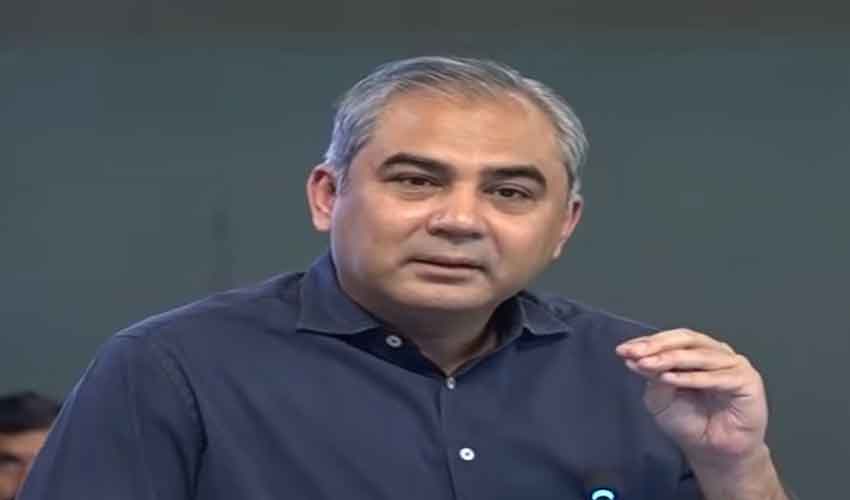
Pakistan’s first Economic Summit Conference 2026 brought together policymakers, business leaders, and industry experts to discuss the country’s economic future, with Federal Interior Minister Mohsin Naqvi delivering a candid speech calling for structural reforms and a “reset” of the existing system.
Addressing the summit, Naqvi said he usually avoids making political speeches but felt compelled to do so given Pakistan’s current situation. He remarked that those present at the conference, both on stage and in the audience, shared responsibility for the country's present condition.
Naqvi said the country's existing governance system had deteriorated and warned that the same issues would continue to dominate discussions even after another decade unless meaningful reforms were introduced.
He clarified that he supports democracy but argued that reforms must be made within the democratic framework. According to him, democracy itself allows multiple governance models, and Pakistan must explore better administrative structures.
Calls for new administrative units, political reforms
The interior minister stressed that the country needed new administrative units and possibly new provinces to improve governance and bring leadership closer to the people.
He said the issue should be presented before the public, adding that new political units would pave the way for new leadership. He also noted that citizens in many areas still travel eight to ten hours to access courts, emphasizing that justice should be available closer to their homes.
Naqvi compared Pakistan with India, saying India had 14 provinces at the time of independence but now has 29, suggesting Pakistan should also debate administrative restructuring.
Business community urged to enter politics
Mohsin Naqvi urged industrialists and business leaders to actively participate in politics instead of merely financing election campaigns.
He said members of the business community often contribute large sums before elections -- some as much as Rs100 million and others up to Rs500 million -- but remain outside the political process. He questioned why business leaders viewed entering politics as an insult despite having the ability to drive meaningful reforms.
According to Naqvi, the day the business community decides to actively participate in politics, the existing system can be transformed. He further cationed that 'cockroaches' could overturn the system if they came together, adding that something needed to be done before that.
Economy, debt, governance under discussion
Highlighting Pakistan’s economic challenges, Naqvi said the federation prepares deficit budgets every year while national debt continues to grow.
He remarked that even if Prime Minister Shehbaz Sharif works 12 to 18 hours daily, sustainable improvement would remain difficult unless the system itself is restructured.
He described the government's current approach as “firefighting” rather than long-term planning and questioned whether it was not everyone's responsibility to correct the country's weaknesses.
Naqvi also noted that a country burdened with debt cannot continue indefinitely without reform, warning against relying on additional borrowing while ignoring structural issues.
Political consensus essential for reforms
The interior minister called on all political parties, including both the government and opposition, to sit together and develop a roadmap for national reforms.
He appealed for political differences to be set aside in the national interest and said Pakistan’s internal governance must be strengthened alongside efforts to improve its international standing.
Naqvi praised Prime Minister Shehbaz Sharif’s hard work but maintained that institutional reforms remained essential for lasting progress.
Youth need jobs and merit, not symbolic measures
Speaking about Pakistan’s young population, Mohsin Naqvi said young people are seeking employment opportunities and merit-based systems rather than symbolic initiatives.
He remarked that laptops alone cannot satisfy the aspirations of millions of young Pakistanis, stressing the importance of creating sustainable employment opportunities.
He also described population growth as a "time bomb," noting that provinces often seek higher populations to secure greater resource allocations while no effective efforts are being made to control population growth.
Naqvi said powers should be transferred to lower administrative levels and called for governance closer to the people.
Naqvi expressed optimism about Pakistan’s future, saying the country could witness major improvements if reforms are implemented.
He stated that people could not imagine where Pakistan International Airlines (PIA) could stand within three years if the right policies continue. He also welcomed the support of the legal community alongside the business sector in discussions on national reforms.
He assured business leaders of his support, encouraging them to play a leadership role in national development.
Economic summit highlights broader reform agenda
Participants at Pakistan’s first Economic Summit Conference emphasized that increasing exports remains the foundation of a strong economy.
Speakers highlighted industry, agriculture and information technology as key pillars of national development, while also pointing to Pakistan’s significant investment opportunities for foreign investors.
Summit participants stressed the need to expand the tax net, document the economy, and implement institutional reforms to achieve sustainable economic growth.
They also underlined the importance of promoting the digital economy, ensuring policy continuity, improving youth skills, creating employment opportunities, encouraging women's participation in the economy, and strengthening the role of the private sector.
Several speakers noted that Pakistan is moving towards economic stability but emphasized that long-term reforms remain essential for sustained progress.



.jpg)







