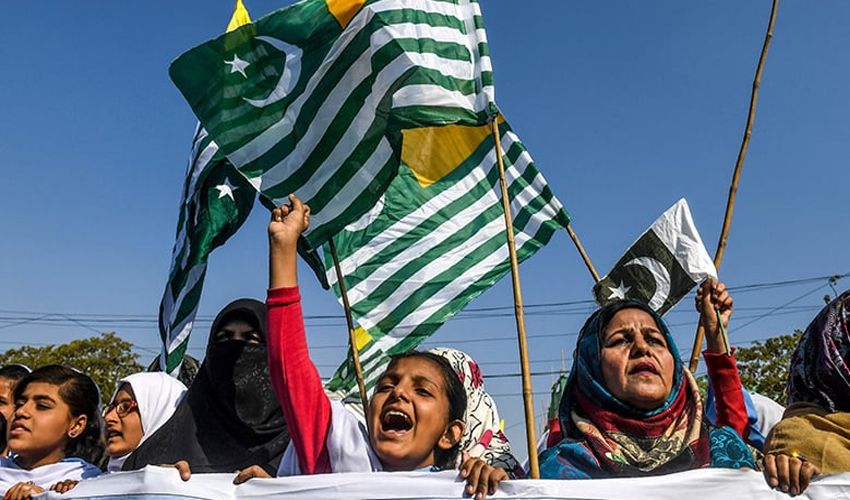
Pakistan's civil and military leadership on Tuesday reaffirmed unwavering solidarity with the people of India-Occupied Kashmir on Youm-e-Istehsal Kashmir (Kashmir Exploitation Day), pledging continued diplomatic, political and moral support while urging the international community to play a more active role in resolving the longstanding dispute.
President Asif Ali Zardari paid tribute to the people of occupied Kashmir for their continued struggle to secure their internationally recognized right to self-determination.
In his message on Youm-e-Istehsal Kashmir, the president said India attempted to alter the disputed status of Jammu and Kashmir on August 5, 2019 through unilateral measures. He added that Kashmiris have been living under severe restrictions for the past seven years.
President Zardari reaffirmed Pakistan's unwavering solidarity with the people of occupied Kashmir and said the country would continue extending moral, political and diplomatic support to their cause.
Message by the President of the Islamic Republic of Pakistan on Youm-e-Istehsal Kashmir
— The President of Pakistan (@PresOfPakistan) August 4, 2026
Today, we observe Youm-e-Istehsal Kashmir to reaffirm our unwavering solidarity with the people of Indian Illegally Occupied Jammu and Kashmir (IIOJK). We pay tribute to their courage,…
He emphasized that Pakistan would continue raising the Kashmir issue at every international forum and stressed that lasting peace in South Asia is directly linked to the peaceful resolution of the Kashmir dispute.
"The people of Pakistan stand by the Kashmiris until they achieve their legitimate right to self-determination," the president said.
PM Shehbaz calls for international action
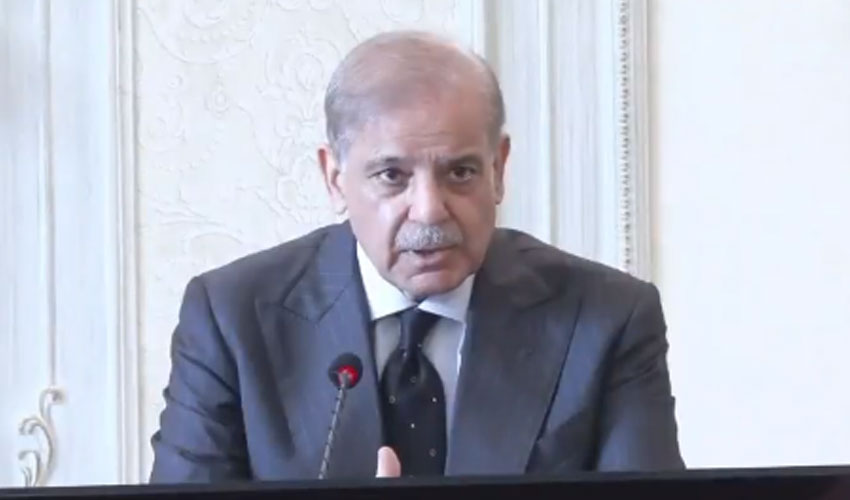
Prime Minister Shehbaz Sharif said the Kashmir dispute remains one of the key issues that must be resolved to ensure lasting peace and stability in South Asia.
In his message, the prime minister said the government and the entire nation stand in unwavering solidarity with the people of occupied Jammu and Kashmir.
He stated that India's unilateral and illegal measures of August 5, 2019 failed to change the internationally disputed status of the occupied territory. Instead, he said, those actions intensified state repression in occupied Kashmir.
The prime minister expressed concern over restrictions on civil liberties and freedom of the media in occupied Kashmir, saying these developments continue to raise serious human rights concerns.
Prime Minister Muhammad Shehbaz Sharif's Message on Youm-e-Istehsal, 5 August 2026.
— Prime Minister's Office (@PakPMO) August 5, 2026
Today, on Youm-e-Istehsal, the people and the Government of Pakistan stand in unwavering solidarity with our Kashmiri brothers and sisters. We solemnly observe this day to remind the world of the…
He praised the courage, resilience and determination of the Kashmiri people, describing their struggle for the right to self-determination as a source of inspiration for future generations.
Prime Minister Sharif urged the international community to play a responsible role in resolving the decades-old dispute and called on the world to press India to end human rights violations in occupied Kashmir.
He also urged India to withdraw all illegal and unilateral measures introduced since August 2019 and to repeal the oppressive laws imposed on the people of Jammu and Kashmir.
The prime minister reiterated that sustainable peace in the region is possible only through a just and peaceful resolution of the Kashmir dispute. He added that the resolution of the Jammu and Kashmir issue remains a fundamental pillar of Pakistan's foreign policy and pledged that Pakistan would continue extending diplomatic, political and moral support to Kashmiris at every level.
Armed forces reiterate unwavering solidarity
Pakistan's military leadership also issued a united message reaffirming unwavering support for the Kashmiri people's struggle for freedom and self-determination.
According to the Inter-Services Public Relations (ISPR), Field Marshal Asim Munir, Chief of the Naval Staff Admiral Naveed Ashraf and Chief of the Air Staff Air Chief Marshal Zaheer Ahmed Babar Sidhu reiterated the Pakistan armed forces' complete solidarity with the people of India-Occupied Kashmir.
The military leadership said the armed forces would continue to fully support the legitimate struggle of the Kashmiri people for their right to self-determination.
The ISPR stated that India's continued military occupation, widespread human rights violations and efforts to alter the demographic composition of occupied Kashmir remain matters of serious concern and pose a threat to regional peace.
The military leadership stressed that lasting peace and stability in South Asia are possible only through a just settlement of the Kashmir dispute in accordance with United Nations resolutions and the aspirations of the Kashmiri people.
The Pakistan armed forces also paid tribute to the martyrs of occupied Kashmir and reaffirmed that the armed forces and the people of Pakistan would continue to stand shoulder to shoulder with the Kashmiri people.
Dar says India's actions undermine regional peace
Deputy Prime Minister and Foreign Minister Ishaq Dar also reaffirmed Pakistan's unwavering support for the people of occupied Jammu and Kashmir in his message on Kashmir Exploitation Day.
He said India's illegal and unilateral actions of August 5, 2019 were aimed at changing the disputed status of Kashmir and suppressing the aspirations of the Kashmiri people.
Dar stated that those actions violate international laws governing the Kashmir dispute and have further complicated efforts to achieve peace and stability in the region.
He reiterated Pakistan's unwavering support for the fundamental rights of the Kashmiri people and pledged that Pakistan would continue to raise the voice of oppressed Kashmiris at every international forum.
Abdul Aleem Khan terms August 5 a dark chapter
Federal Minister for Communications Abdul Aleem Khan described August 5 as a dark chapter in history that neither Kashmiris nor the people of Pakistan can ever forget.
In a message posted on X, he said India's unilateral and illegal decision in 2019 to revoke the special constitutional status of occupied Jammu and Kashmir was intended to change the demographic composition of the valley.
He said India's attempts to turn Kashmiris into a minority in their own homeland would never succeed.
Abdul Aleem Khan added that the roots of the injustice trace back to the controversial annexation of October 1947, which deprived the people of Kashmir of their right to self-determination.
August 5 marks a grim chapter in history—one that neither the people of Kashmir nor the Pakistani nation would ever forget. On this day in 2019, India took an illegal and unilateral step to strip Indian Illegally Occupied Jammu and Kashmir (IIOJK) of its special status. This…
— Abdul Aleem Khan (@abdul_aleemkhan) August 5, 2026
He said that despite decades of oppression, prolonged lockdowns and demographic changes, the spirit of freedom among the Kashmiri people remains unshaken.
The federal minister assured the people of occupied Kashmir that they are not alone in their struggle, emphasizing that the state and people of Pakistan stand firmly beside them.
He also said that under United Nations resolutions, the right to self-determination is an inalienable and fundamental right of the Kashmiri people and reaffirmed that Pakistan's moral, political and diplomatic support would continue until that right is realized.
"No matter how long the night of oppression lasts, the victory of truth and justice is certain in the end," Abdul Aleem Khan said.
Pakistan reiterates unified stance
Messages issued by the president, prime minister, military leadership and senior government officials carried a unified message that Pakistan remains committed to supporting the people of occupied Jammu and Kashmir through diplomatic, political and moral means.
The leadership also reiterated that a just resolution of the Kashmir dispute in accordance with United Nations resolutions and the wishes of the Kashmiri people remains essential for achieving lasting peace, stability and security in South Asia.