Pakistan Muslim League-Nawaz (PML-N) senior leader Ahsan Iqbal has hit back at Pakistan Peoples Party (PPP) Chairman Bilawal Bhutto-Zardari, saying that the PPP leader did not receive a majority in Gilgit-Baltistan (GB).
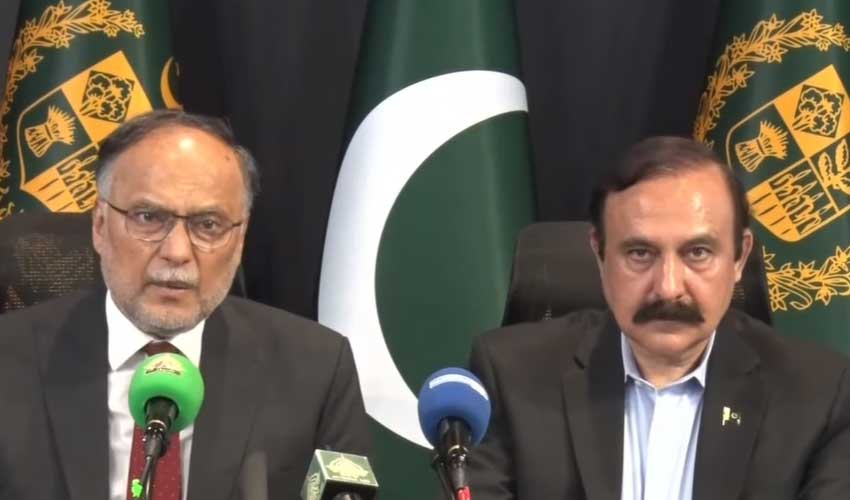
Speaking at a press conference alongside Federal Minister for Parliamentary Affairs Tariq Fazal Chaudhry, the planning minister said Bhutto-Zardari had forgotten which party formed the government in Azad Jammu and Kashmir (AJK).
Iqbal said the people of AJK had voted on the basis of performance in the elections, adding that around 650,000 voters exercised their right to vote.
The PML-N stalwart said the mandate of the people of AJK was being insulted and alleged that the PPP created unrest by repeatedly raising claims of rigging.
He added that whenever the PPP faced defeat in Kashmir, it claimed that the elections were rigged.
The remarks came after Bhutto-Zardari accused state institutions of favouring the PML-N over the national interest, alleging widespread irregularities during the first phase of the AJK elections.
Addressing party workers in Muzaffarabad, Bhutto-Zardari said the PPP had always supported the state on matters of national interest but would not back decisions taken for the political benefit of the ruling party.
PML-N's success hard for opponents to accept: Tariq Fazal Chaudhry
Meanwhile, Chaudhry said that the success of the Pakistan Muslim League-Nawaz (PML-N) was difficult for opponents to accept.
Chaudhry said the prime minister had always made every possible effort to resolve the issues of AJK. He said the party’s ministers were subjected to unnecessary criticism. He added that PML-N had development models which its opponents lacked.
Chaudhry challenged opponents to present their development plans before the public if they had any. He said two phases of the AJK elections were still remaining.
The federal minister congratulated the AJK's electoral watchdog, saying it deserved appreciation for holding transparent elections. He said no one could question the fairness of the elections, which remained peaceful, transparent and impartial.



.jpg)