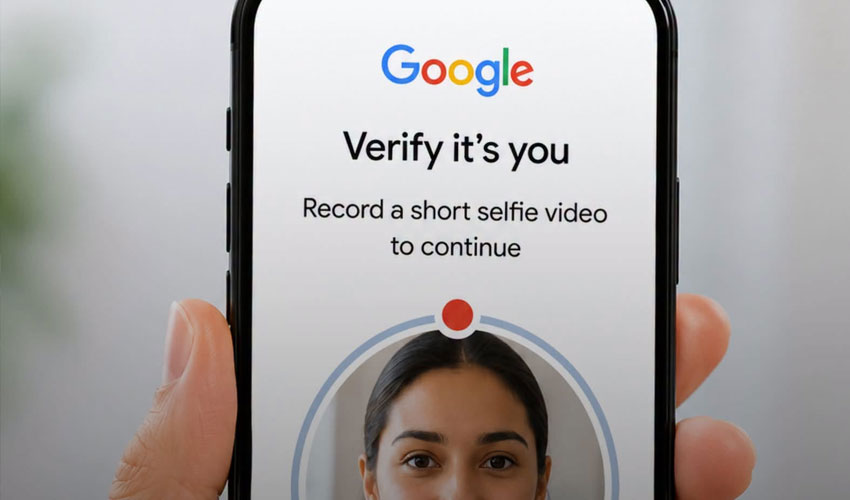
Google has introduced selfie video sign-in, a new identity verification feature designed to make it easier for users to regain access to their accounts while strengthening protection against fraud and impersonation.
The new feature offers an additional sign-in and account recovery method, particularly for users who lose access to their primary device or cannot use their usual authentication methods.
How selfie video works
Users can set up the feature by recording a short selfie video using their device's camera while following a series of guided head movements to capture multiple angles of their face.
If they are later unable to access their account, they can record another selfie video. Google compares the new recording with the previously saved video to verify the user's identity before restoring account access.
Privacy and security measures
Google said selfie videos are stored only with the user's consent and remain under the user's control.
The videos are encrypted while stored and can be deleted at any time through the user's Google Account settings.

According to the company, the recordings are used solely for account sign-in and recovery unless users explicitly choose to share them for other purposes.
To prevent identity fraud, Google has built multiple security safeguards into the feature.
These include requiring users to perform live facial movements during verification and using advanced systems to detect spoofing attempts involving fake photos, recorded videos or AI-generated deepfakes.
The company also applies its existing security systems to identify suspicious login attempts.
Expanding account protection
Google said the new feature builds on existing account security tools such as passkeys and recovery contacts, giving users more options to securely access their accounts.
The company encouraged users to enable multiple recovery methods to reduce the risk of being permanently locked out of their accounts.
Selfie video sign-in is now available for eligible Google Account users.