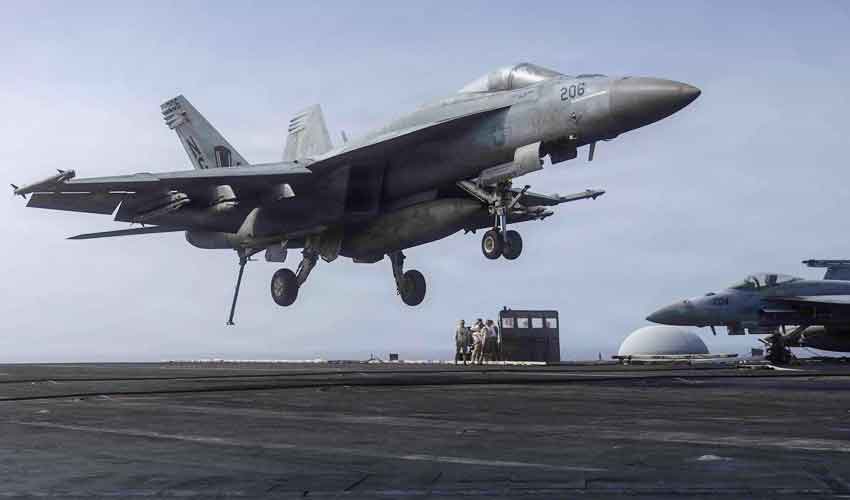
Newly sworn-in British Prime Minister Andy Burnham has approved the continued use of British military bases by the United States for operations against Iran, according to a Bloomberg report, maintaining a policy introduced by his predecessor Keir Starmer as the US intensifies its military campaign.
The decision comes as the conflict between the United States and Iran deepens, with President Donald Trump signaling that more Iranian targets could be struck if diplomatic efforts fail.
According to Bloomberg, Burnham agreed to continue the previous government's policy allowing the United States to use British military bases for what the UK describes as defensive strikes against Iran.
The approval means US forces can continue operating from Diego Garcia in the Indian Ocean and RAF Fairford in Gloucestershire, England, for missions aimed at countering Iran's missile threat and targeting facilities used to threaten commercial shipping in the Strait of Hormuz.
People familiar with the matter said former prime minister Keir Starmer chaired a meeting of senior ministers and officials on Friday following the resumption of US military operations earlier this month.
During that meeting, ministers decided to maintain the existing policy allowing the use of the two bases. Burnham, who became prime minister on Monday, was briefed on the discussions and endorsed the decision, according to the sources, who spoke on condition of anonymity because they were discussing security matters.
No official statement has been issued by Burnham's office regarding the reported decision.
US operations continue
The policy decision emerged after the 10th consecutive day of renewed US military operations against Iran.
US Central Command (CENTCOM) said it carried out overnight strikes targeting Iranian military command centers, missile launch sites and air defense systems as part of the ongoing campaign.
Also Read: US ends latest strikes on Iran, 11th night of attacks
By maintaining the previous government's position, British military facilities are expected to support some of the current round of American operations.
Political pressure grows inside UK
The decision is expected to prove politically sensitive for Burnham, just as it did for Starmer.
During his tenure, Starmer faced mounting pressure from the British political left to block US access to British bases while also dealing with calls from President Trump to expand the UK's role in supporting the military campaign.
Trump's repeated threats to target Iranian civilian infrastructure, including bridges and power plants, have also raised concerns within the UK government.
British officials are reportedly worried about the legal implications of participating in or facilitating operations that could violate international humanitarian law.
Burnham is now likely to face criticism from the Green Party and the Liberal Democrats, both of which oppose the use of British bases, arguing that doing so could make the UK complicit in alleged war crimes.
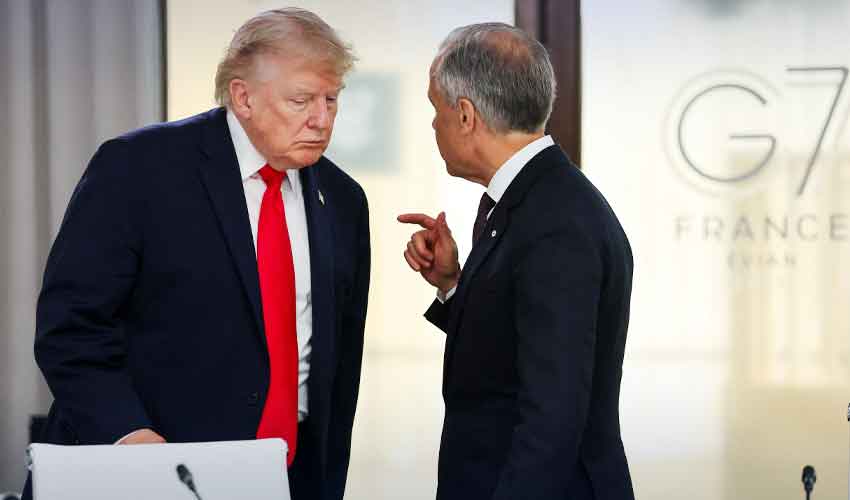
Burnham, Trump discuss regional security
The report suggests Burnham's decision may partly explain President Trump's relatively positive public remarks following the British leader's arrival at 10 Downing Street.
Burnham spoke with Trump by telephone after becoming prime minister on Monday.
According to a statement released by the British prime minister's office, Burnham reaffirmed the UK's commitment to ensuring freedom of navigation and securing commercial shipping through the Strait of Hormuz.
Trump later commented positively on the conversation in a post on Truth Social.
"We discussed North Sea Oil, Trade, the Military Alliance, Demining of the Hormuz Strait, and many other topics. The call was interesting, and went very well," Trump wrote.
Trump warns of possible new strikes
The developments come as President Trump escalated his rhetoric against Tehran.
According to the report, Trump warned on Tuesday that Iran's underground nuclear-linked facility at Pickaxe Mountain could become a military target if diplomatic efforts fail to resolve the crisis.
The warning reflects Washington's increasingly aggressive stance as military operations continue across the region.
Iran threatens retaliation against US, allies
Iran has responded with fresh warnings of its own.
State television reported that the commander of Khatem al-Anbia, Iran's top military headquarters, warned that US and allied military assets throughout the region would become targets if Washington attacks Iranian nuclear facilities.
The warning adds to fears of a broader regional conflict involving multiple countries.
Meanwhile, The Wall Street Journal reported that Arab Gulf states are urging the United States to ensure Israel does not resume attacks on Iran.
Regional governments fear that renewed Israeli military action could prompt Tehran to retaliate against Gulf energy infrastructure while making diplomatic efforts significantly more difficult.
According to regional mediators, any renewed Israeli involvement would complicate attempts to persuade Iran's Islamic Revolutionary Guard Corps (IRGC) to return to negotiations.
US, Israel discuss expanding military logistics
The report also says the United States and Israel are discussing plans to station additional US aerial refueling aircraft at Ben-Gurion Airport. If approved, the fleet could expand to 40 aircraft.
According to N12, Israeli Transportation Minister Miri Regev, senior officials from the Transportation Ministry and the Israel Airports Authority are working on a solution that would allow the aircraft to be accommodated without severely disrupting civilian air travel.
However, parking the additional refueling aircraft at the airport could require the cancellation of 30 civilian flights per day beginning August 1, according to the report.