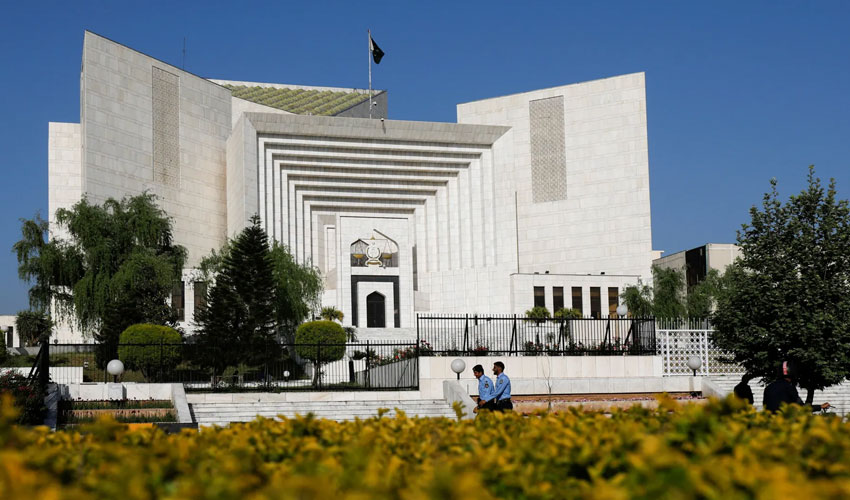
Pakistan has taken a significant step toward modernising its commercial justice system, with the Law and Justice Commission recommending the establishment of an International Commercial Court of Pakistan through a constitutional amendment.
The proposal has been forwarded to the federal government for legislation and is aimed at attracting foreign investment and aligning the country's legal framework with international standards.
The recommendation was approved during the 49th meeting of the Law and Justice Commission, chaired by the Chief Justice of Pakistan.
The commission proposed creating an International Commercial Court of Pakistan (ICCP) by introducing a new Article 212A into the Constitution. The recommendation has been formally sent to the federal government for legislative action.
If approved, the new court will function as an independent federal high court dedicated to resolving international commercial disputes efficiently and effectively.
International commercial disputes
According to the commission, the proposed International Commercial Court will provide prompt and effective resolution of international commercial disputes, strengthen the enforcement of arbitration awards, and promote uniformity and predictability in commercial laws.
The initiative is designed to align Pakistan's commercial justice system with international best practices, creating a more reliable legal environment for businesses operating across borders.
The commission believes the court will play a key role in increasing investor confidence and making Pakistan a more attractive destination for global trade, foreign direct investment (FDI) and international business.
Proposal aims to strengthen investment climate
The proposed reforms are intended to provide a modern legal framework that supports sustainable economic growth and encourages foreign investors to conduct business in Pakistan.
By ensuring quicker dispute resolution and stronger enforcement of commercial agreements, the commission expects the new court to improve Pakistan's standing as an investment destination while enhancing business confidence.
To establish the International Commercial Court, the Law and Justice Commission has recommended the inclusion of Article 212A in the Constitution.
The commission also decided to forward its constitutional amendment proposal to the federal government so that the required legislation can be introduced.
The recommendation represents one of the most significant judicial reform proposals aimed at strengthening Pakistan's commercial legal system.
High-level meeting approves key legal reforms
The 49th meeting of the Law and Justice Commission was attended by the attorney general for Pakistan, chief justices of the high courts, the law secretary, and other members of the commission.
Federal Minister for Law and Justice Azam Nazeer Tarar also participated in the meeting on a special invitation.
During the session, participants reviewed multiple reform proposals designed to improve Pakistan's legal and financial regulatory framework.
Banking Ombudsman reforms also recommended
Alongside the proposal for the International Commercial Court, the commission approved important recommendations relating to banking and company laws.
It recommended extending the jurisdiction of the Banking Ombudsman to include microfinance banks and institutional customers of financial institutions.
The proposed amendments to the Banking Ordinance and Companies Ordinance have also been forwarded to the federal government for legislation.
Greater consumer protection, financial inclusion
According to the commission, expanding the Banking Ombudsman's jurisdiction will provide millions of microfinance customers with an effective, affordable and accessible grievance redressal mechanism.
The reforms are expected to strengthen consumer protection, promote financial inclusion, and enhance public confidence in Pakistan's financial sector.
The Law and Justice Commission reaffirmed its commitment to supporting Pakistan's economic development through a modern, effective and accountable justice system.
It also pledged to continue pursuing judicial and legal reforms that promote business confidence, improve consumer protection, and create a stronger legal environment for sustainable economic growth and investment.



.jpg)