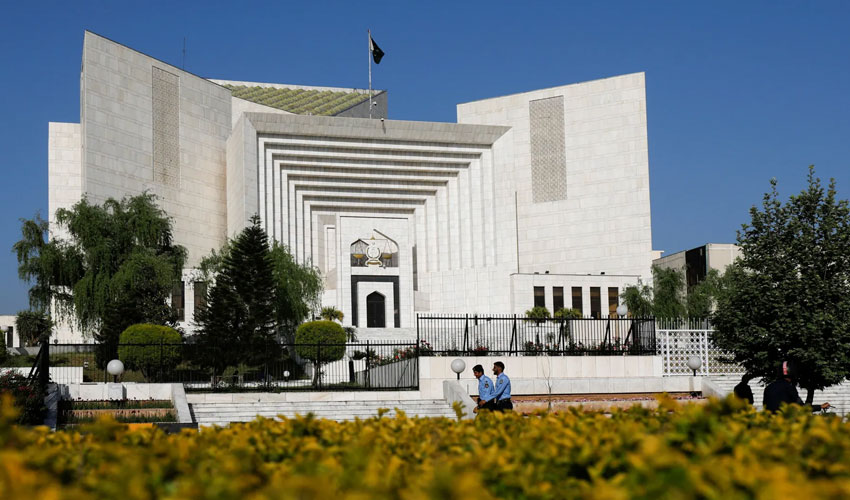
The Supreme Court has dismissed the Federal Board of Revenue's (FBR) appeals in a major tax dispute, ruling that dividend income is subject to a 10% final tax and cannot be taxed at the normal 35% corporate rate.
The verdict was announced by a two-member bench headed by Chief Justice Yahya Afridi, while the detailed judgment was authored by Justice Aqeel Ahmed Abbasi.
The dispute centred on the interpretation of Sections 5 and 39 of the Income Tax Ordinance, 2001.
The FBR had argued that dividend income should be treated as part of a company's general taxable income and be subject to the standard 35% corporate tax.
However, the petitioner companies maintained that dividend income falls under a separate tax regime and is subject to a 10% final withholding tax under Section 5.
The Supreme Court agreed with the companies' stance and upheld the earlier decision of the Islamabad High Court, which had ruled in favour of taxpayers.
The court held that dividend is a separate tax block and cannot be treated as general income, making the specific tax regime applicable instead of the normal corporate tax provisions.
It declared that only Section 5 applies to dividend income and that the 10% tax constitutes the final tax liability.
The apex court termed the FBR's attempt to impose a 35% corporate tax on dividend income as legally unsustainable and dismissed all its appeals as without merit.
The case was brought before the courts by several companies, including Saudi Pak Industrial and Agricultural Investment Company, Fauji Foundation, Fauji Fertilizer, and Cap Gas, after challenging the FBR's interpretation of the tax law.



.jpg)