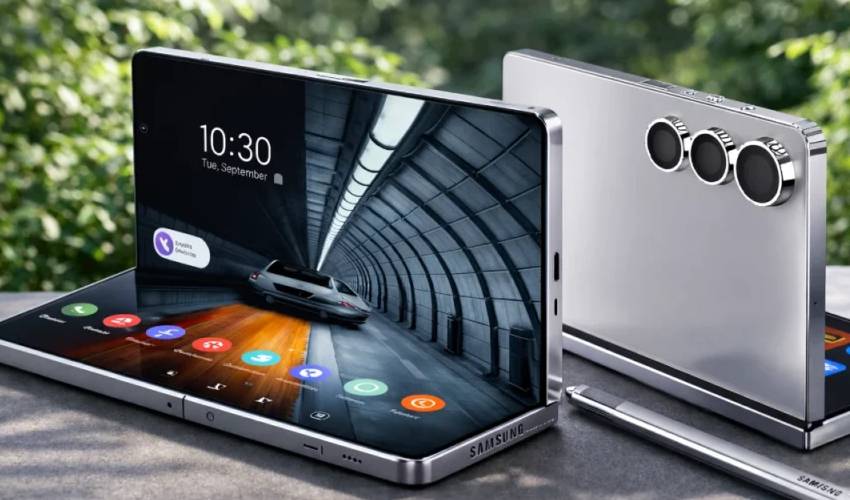
Samsung has reportedly revised its production strategy for the upcoming Galaxy Z Fold 8 series, increasing output of the Galaxy Z Fold 8 Wide ahead of its official unveiling later this week.
According to noted tipster Ice Universe, Samsung now plans to manufacture 2.8 million Galaxy Z Fold 8 Wide units, compared with 2 million Galaxy Z Fold 8 Ultra devices and 1.5 million Galaxy Z Flip 8 handsets.
The reported figures mark a shift from Samsung's earlier plan, which called for equal production of the Fold 8 Wide and Fold 8 Ultra models.
Samsung is expected to introduce its 2026 foldable smartphone lineup during its Galaxy Unpacked event on July 22.
New approach to reducing the display crease
The Galaxy Z Fold 8 series is also expected to feature significant engineering changes designed to minimise the visible crease on the foldable display.
Reports suggest Samsung has replaced traditional plastic support layers beneath the foldable OLED panel with a titanium-alloy film, which is considerably thinner and substantially stiffer than the polymer material used in previous generations.
The new structure is also said to include a micro-perforated titanium plate beneath the display, allowing the hinge area to flex while providing stronger support and reducing sagging when the device is unfolded.
Apple pursuing a different solution
Samsung's approach differs from Apple's reported strategy for its first foldable iPhone, widely expected to debut later this year.
According to industry reports, Apple plans to reduce the crease by using custom ultra-thin glass (UTG) that is thinner at the fold and thicker around the edges for improved rigidity.
Apple is also reportedly developing a 3D-printed hinge mechanism with fewer moving parts and a specialised transparent adhesive designed to minimise visible dips when the display is fully opened.
Although Samsung is expected to supply foldable OLED panels for Apple's first foldable device, the two companies appear to be using different engineering solutions to tackle one of foldable smartphones' biggest design challenges.



.jpg)