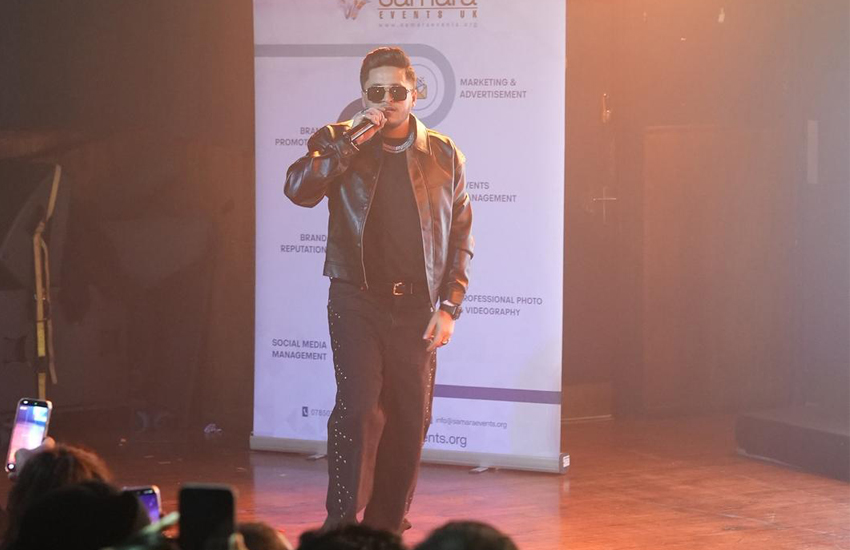
Pakistani freestyle rapper Hamza Ghani Butt, professionally known as Ghani Tiger, is emerging as one of the most distinctive voices in the new wave of South Asian rap. With a style rooted in Punjabi and Urdu street expression, emotional storytelling and rapid lyrical improvisation, Ghani Tiger has built a profile that now stretches from Pakistan’s underground rap and social media scene to live audiences in the United Kingdom.
What makes Ghani Tiger’s work stand out is not simply the size of his digital following, although his online audience is substantial. His appeal lies in his ability to create direct, immediate and emotionally charged rap performances that connect with ordinary listeners. His freestyle work is spontaneous, culturally rooted and audience focused. He brings together humour, pain, social commentary, personal struggle and street language in a way that feels authentic rather than manufactured.
Ghani Tiger began his professional career in 2016 and developed his reputation through original songs, live freestyle performances, studio recordings, music videos and social media engagement. His early work helped him build a large audience in Pakistan, where rap and freestyle performance have increasingly become platforms for young artists to speak about identity, hardship, ambition and public life.

His freestyle ability is central to his artistic identity. Unlike conventional studio-led performers, Ghani Tiger’s strongest work often happens in the moment: responding to a crowd, a location, a public mood or a personal memory. This ability to create rhythm, punchline, flow and lyrical structure instantly has become one of the key reasons for his popularity. It also places him within a growing international culture of rap performance where authenticity, speed, originality and direct connection with the audience are highly valued.
Since arriving in the United Kingdom, Ghani Tiger has developed his presence within the British-Pakistani and wider South Asian music scene. He has performed at private events, cultural gatherings, street locations and major public areas in London. His performances at locations such as Trafalgar Square and Piccadilly Circus show his ability to take Pakistani freestyle rap into visible public spaces and engage audiences outside traditional concert settings.
His UK profile has also grown through support performances for established South Asian artists. He has opened or supported shows connected with major names including Bohemia, Abrar-ul-Haq, Atta Ullah Esa Khailwi and other recognised performers. This is significant because it places him within a professional live music environment and shows that his work is not limited to social media platforms. He is developing as a live performer with the ability to hold attention in front of real audiences.

Ghani Tiger’s story also carries a strong personal dimension. In 2020, his father was killed in Pakistan, and his brother was injured in the same incident. This tragedy became a turning point in his life and work. Rather than leaving music, he transformed personal grief into songs of loss, survival and hope. This experience gives his performances a depth that is not always present in purely commercial rap. His music often carries the urgency of someone who has lived through hardship and uses performance as a way to speak directly to people facing their own struggles.
One of his most moving works is “Baba Tera Ehsan”, a tribute to his late father. The song reflects the emotional foundation of his music: family, memory, pain and resilience. While many freestyle artists rely mainly on wit and rhythm, Ghani Tiger’s strongest work combines speed and humour with vulnerability. This balance is one of the reasons his music resonates with audiences across age groups and countries.
His digital reach further supports his growing professional profile. He has built a significant audience across YouTube, TikTok, Instagram, Facebook and Spotify. His YouTube channel has hundreds of thousands of subscribers, while his TikTok following is in the millions. These platforms have allowed him to develop independently, without relying entirely on traditional industry structures. In that sense, Ghani Tiger represents a modern form of artist development: one based on direct public engagement, digital performance and grassroots audience-building.
For the British cultural landscape, Ghani Tiger’s work has particular relevance. The UK has a large South Asian diaspora, including Pakistani, Punjabi and Urdu-speaking communities. His performances speak directly to this audience while also introducing non-South Asian listeners to a raw and energetic form of Pakistani freestyle rap. His street performances in London are not only entertainment; they are cultural exchange. They bring the sound of Pasrur, Sialkot, Lahore and Punjabi-Urdu youth culture into the public spaces of London.
Ghani Tiger’s artistic promise lies in his ability to build a bridge between Pakistan’s grassroots rap culture and the UK’s diverse live music environment. He is not simply repeating existing forms of rap. He is adapting Punjabi and Urdu freestyle traditions for diaspora audiences and using social media, live performance and public spaces to expand the reach of that work.
At this stage of his career, Ghani Tiger can fairly be described as a developing international artist with clear potential. He has professional experience, a substantial digital audience, original music releases, live performance history in Pakistan and the United Kingdom, media recognition, and a growing role within the British-Pakistani music scene. His work shows the qualities of an artist who is still developing but already has a recognisable voice, an engaged audience and a clear cultural contribution to make.

His next stage will be important. With the right professional support, collaborations, UK performances, studio releases and media coverage, Ghani Tiger has the potential to become a significant representative of Pakistani freestyle rap in Britain. His work reflects a new generation of South Asian artists who are not waiting for permission from traditional gatekeepers. They are building audiences directly, carrying their languages and stories into new spaces, and reshaping what British-Asian music can sound like.
Ghani Tiger’s journey from Pakistan to London is therefore more than a personal success story. It is part of a wider cultural shift. His freestyle rap shows how South Asian artists can use language, rhythm and lived experience to connect communities across borders. In a UK music scene that continues to grow more diverse, his voice adds something distinctive: raw Punjabi and Urdu street rap, performed with energy, emotion and a strong connection to the people who listen.

.jpg)