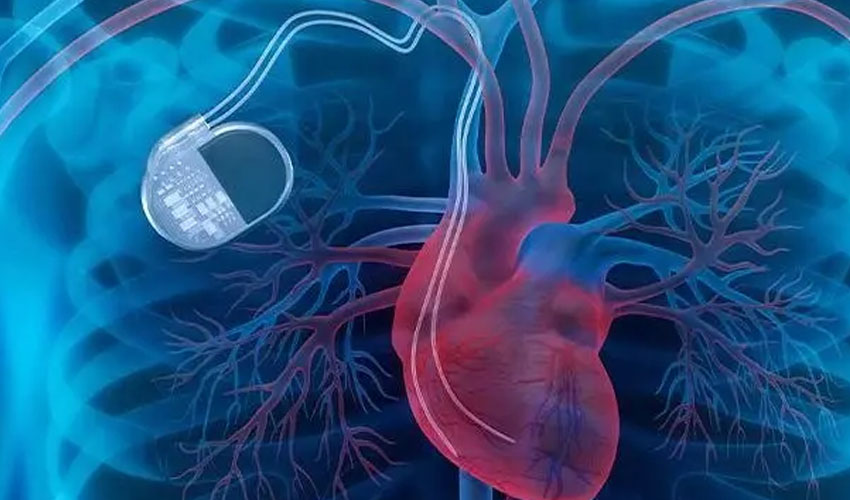
Chinese researchers have achieved a major milestone in cardiovascular science by successfully creating the world's first laboratory-grown sino-atrial node — the tiny part of the heart responsible for regulating its rhythm.
The breakthrough could pave the way for more advanced heart disease research, improved drug testing, and the development of biological alternatives to traditional pacemakers in the future.
What is sino-atrial node?
The sino-atrial (SA) node is often referred to as the heart’s natural pacemaker. Located in the right atrium, it generates the electrical impulses that keep the heart beating continuously and regularly.
These electrical signals are regulated by the nervous system and direct the heart’s upper and lower chambers to contract and relax in a coordinated sequence. This process ensures blood circulates efficiently throughout the body.
Because of its critical role, any malfunction in the sino-atrial node can have serious consequences.
When the heart’s natural pacemaker stops working properly, the heartbeat can become abnormally slow or, in severe cases, stop altogether. Such conditions can be life-threatening and often require medical intervention.
Scientists have long sought ways to better understand how the sino-atrial node functions and how its disorders can be treated.
To address this challenge, Chinese researchers created a three-dimensional laboratory model of the sino-atrial node using human pluripotent stem cells.
The lab-grown structure closely mimics the behavior of the natural node and is capable of generating its own rhythmic beats without external stimulation.
According to the research, the model functions similarly to the heart’s natural pacemaker, offering scientists a new way to study cardiac rhythm disorders in a controlled environment.
The development is expected to significantly improve research into heart diseases linked to irregular heart rhythms.
By providing a realistic laboratory model, scientists can test potential treatments and evaluate new medications more effectively before moving to clinical studies.
Researchers believe the innovation could also help them better understand how electrical signals are generated and regulated within the human heart.
Potential for future biological pacemakers
Beyond research and drug development, the technology may one day contribute to the creation of biological pacemakers.
Such a development could offer new treatment possibilities for patients suffering from abnormal heart rhythms, potentially reducing reliance on conventional electronic pacemakers.
While further research is needed, the achievement is already being viewed as a significant advance in cardiac science.



.jpg)