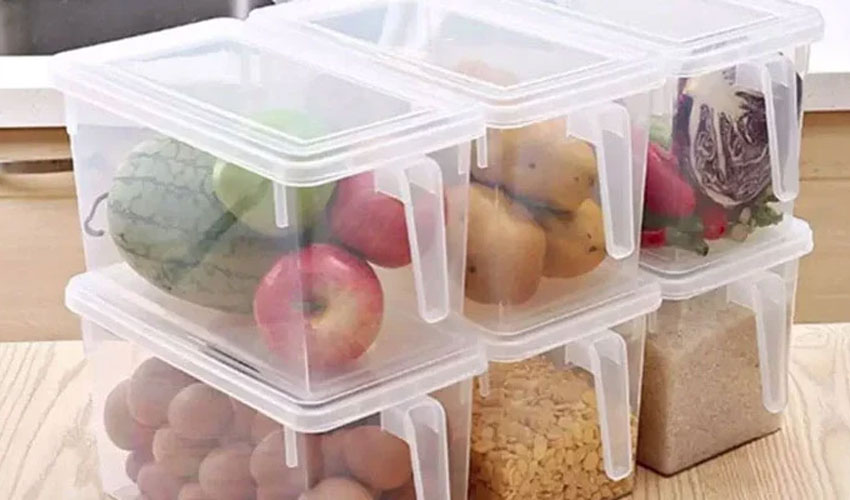
Health experts have urged people to be cautious about storing leftover food in plastic containers in freezers.
Recent warnings highlight that extreme cold and repeated heating may weaken plastic and release tiny particles known as microplastics into food.
Health experts say freezing food in plastic containers may pose potential health risks due to the release of microplastics.
According to the Consumer Rights Institute, glass and steel containers are considered safer alternatives for storing food in freezers. Experts believe these materials are more stable under extreme temperatures and less likely to release harmful particles.
Experts explained that exposure to very cold temperatures or repeated heating can gradually weaken plastic containers.
As the plastic breaks down, tiny particles called microplastics may mix with stored food. These particles can then enter the human body when the food is consumed.
Growing concerns over microplastics
Research has already shown that microplastics are harmful to the environment. Scientists are still studying their possible effects on human health.
According to experts, microplastics have been detected in several parts of the human body, including blood, lungs, the placenta, and breast milk.
Experts also warned about nanoplastics, which are even smaller particles that may reach the brain’s immune system.
Researchers believe this could potentially increase the risk of neurological diseases in the future, although further scientific studies are still ongoing.
Safer storage alternatives suggested
The Consumer Rights Institute has recommended using glass or stainless steel containers for freezing leftover food instead of plastic.
Experts say these materials are more durable and reduce the chances of particles contaminating food during storage or reheating.
.jpg)