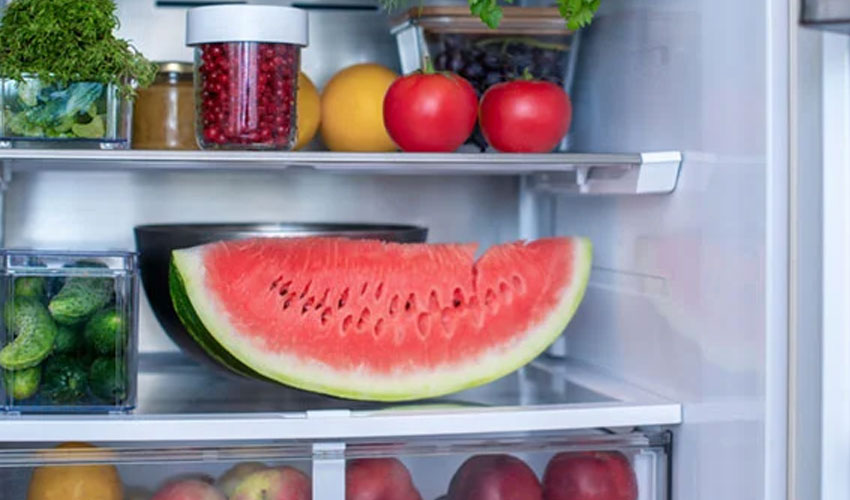
As temperatures rise during the summer season, chilled watermelon remains one of the most popular fruits among people.
However, following a few recent incidents linked to watermelon consumption, concerns have surfaced about whether cut watermelon stored in the refrigerator is truly safe to eat.
Experts say the fruit is generally safe, but only when proper hygiene and storage practices are followed.
According to nutritionists, watermelon contains a high amount of water and natural sugar, making it more vulnerable to bacterial growth during hot weather.
Experts warned that leaving cut watermelon outside for an extended period can increase health risks, especially in summer when temperatures remain high.
They advised people to refrigerate watermelon immediately after cutting and avoid exposing it to open environments for too long.
Why hygiene matters
Health experts emphasized that cleanliness plays a key role in preventing contamination.
Before cutting the fruit, consumers are advised to wash the watermelon thoroughly and clean both their hands and knives properly. Experts say bacteria from the outer surface can transfer to the inside during cutting if hygiene is ignored.
They also cautioned against eating pre-cut watermelon that has been left uncovered or exposed for long periods.
Important precautions for safe consumption
Choose Fresh Watermelon
Experts recommend buying fresh and uncracked watermelon to reduce the chances of contamination.
Store It in an Airtight Container
After cutting, watermelon pieces should be placed in a closed or airtight container and stored in the refrigerator immediately.
Avoid Keeping It Outside
Nutritionists warned that cut watermelon should not remain at room temperature for too long, particularly during extreme summer heat.
Consume It Quickly
Experts also suggested consuming refrigerated watermelon within a short period instead of storing it for extended durations.
According to experts, improperly stored watermelon can pose greater health risks for children and people with weakened immune systems.
They stressed that exposure to bacteria in open environments may increase the chances of contamination if the fruit is not handled carefully.



.jpg)