“A true soldier fights not because he hates what is in front of him, but because he loves what is behind him.”
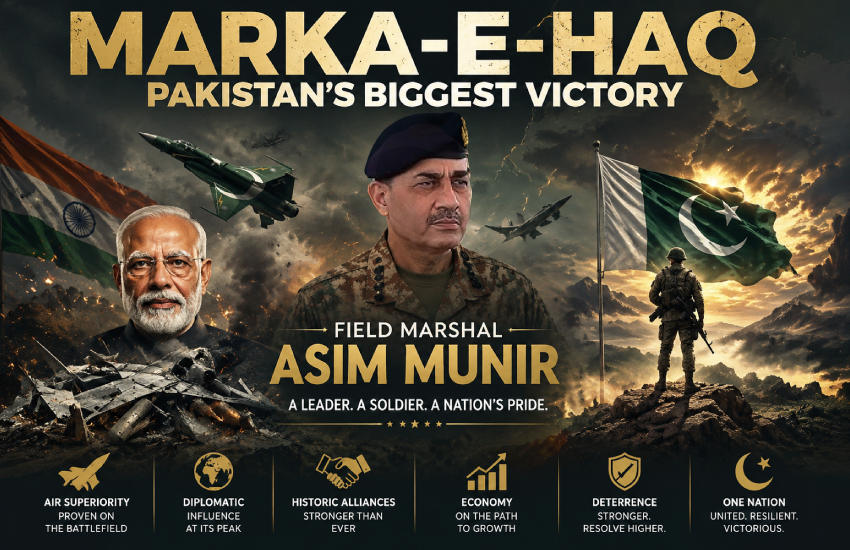
A year has passed since India handed Pakistan the greatest strategic gift Islamabad could have asked for. Convinced they would teach Pakistan a lesson, Indian forces marched in with arrogance. Instead, they had their own pride buried in dust and walked out with humiliation in front of the entire world. Operation Sindoor, as they called it, turned out to be a botched, futile exercise that weighed heavily on both Indian coffers and the morale of their military, as they faced the indomitable resolve of Pakistan’s armed forces.
What hostile forces imagined as a display of dominance became the moment Pakistan proved itself militarily, diplomatically, and politically. For that, strangely enough, Pakistan does owe India thanks. Without India's manufactured pretext, reckless escalation, and desperate obsession with spectacle, Marka-e-Haq would never have become the turning point that it did.
Now, 12 months later, the battlefield might be quiet, but the consequences are everywhere... be it the defence markets, regional diplomacy, in Washington and Riyadh, as well as in the uncomfortable reality that India still cannot fully explain away what happened in May 2025.
Yes, Marka-e-Haq was a battlefield victory, but it was also the moment Pakistan forced the world to look at it differently. On the other hand, India was left explaining wreckage, denials, and a narrative that could not even be built properly.

The World Verified What Pakistan Said
To no one’s surprise, India went to great lengths to control the narrative after May 2025. The modus operandi included denial of losses, followed by dismissal of Pakistan's claims and fabrication of the story by the ‘godi media’ machinery. What the Bollywood-inspired scriptwriters serving the power corridors did not count on was the international press doing its job.
The Washington Post conducted a visual investigation and found compelling evidence of three crash sites in India, two in Indian illegally occupied Jammu and Kashmir (IIOJK) and one in Indian Punjab. The Post went further, identifying two of the downed aircraft as a Rafale and a Mirage 2000. Al Jazeera ran a dedicated fact-check on Pakistan's claims and, in a separate analysis, concluded that India had tried to project strength but ended up showing weakness. The Financial Times covered the conflict's wider strategic fallout. Interestingly, India courts and relies on the very same media outlets for its international image. But these institutions independently corroborated key Pakistani claims while exposing the distance between what New Delhi said and what actually happened. Unlike India, Pakistan didn’t have to shout; the evidence on the ground was enough to speak for itself.
JF-17 Settled the Argument
For years, the JF-17 Thunder Block III was the aircraft that the world loved to underestimate. Indian television had a field day with it, while Western defence analysts had their own set of preferred adjectives. They assured everyone that the Rafale was in a different league. However, that theory, just like Indian pride, did not survive after coming into contact with the Pakistan Air Force during the longest dogfight in the history of air combat.

The confirmed kills included four Rafales, a Su-30, a MiG-29, a Mirage 2000 jet and an expensive multi-role unmanned aerial system. Right after the Pakistan-India clash, Dassault Aviation's stock fell more than 7 percent over five trading sessions, dropping to around 292 euros at its lowest. Meanwhile, shares of AVIC Chengdu Aircraft, the manufacturer of the J-10C and co-developer of the JF-17, surged over 20 percent, hitting their highest level since October of the previous year. The Harvard Business Review could not have designed a cleaner case study in how battlefield performance influences markets.
However, instead of gloating, Air Vice Marshal Aurangzeb Ahmed came forward and said on record that the Rafale is a good aircraft, and that the problem was the pilot, not the plane. Indian airmen, he noted, lacked the experience to extract what the Rafale is capable of. It was a professional, measured, and completely devastating assessment. No one expected the winning side to say something that honest, and that is precisely why it landed the way it did.
The JF-17 Thunder contracts followed. In December 2025, Pakistan signed what Reuters confirmed as one of its largest-ever defence export deals. It was a package worth over $4 billion with the Libyan National Army, covering 16 JF-17 fighters and 12 Super Mushshak trainer aircraft. Field Marshal Asim Munir flew to Benghazi to finalise it personally. Beyond Libya, Saudi Arabia, Indonesia, Bangladesh, Iraq and Sudan have all entered talks to acquire the JF-17. Pakistan's total defence export contracts for 2025 crossed nearly $10 billion, the highest in the country's history. The aircraft that was mocked is now the aircraft that the world is buying.
Pakistan at the Table
Another major gain Pakistan now enjoys is that before May 2025, the country was spoken about in international forums. However, afterwards, Pakistan is invited to them, which is not a small distinction.

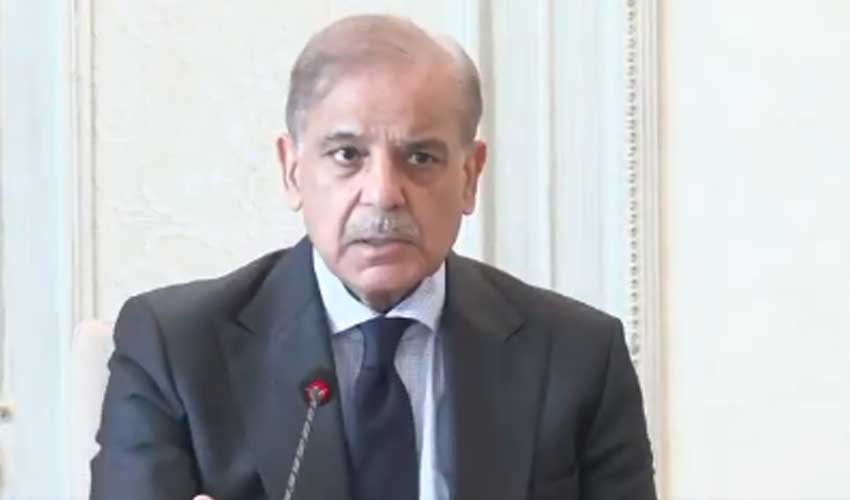
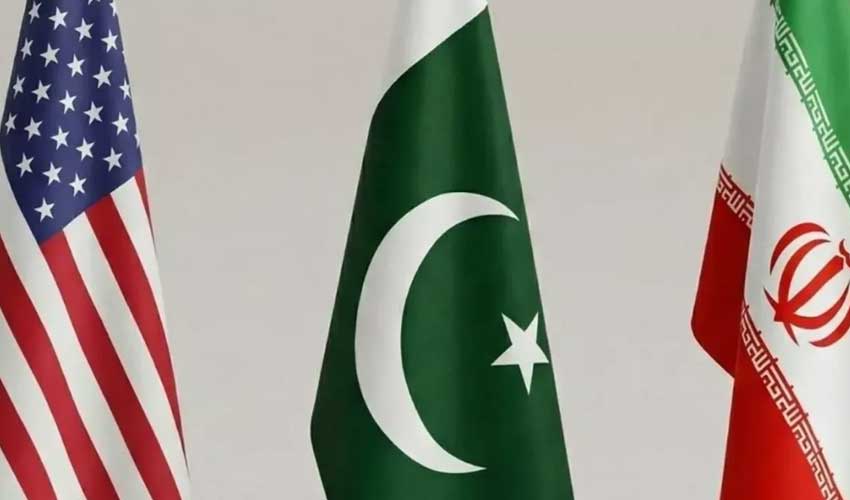
The most striking example is Pakistan's role in the US-Iran situation. When two countries that have been at each other's throats for decades needed a trusted mediator, they chose Pakistan as the actual host and sole mediator. Islamabad became ground zero for negotiations in a conflict that does not directly involve Pakistan at all. Field Marshal Asim Munir was the key negotiator, working closely with US Vice President JD Vance and special envoy Steve Witkoff over weeks of background talks. He is also said to have persuaded China to support the effort to bring Iran to the table. This has never happened before, and Pakistan was given this role because it earned the trust of both sides simultaneously.
Then there is the White House. On June 18, 2025, Field Marshal Munir became the first Pakistani army chief ever to be hosted for lunch by a sitting US president. When Trump addressed the Sharm el-Sheikh Peace Summit in Egypt, he thanked world leaders for the ceasefire and, with Prime Minister Shehbaz Sharif standing behind him, referred to the Field Marshal as 'my favourite field marshal.'
Over the course of the year, Trump described him as 'a great fighter', 'a very important guy', and 'an exceptional human being.' By late 2025, Trump had publicly praised the Field Marshal on at least 10 separate occasions, and continues to do so. Trump does not hand out that kind of language as courtesy. Pakistan's leadership earned it in the only currency that matters: results.
The Saudi Pact: A Historic First
On September 17, 2025, Pakistan and Saudi Arabia signed the Strategic Mutual Defence Agreement at Al-Yamamah Palace in Riyadh. The central clause is unambiguous: any aggression against one country is aggression against both. It is the first military pact of its kind between an Arab Gulf state and a nuclear power. It was signed in the context of a region shaken by Israeli strikes on Doha, Gulf states reassessing American reliability, and Pakistan having just demonstrated its military credibility months earlier.

As expected, the pact sent shockwaves across the region and beyond. India said it was 'carefully monitoring the development.' Iran's president, speaking at the UN General Assembly, welcomed it as the beginning of a comprehensive regional security framework. Chatham House noted its historic significance for extended deterrence globally. It was a decades-long partnership that finally got the formal architecture it deserved, at exactly the right moment.
The Economy is Responding
Pakistan’s credit ratings have improved, foreign investment is coming in, and the numbers are moving in the right direction, and the explanation is not complicated.
Investors follow credibility. They follow the ability of a government to hold its nerve and a military to defend the country's interests. Pakistan demonstrated both in May 2025. Instead of being a country that requires reassurance before a deal can be considered, Pakistan started being the country that provides such assurances.
It would be imprudent to believe that the economic work is finished. However, it must be acknowledged that the foundation has changed, and that matters a lot.
India: The Mask Came Off
May 2025 shattered the image India spent decades building. It presented itself as a rising power, a responsible democracy, and the world's largest election that is managed with confidence and projected as a model of stability.
The attack in Pahalgam on April 22 that India used as its pretext killed 26 people. India blamed Pakistan within minutes into the incident without presenting credible evidence, and launched Operation Sindoor on May 7. And from that point on, everything started going south for India. The country’s claims, conduct, and its military assumptions all got exposed simultaneously. Indian media initially declared devastating strikes on Karachi's seaport and other targets deep inside Pakistan, and those hilarious reports proved false.
Just one statement, rather a challenge, from Defence Minister Khawaja Asif pushed India on the back foot when he suggested opening both sides' aircraft inventories to independent verification, knowing full well what that comparison would show. India declined.

The Rafale losses hit India's establishment in a place that was particularly sensitive, and that was institutional pride. India's defence procurement is a deeply political exercise. The people who sold the Rafale deal to the Indian public as a guarantee of air superiority are still explaining themselves. France is not pleased either. Dassault did not sign up to have its flagship fighter become a cautionary tale about what happens when you put an underprepared pilot in an expensive cockpit.
Water Terrorism
Meanwhile, the water terrorism continued. India suspended Pakistan's share under the Indus Waters Treaty before and during the conflict, and has not restored it. Weaponising rivers is not a grey area but a violation of a legally binding international treaty, and Pakistan has raised it at every relevant forum.

A Warning on the Table
Pakistan's military officials and political leadership have said clearly, and repeatedly, that India may attempt another false-flag operation. It is a template that India has overused to such an extent that saner minds are not willing to believe it. But there are others as well, so the political incentives to use it again have not disappeared.
However, Pakistan has stated this without ambiguity that the response this time will be harsher, more decisive, and considerably more dangerous than what India experienced in May 2025. This statement should not be taken lightly, as it comes from a military establishment that has proven that it means exactly what it says. Any government in New Delhi that treats this as a bluff will be making a very expensive mistake.
One Year On
Twelve months ago, the world expected Pakistan to lose, or at best, to survive. What Pakistan did instead was win. It won the confrontation as well as the larger argument about what this country is and what it is capable of.
The operation was named Marka-e-Haq, The Battle of Truth, for a reason. One year later, as we honour the armed forces' achievements and national unity, the truth is still standing, and so is Pakistan.

.jpg)