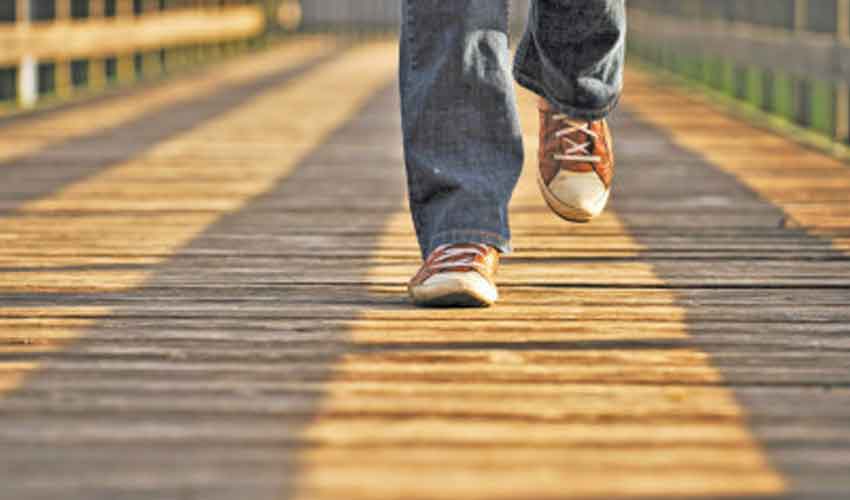
Despite continued warnings over prolonged sitting, a recent study indicates that an increase in daily step count may markedly reduce associated health risks.
According to a report published on ScienceDaily, regular walking is linked to a notable decline in the risk of death and heart disease, even among individuals who spend long hours seated.
The study, which covered more than 72,000 participants, relied on data from activity trackers. It found that reaching between 9,000 and 10,000 steps per day corresponded with a reduction in mortality risk of up to 39 per cent, and a 21 per cent decline in heart disease.
The findings showed that substantial benefits do not require high figures. Achieving approximately 4,000 to 4,500 steps daily yields nearly half of these health gains.
The results indicate that increased physical activity may offset some of the adverse effects of prolonged inactivity, though not entirely. Researchers state that movement, even at moderate levels, plays a significant role in improving heart health and reducing risks linked to a sedentary lifestyle.
Data also showed that participants spent, on average, more than 10 hours a day sitting. Nevertheless, clear benefits appeared among those who increased their step count.
Daily step count is regarded as a practical measure that can be easily tracked through mobile phones or wearable devices, making it an effective tool to promote physical activity in everyday life.
Researchers believed this indicator may assist in developing more precise health guidelines based on observed data rather than general estimates of activity levels.
The study remains observational in nature, indicating an association between walking and reduced risk without establishing direct causation. Nonetheless, the findings reinforce the view that any increase in daily movement may yield meaningful benefits, with walking remaining one of the simplest means to improve long-term health.



.jpg)